


Dutch Tin Glaze
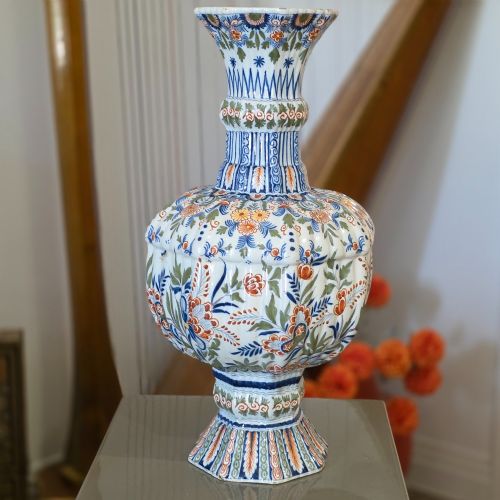
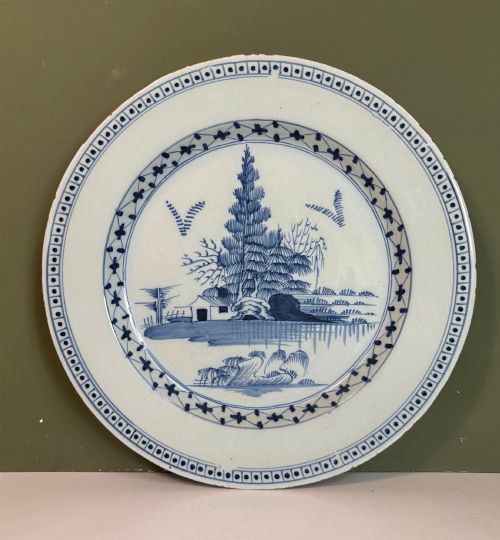
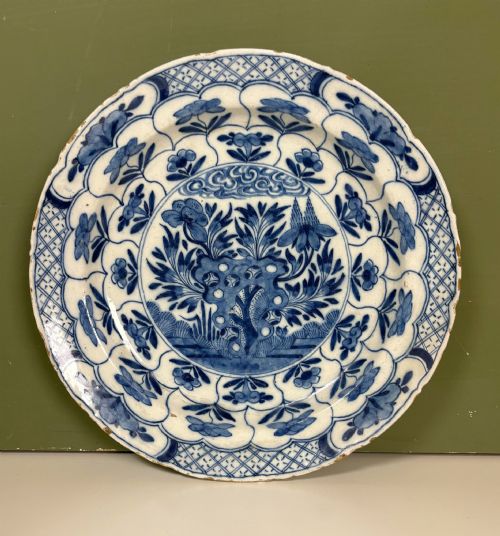
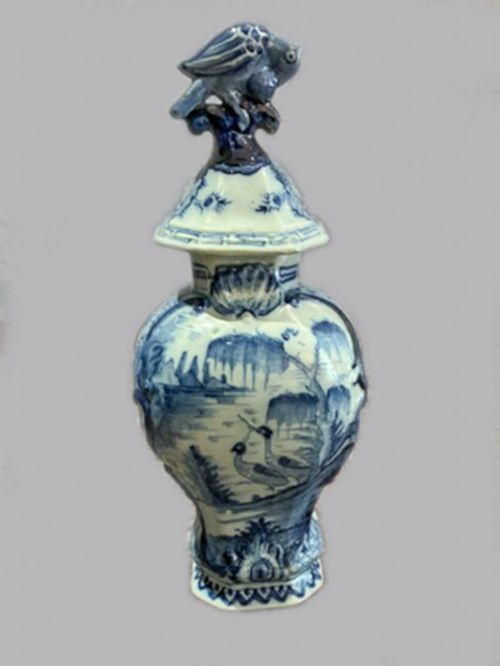
Dutch tin glaze brings centuries of earthenware vessels, chargers and tiles into the room, valued for their painted blue and white motifs.
Dutch Tin Glaze
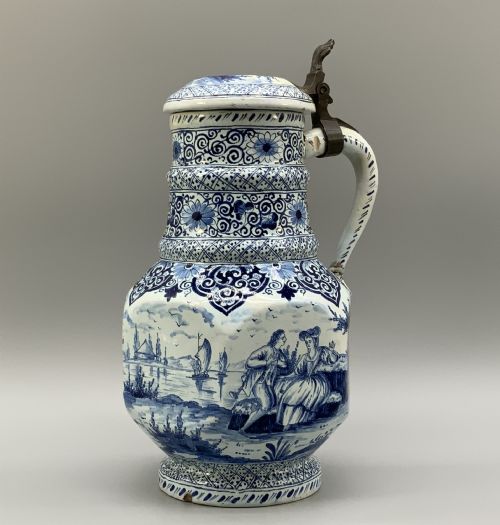
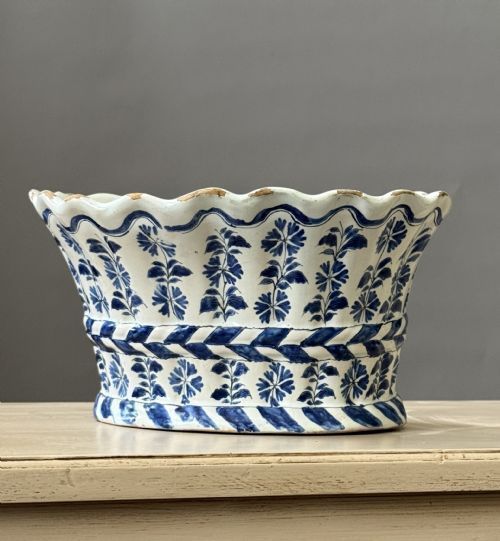
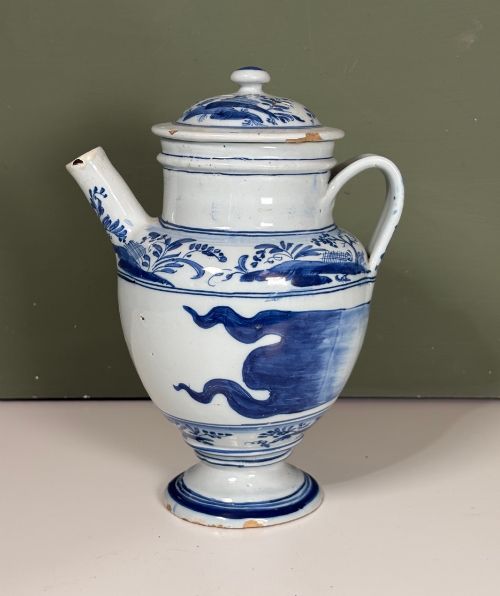
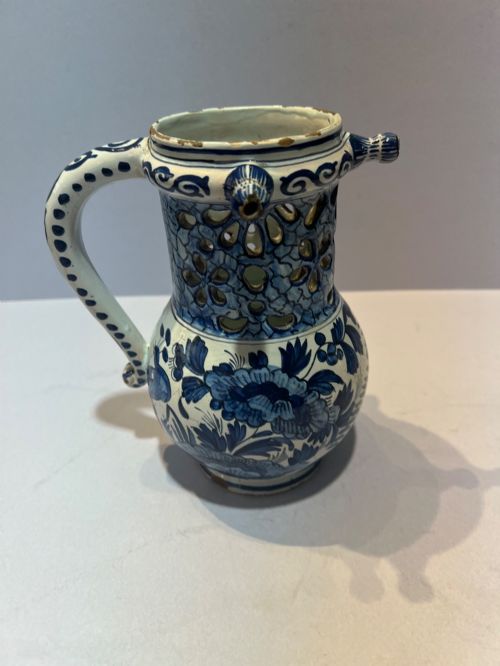
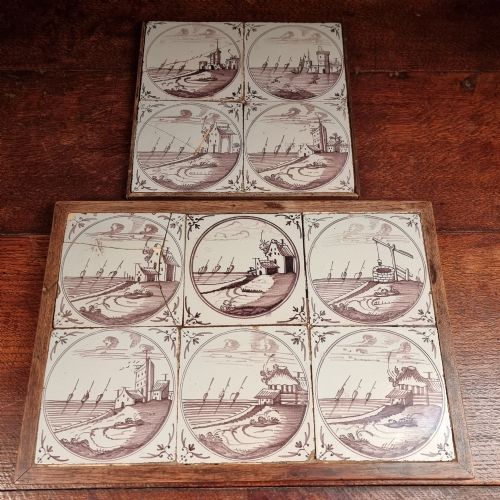
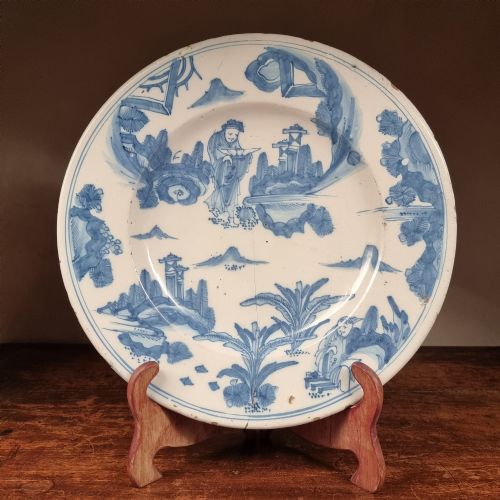
When you search for dutch tin glaze, you encounter historical ceramic vessels produced across the seventeenth, eighteenth and nineteenth centuries. The selection on this page centres on decorative plates, chargers, vases, tiles and utilitarian forms such as apothecary jars and puzzle jugs.
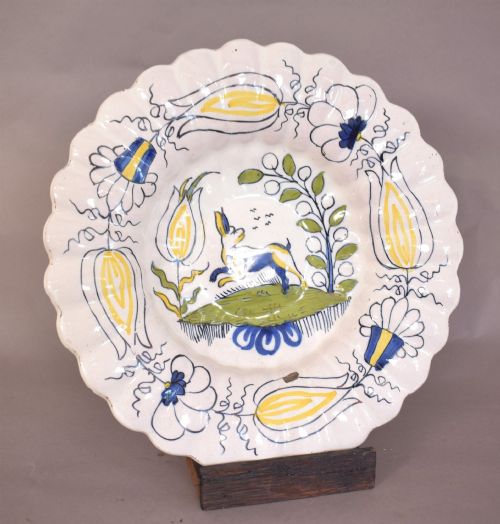
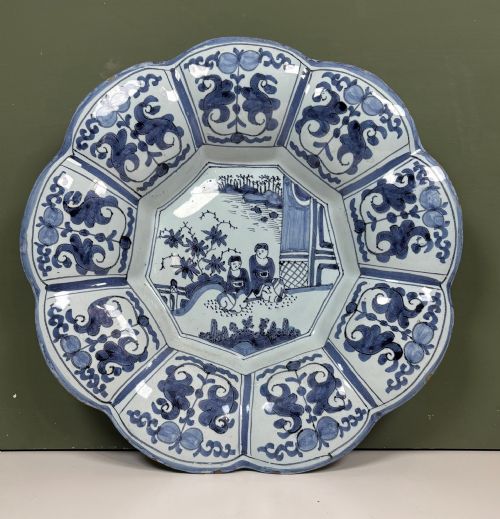
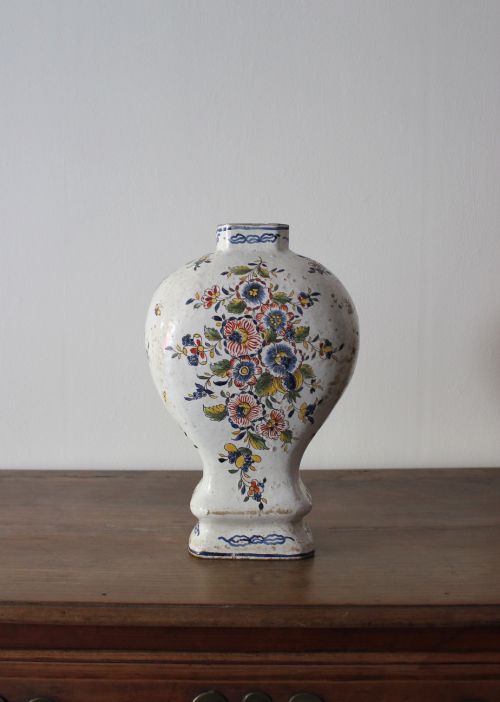
The objects most frequently met here date from the eighteenth century, taking the form of blue and white chargers, lidded vases and polychrome dishes. Makers adopted styles ranging from Dutch Baroque to Chinoiserie and Kraak influences, painting scenes directly onto an opaque white surface.
How they were made
Potters shaped earthenware bodies and coated them in a metallic tin glaze that provided a smooth, opaque white ground for painting. Cobalt pigment and cobalt oxide supplied the deep blue colour seen on the majority of pieces, while polychrome examples incorporated additional mineral colours.
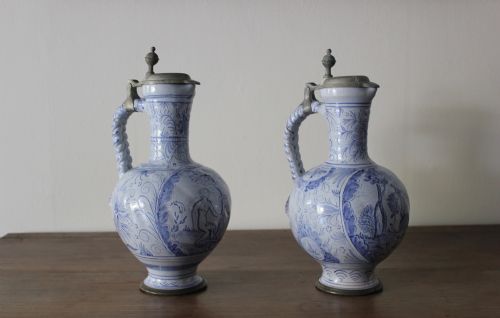
Painters applied designs by hand directly onto the unfired or biscuit-fired glaze, absorbing the pigment before a final kiln firing fused the decoration into the surface. Selected utilitarian forms also integrated functional metal components such as pewter lids and brass fixtures.
Listings span the 17th, 18th and 19th centuries, utilising tin-glazed earthenware, ceramic, cobalt pigment and brass.
What varies in quality
Quality rests upon the crispness of the hand-painted brushwork and the clarity of the cobalt pigment against the white tin ground. Finer examples display confident lines and balanced composition, particularly on complex pictorial subjects like architectural plaques or figurative chargers.
The survival of the original glaze and the integrity of the earthenware body distinguish superior items from heavily restored or damaged examples. Pieces retaining matching lids or complete sets, such as pairs of vases and groups of tiles, command greater interest.
The Dutch Tin Glaze Glossary
- Tin-Glazed Earthenware
- Pottery fired from clay and coated with a metallic glaze containing tin oxide to create an opaque white surface.
- Charger
- A large decorative plate intended for display on a wall or dresser rather than for daily dining.
- Polychrome
- Decoration utilising multiple colours in addition to the standard blue and white palette.
- Kraak Style
- A Dutch interpretation of sixteenth-century Chinese porcelain designs characterised by panelled borders and central motifs.
- Bough Pot
- A specialised vessel pierced with holes designed to hold cut stems or flowering branches indoors.
- Apothecary Jar
- A cylindrical or bulbous container historically utilised in pharmacies to store medicinal herbs and dry preparations.
Dutch Tin Glaze: Frequently Asked Questions
How were apothecary jars used?
Apothecary jars held dried herbs, ointments and medicinal compounds in seventeenth and eighteenth-century dispensaries.
Their tin-glazed surfaces protected contents from moisture while painted labels identified the specific contents stored inside.
What is a puzzle jug?
Puzzle jugs functioned as drinking vessels with perforated necks that defied straightforward attempts to consume the liquid.
Drinkers had to cover concealed holes or suck through specific spouts to drink without spilling the contents down their front.
How do I care for tin glaze?
Tin-glazed earthenware requires gentle handling because the ceramic body and surface glaze remain vulnerable to impact.
Keep pieces away from moisture and harsh cleaning agents to protect the historic surface from staining and degradation.
How are periods told apart?
Seventeenth-century pieces often reflect heavy Kraak influences and robust forms, whereas eighteenth-century items embrace lighter blue and white floral or figurative scenes.
Nineteenth-century examples introduce distinct potting weights and altered cobalt tones that signal later production methods.