
Dressing Glass Mirror
A dressing glass mirror focuses light and reflects the room, moving easily on a swing pivot or standing tall on floor frames.
Dressing Glass Mirror
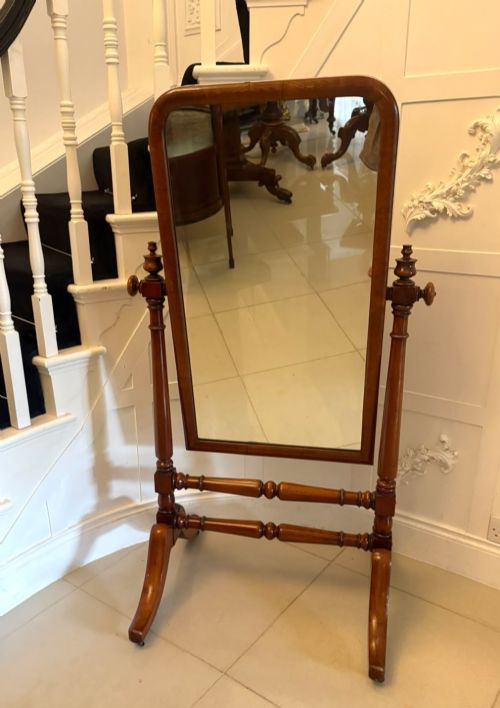
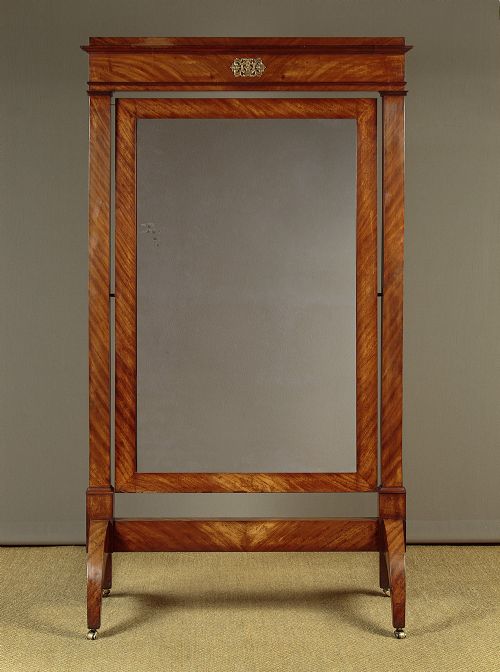
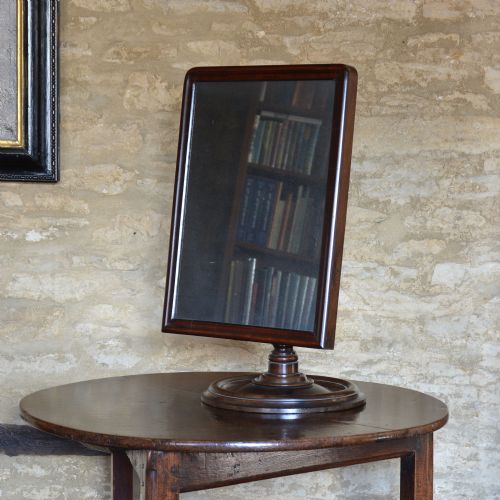
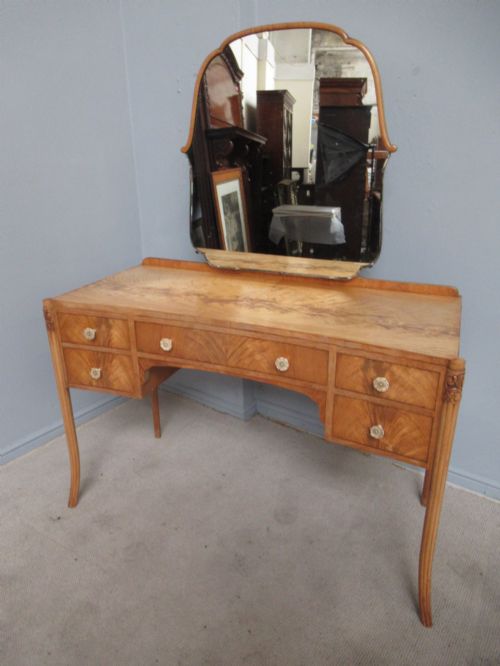
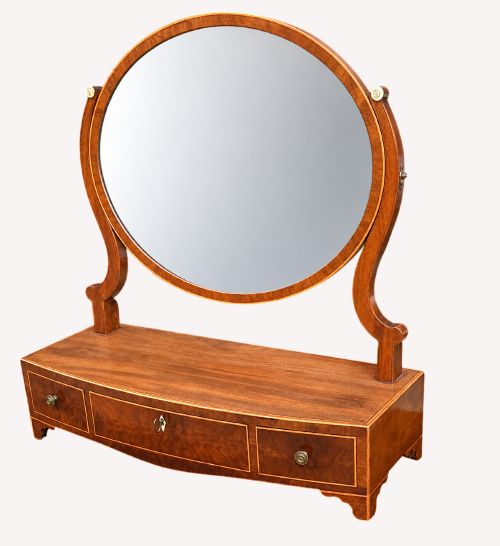
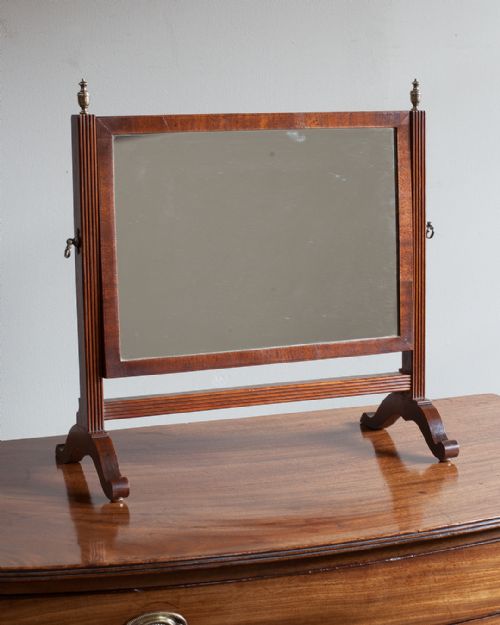
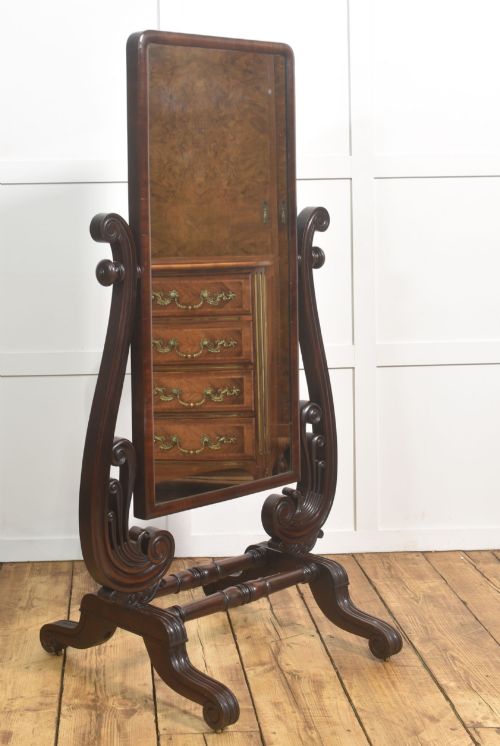
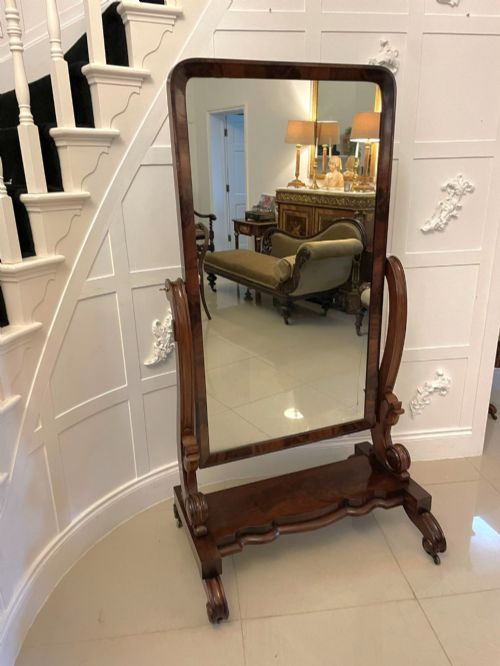
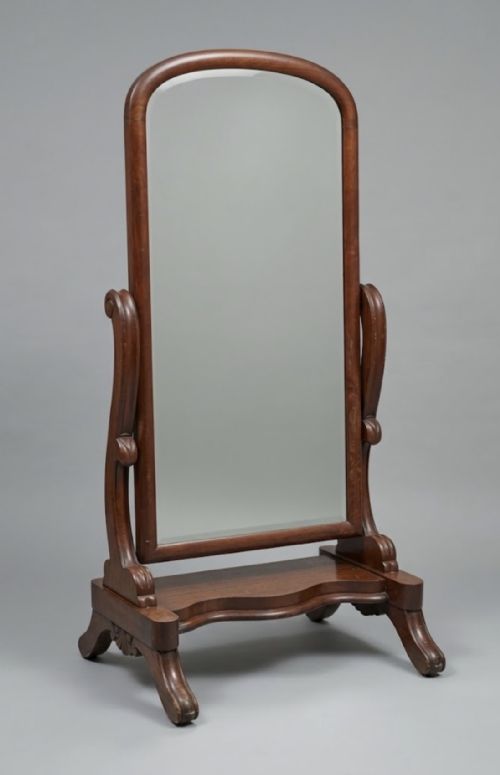
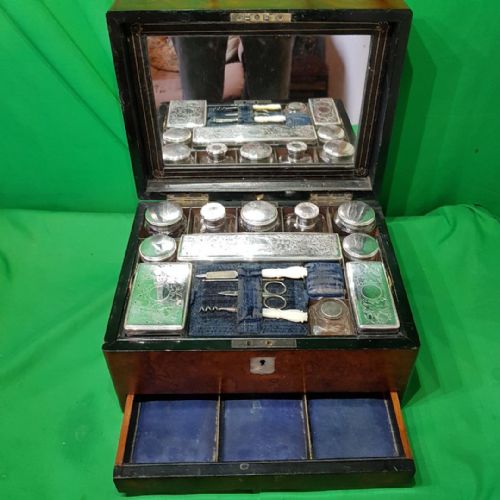
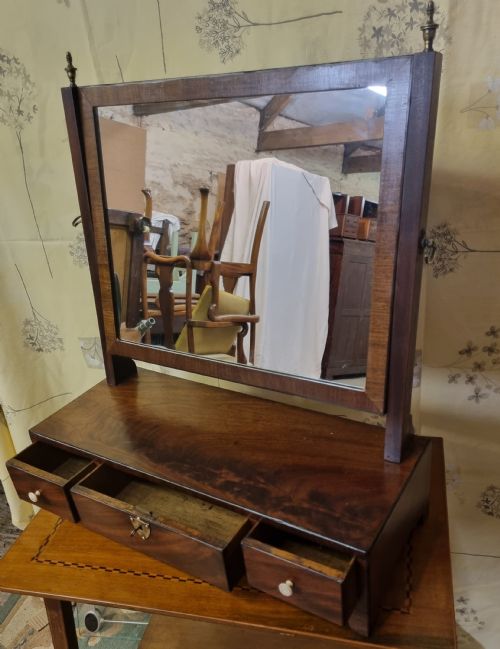
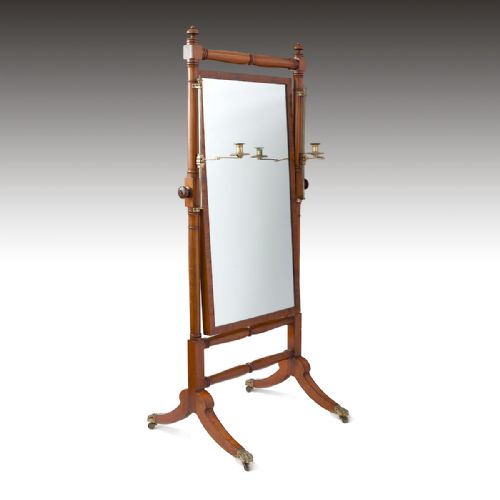
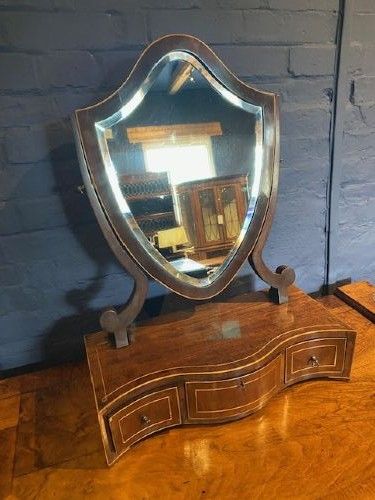
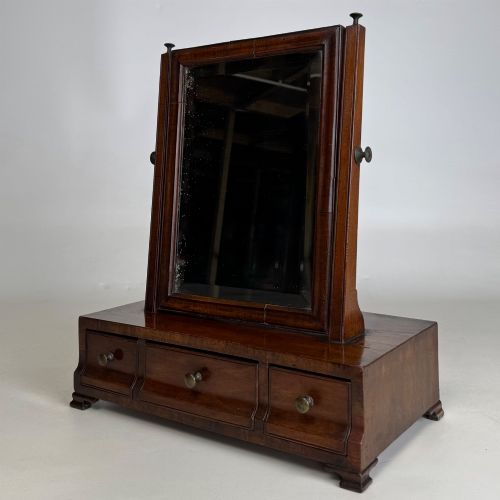
A dressing glass mirror satisfies the need for a movable looking glass in a bedchamber or dressing room, taking forms from small table top toilet glasses to grand floor standing cheval frames. The versions you meet most often on this page are mahogany swing mirrors from the Georgian and Victorian eras, alongside taller floor standing cheval mirrors.
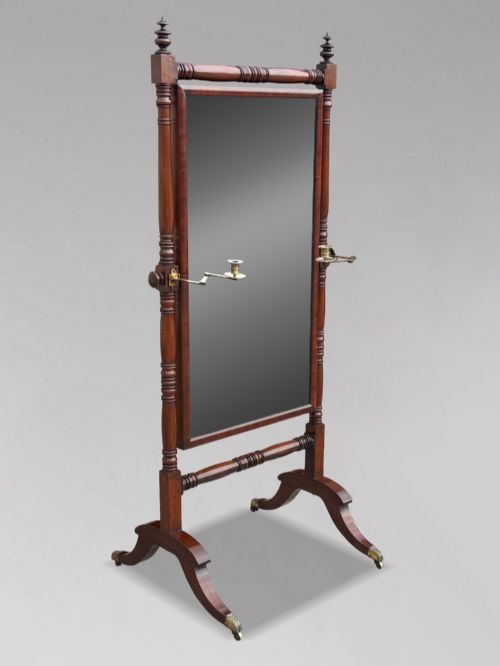
The objects span centuries of domestic life, moving from walnut and laburnum pieces of the early period through rich Regency mahogany into Edwardian oak and 1930s Venetian glass. Table mirrors frequently incorporate small storage drawers beneath the frame, while larger cheval examples pivot between heavy upright posts to adjust the angle for dressing.
How they were made
Cabinet makers built these frames using dense timbers like mahogany, walnut and oak, often shaping them with curved serpentine fronts or slender boxwood stringing. Glass plates sat within rebated wooden mouldings, supported by brass swing pins, swan neck handles and decorative finials.
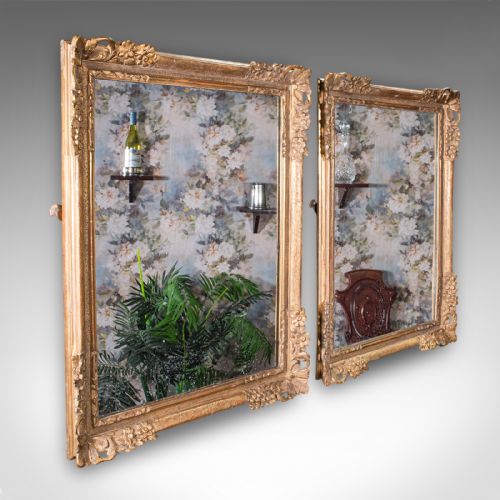
Giltwood and gesso techniques brought bright ornamentation to pier and dressing glasses through carved plaster applied to wooden bases and finished with gold leaf. Secondary woods like oak lined the small drawers of table top toilet glasses.
Periods represented stretch from the 17th century through Georgian, Regency and Victorian eras to 1930s modernism.
What varies in quality
The distinction between ordinary utility items and exceptional pieces rests upon the crispness of the cabinet work, the depth of the timber figuring, and the integration of original hardware. Well chosen flame mahogany veneers, finely cut dovetails on drawer boxes, and substantial brass mounts separate master workshops from provincial joinery.
Proportion dictates presence, with superior pieces showing balanced height to width ratios and refined turning on the upright supports. The survival of original mirror glass, retaining its soft speckling and bevelled edges, preserves the authentic character of the piece.
Heal & Sons·Gillow
The Dressing Glass Mirror Glossary
- Cheval mirror
- A large floor standing dressing glass mounted on a vertical frame with side pivots allowing it to tilt. These tall mirrors appeared in bedrooms to show the full figure.
- Toilet mirror
- A smaller swing glass designed to sit upon a dressing table or chest. Many feature small box bases containing trinket drawers.
- Giltwood
- Timber carved and coated with a thin layer of gold leaf over a gesso ground. This bright finish suited formal reception spaces and grand dressing rooms.
- Pier glass
- A tall narrow mirror designed to hang on the wall between windows or above a console table. They frequently served dual purposes as dressing glasses.
- Swing mirror
- A glass plate suspended within a frame on horizontal pivots that permit tilting. The mechanism relies on brass screws or pins set into upright arms.
Dressing Glass Mirror: Frequently Asked Questions
What is a dressing glass mirror?
A dressing glass mirror is a pivoting looking glass designed for personal grooming, appearing either as a compact table top toilet mirror with small storage drawers or as a tall floor standing cheval frame.
Cabinet makers produced these pieces across several centuries in woods like mahogany, walnut and oak to suit the fashion of each successive period.
How do I date a dressing glass mirror?
Dating relies on timber selection, structural joinery and edge treatments of the glass plate. Georgian examples often display fine mahogany framing with oak lined drawer boxes, while Victorian pieces lean towards heavier proportions and burr walnut.
Looking at the backboards, screw types and hardware fastenings provides further clues to the original period of manufacture.
Where should I place a dressing glass mirror?
These mirrors work best in bedrooms and dressing areas where their pivoting frames allow convenient adjustment for daily use. Table top versions sit securely on chests of drawers or dedicated dressing tables, while tall cheval mirrors stand directly on the floor.
Positioning them near natural light sources helps illuminate the glass without casting harsh shadows.
Are the mirror plates original?
Many older pieces retain their original glass plates, which often display subtle ageing, slight foxing and hand bevelled edges. Replacement glass frequently looks brighter and lacks the soft distortion characteristic of antique silvering.
Examining the rear of the frame reveals how the glass plate is secured and whether the backing boards remain undisturbed.