


Late Victorian Standing Mirror
A late victorian standing mirror brings upright glass and timber frames together to reflect dressing and hallway spaces with period proportion.
Late Victorian Standing Mirror
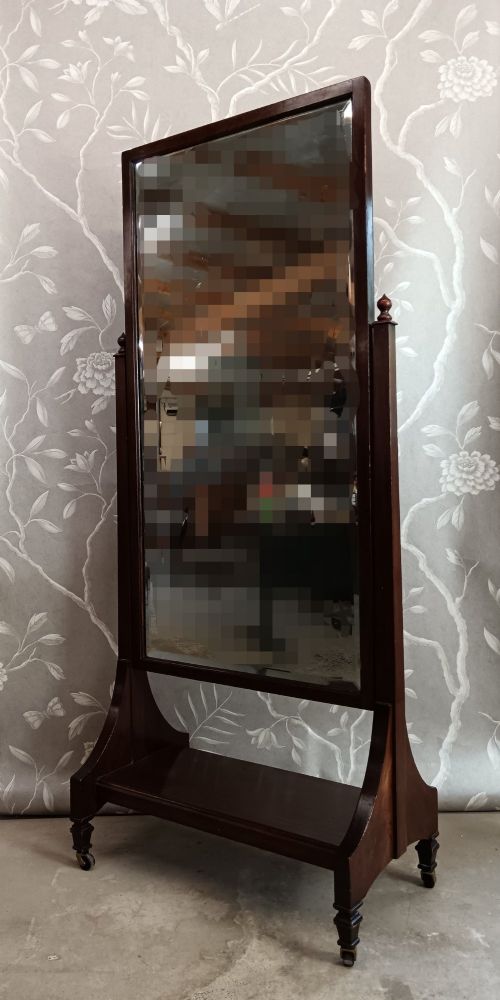
A late victorian standing mirror is an upright glass panel designed to show the full figure or dressing height, frequently encountered as a freestanding cheval mirror or an adjustable dressing glass resting on timber legs. These pieces emerge from the late nineteenth century, spanning mahogany and rosewood constructions with swing frames supported by upright standards.
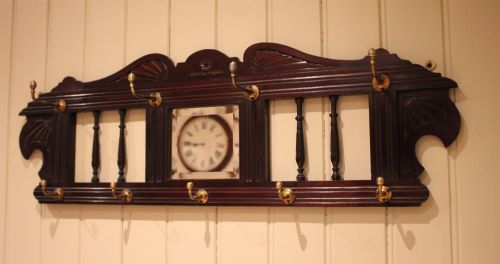
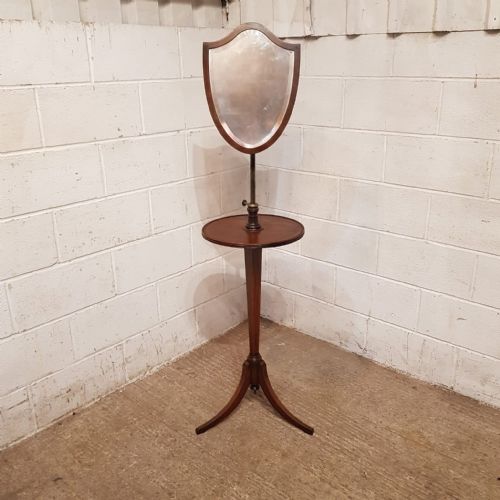
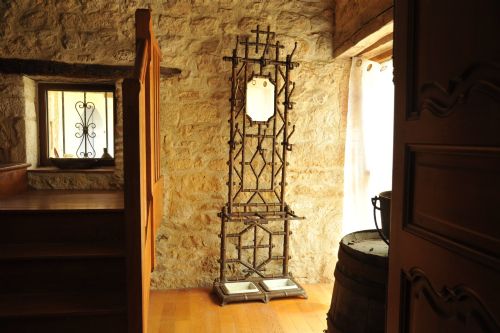
Buyers seeking this phrase encounter pivoting cheval mirrors alongside related upright forms featuring integrated glass, such as shaving stands, hall stands, and dressing table mirrors. The proportions reflect late Victorian domestic interiors, where tall reflective surfaces served bedrooms, dressing rooms, and entrance hallways alike.
How they were made
Makers utilised dense timbers such as mahogany, rosewood, and oak for the structural frames, often joining them with traditional cabinetmaking techniques to support the heavy weight of the glass. Brass fittings, including pivoting screws and candle sconces, provide functional movement and decorative contrast against the polished wood.
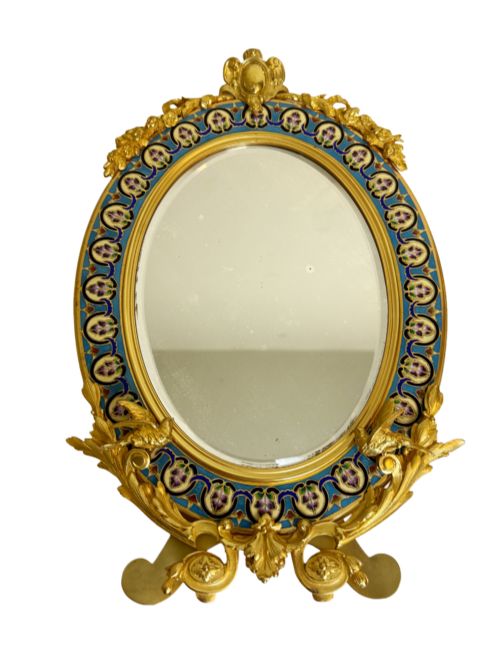
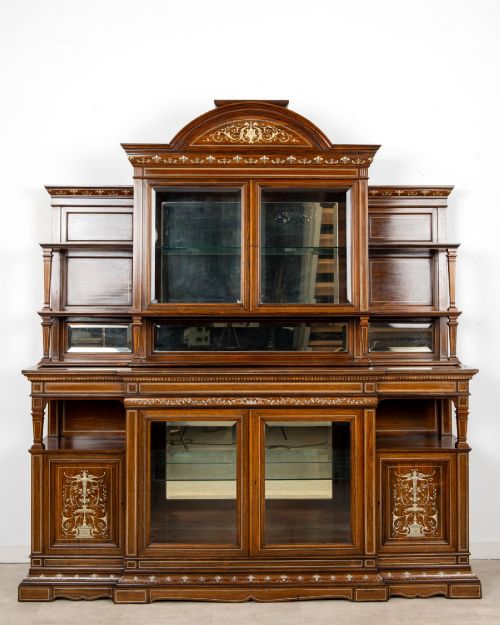
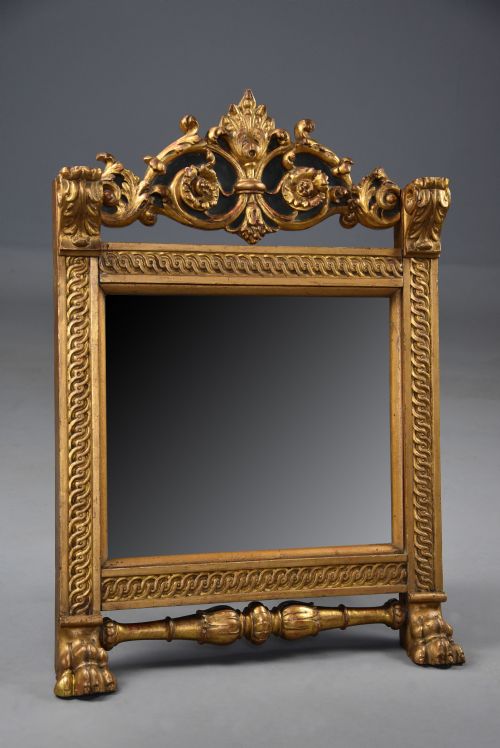
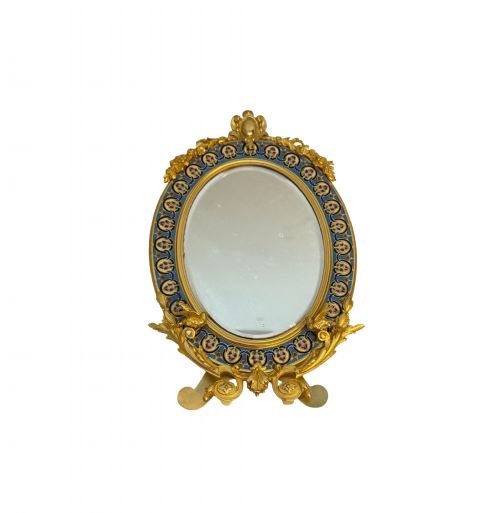
Glass panels were bevelled at the edges to catch the light, set securely into rebated wooden frames or held by cast bronze, gilt bronze, and champleve mounts. Carved ornament, giltwood details, and inlaid marquetry frequently embellish the crests and uprights.
What varies in quality
The standard of timber selection and the crispness of carved or cast ornamentation dictate the distinction between workshops, where finer examples display deeply figured mahogany or rosewood alongside meticulously chased bronze and champleve enamel. Subtlety in the proportions of the upright standards and the stability of the pivoting mechanism show the maker's underlying design competence.
The survival of original silvered glass and unpolished brass hardware preserves the integrity of the piece, while the weight and balance of the frame determine how smoothly the mirror swings and holds its adjusted angle.
Collinson and Lock·Edwards and Roberts·Henry Matthews
The Late Victorian Standing Mirror Glossary
- Cheval mirror
- A large freestanding mirror supported by a frame with four legs and vertical posts that allow the glass to swing. It is designed for full-length viewing in bedrooms and dressing rooms.
- Champleve
- An enamelling technique where troughs are dug into a metal surface and filled with vitreous paste before firing. This decorative method appears on brass and bronze mirror frames.
- Bevelled glass
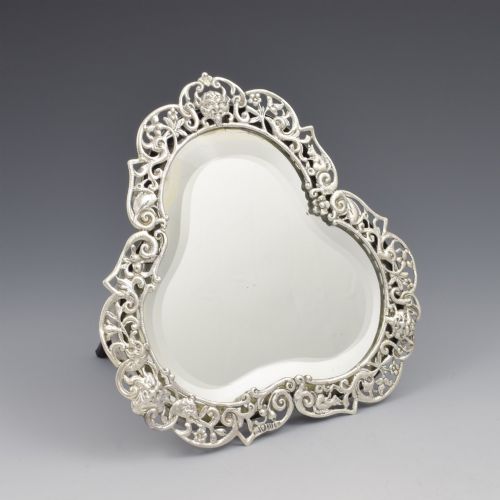
- Glass with edges cut and polished to an angled slope, creating a framed prismatic border. It is typical of better quality nineteenth-century mirrors.
- Easel mirror
- A smaller mirror supported by a hinged prop or stand at the back, intended for placement on a dressing table or console.
Late Victorian Standing Mirror: Frequently Asked Questions
Where should I place a standing mirror?
These tall mirrors suit bedrooms, dressing areas, and spacious hallways where natural light can reflect across the room. Positioning them opposite a window maximises the illumination.
Ensure the floor surface is level so the four feet rest evenly, preventing undue stress on the upright standards and joints.
How do I identify a late Victorian mirror?
Look for characteristic timber choices like mahogany and rosewood combined with bevelled glass plates and brass pivoting hardware. Stylistic details often mix Victorian proportions with aesthetic movement or revival ornament.
Construction methods such as hand-cut dovetails on associated drawers and cast brass screw mounts help confirm the nineteenth-century date of manufacture.
Can the mirror glass be replaced?
Original glass frequently shows light foxing or silver degradation, which collectors accept as a sign of age. Replacement is possible but changes the historic character of the piece.
If replacement is necessary, a glazier can cut new glass to fit the original wooden rebate behind the surviving frame and stops.