
Dark Oak Kitchen Table
A dark oak kitchen table brings deep grain and sturdy timber into daily service, anchoring the room with enduring utility.
Dark Oak Kitchen Table
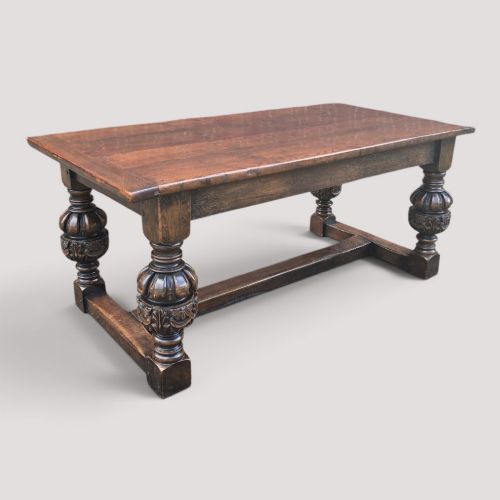
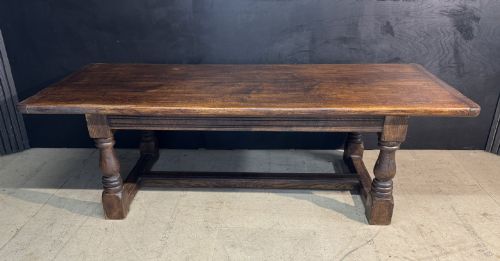
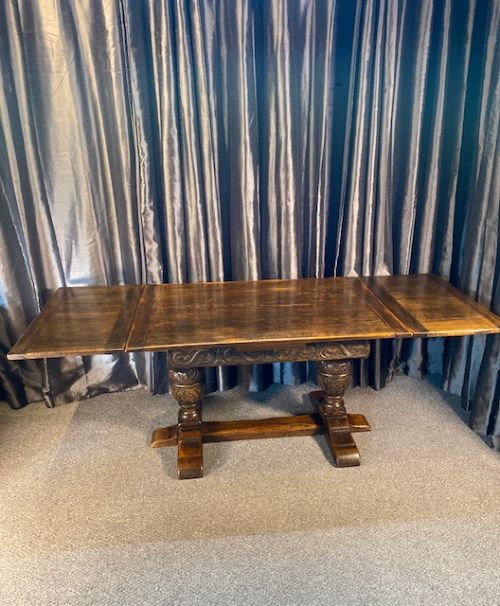
When you search for a dark oak kitchen table, you encounter substantial dining boards, extending refectories and rustic farmhouse surfaces built for heavy daily use. The pieces span centuries from the seventeenth up to the twentieth, reflecting shifting domestic habits from large hall feasts to compact family meals.
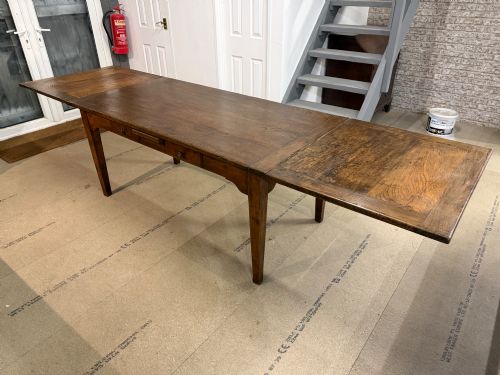
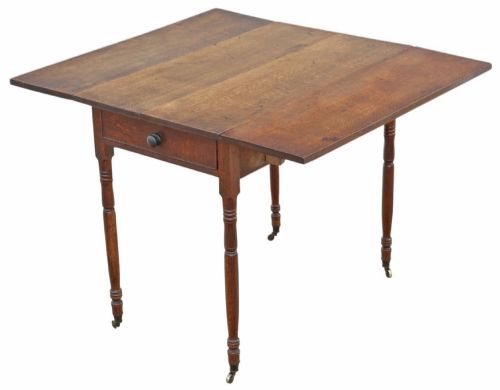
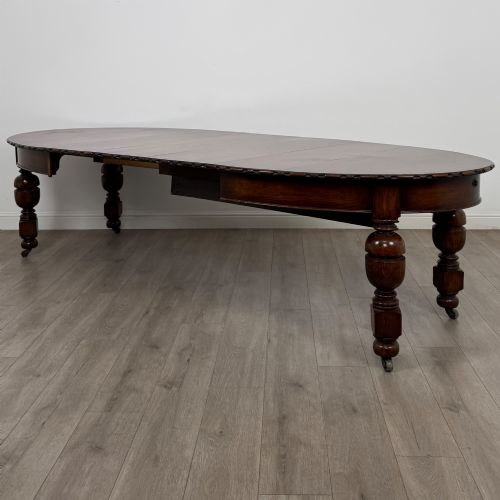
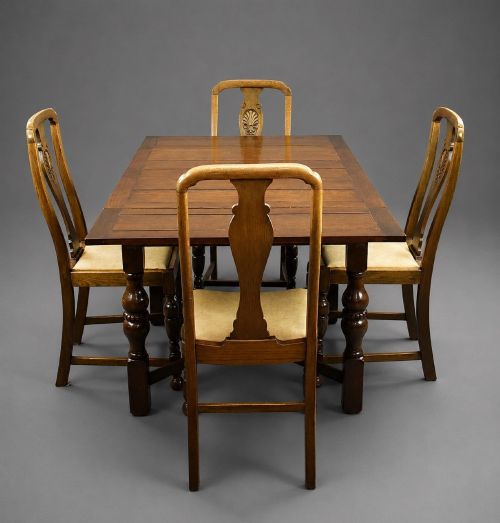
You are most likely to meet twentieth-century draw-leaf and refectory designs alongside nineteenth-century examples and eighteenth-century Georgian plank tops. Forms range from simple drop-leaf Pembroke tables to grand eight-seater refectories and French country variants fitted with drawers.
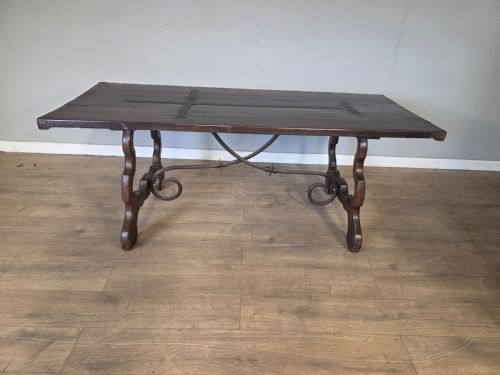
Makers and workshops drew on vernacular traditions across England, Wales and France, producing versatile boards suited to both formal dining and everyday kitchen preparation. Stylistic revivals such as Jacobean, Tudor and Arts and Crafts heavily influence the dark timber surfaces seen today.
What varies in quality
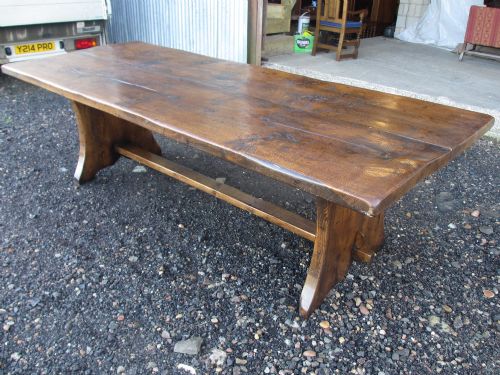
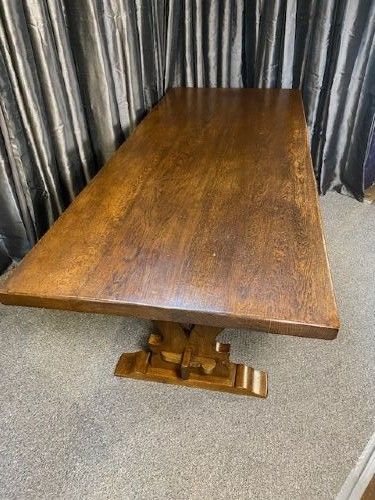
Quality rests in the integrity of the timber, particularly whether a top uses a single wide plank of oak or elm rather than multiple joined sections. The thickness of the timber and the tightness of the joinery determine how well a table withstands centuries of movement.
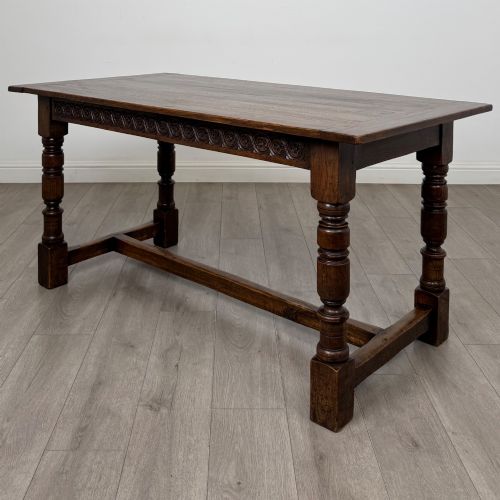
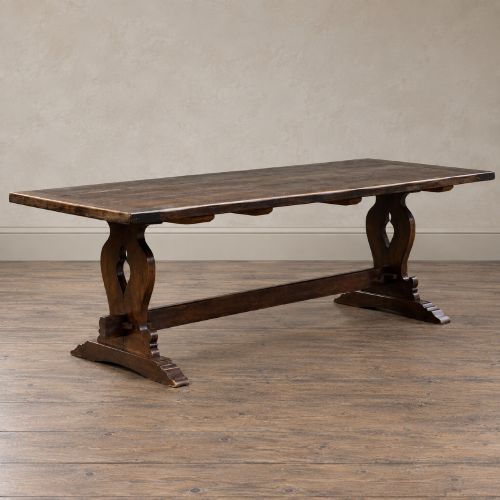
The refinement of hand-carving on trestle ends and friezes separates standard production from finer workshop pieces. Original mechanics in extending draw-leaf tables also dictate the level of craftsmanship, showing smooth operation without sagging joints.
Stylistic influences span Georgian simplicity, French provincial warmth, Arts and Crafts restraint and heavy Jacobean revival carving.
The Dark Oak Kitchen Table Glossary
- Refectory table
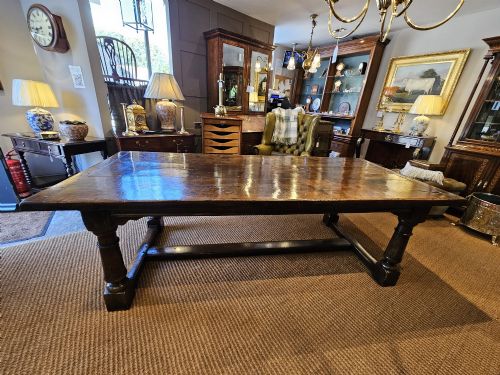
- A long, narrow dining table traditionally used in monastic dining halls and later adapted for domestic farmhouse use. These boards typically feature substantial legs connected by low stretchers.
- Draw-leaf table
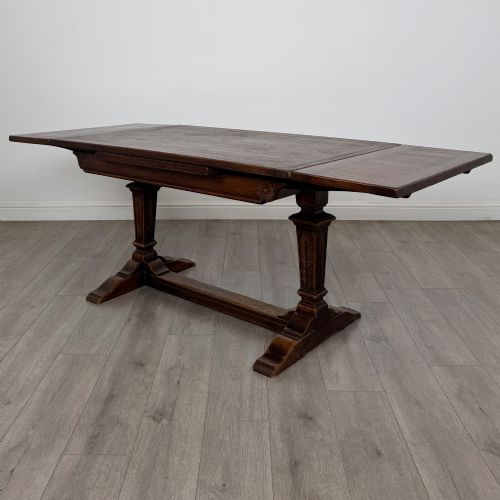
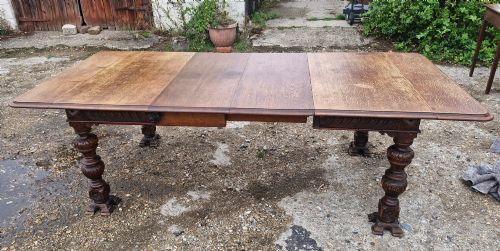
- An extending dining table with two sliding leaves stored beneath the main top that pull out to lengthen the surface. This clever mechanism allows the table to expand without removing the centre boards.
- Plank top
- A table surface constructed from boards running the full length of the table rather than smaller parquet sections. Single plank tops in oak or elm are particularly prized for their unbroken grain.
- Trestle ends
- Support structures placed at either end of a table rather than four individual corner legs. They often feature shaped timber or central posts joined by a robust stretcher beam.
Dark Oak Kitchen Table: Frequently Asked Questions
How do I clean a dark oak kitchen table?
Wipe the surface with a damp cloth and mild soap, avoiding harsh chemical cleaners that strip the historic finish. Dry the timber thoroughly afterwards to prevent moisture damage.
Applying a natural beeswax periodically feeds the dark oak and maintains a soft sheen without building up a sticky residue. Regular gentle care preserves the rich colour of the grain.
Are these tables suitable for daily family use?
These tables were originally built for hard domestic service, making them exceptionally durable for modern kitchens and dining rooms. Solid oak handles daily meals, homework and gatherings with ease.
Heavier refectory and farmhouse formats provide great stability, while extending versions adapt readily to different numbers of guests. The robust timber naturally conceals minor everyday marks.
How do I tell an 18th century table from a 20th century revival?
Examine the underside and joints for hand-tool marks, peg construction and timber shrinkage that indicate older hand-cut manufacturing methods. Eighteenth-century pieces show authentic wear patterns and patination accumulated over generations.
Twentieth-century revival pieces often display more uniform machining, standardised hardware, and mechanical consistency in their extending leaves. Style labels like Jacobean Revival frequently point to later reinterpretations.
What is the difference between a refectory and a farmhouse table?
Refectory tables typically feature long, narrow proportions supported by trestle ends or recessed legs connected by heavy stretchers. They descend from monastic dining traditions and emphasise linear strength.
Farmhouse tables often include four corner legs, sometimes accompanied by drawers for storage, reflecting domestic workspace utility. Both styles utilise heavy oak but serve slightly different architectural roles.