
Oak Farmhouse Kitchen Table
When choosing an oak farmhouse kitchen table, you are selecting a hard-wearing domestic anchor built for daily family life and heavy culinary preparation.
Oak Farmhouse Kitchen Table
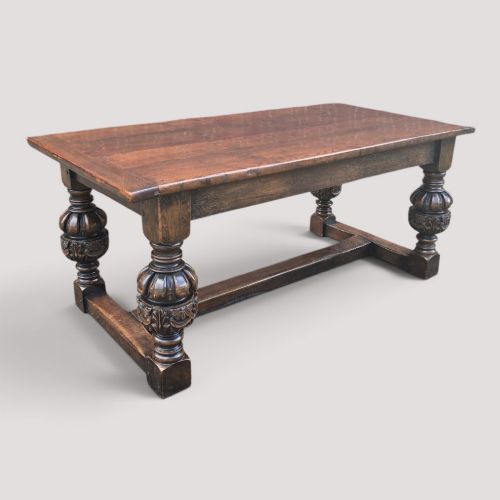
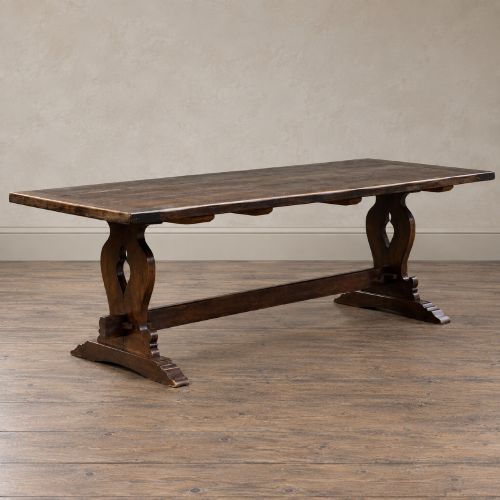
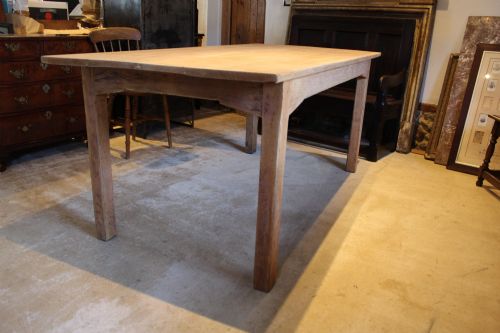
An oak farmhouse kitchen table is a heavy, functional board resting on sturdy timber framing, designed originally for domestic work and communal meals in rural homes. When searching this phrase, buyers encounter examples spanning from the seventeenth century through the early twentieth century, showing both English and French regional characteristics.
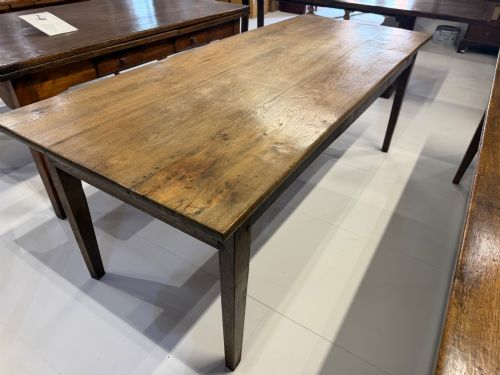
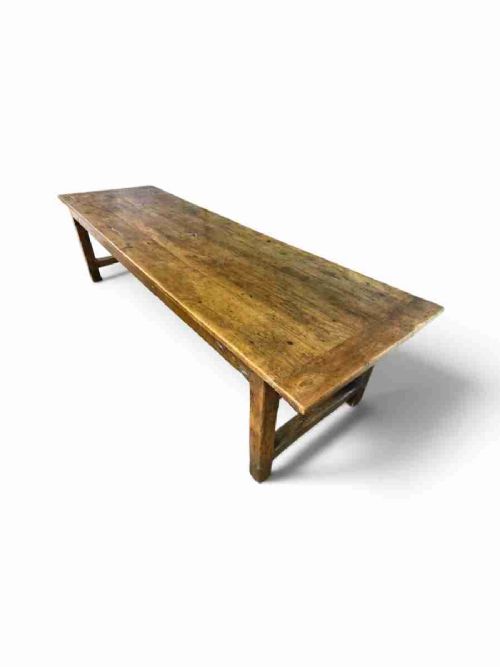
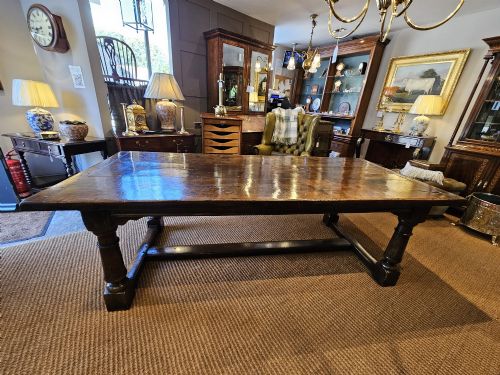
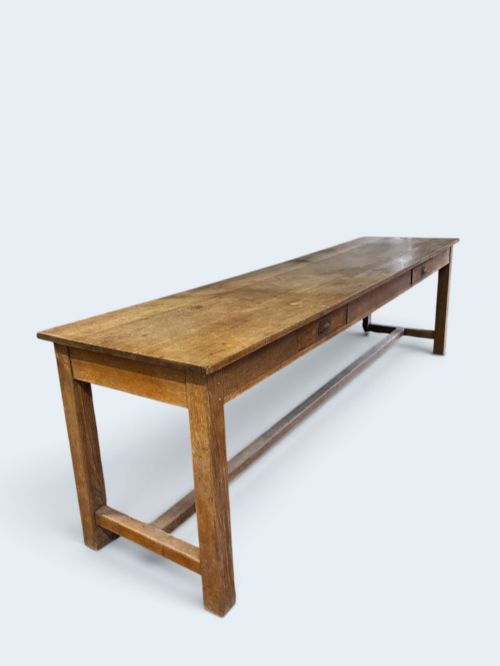
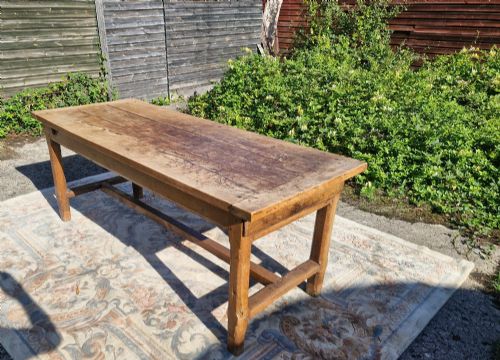
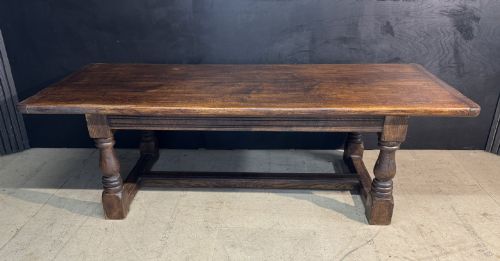
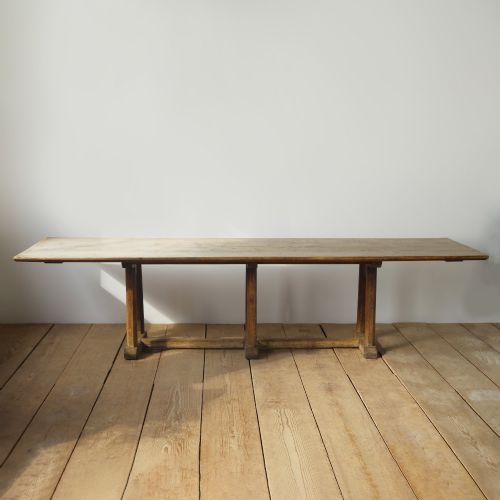
The version most commonly met on this page is the nineteenth-century or early twentieth-century dining and refectory format. These pieces frequently feature substantial plank tops, linear stretcher bases, and occasional utilitarian side drawers intended for cutlery and linens.
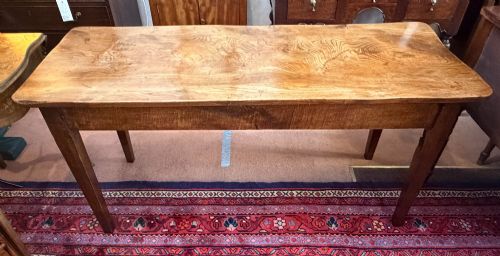
Makers utilised resilient regional hardwoods, predominantly oak alongside beech, fruitwood, and pine, resulting in surfaces that display deep patination built up through generations of use. Styles range from restrained Georgian and Victorian geometries to rustic French provincial interpretations.
Materials and construction methods
Construction relies heavily on solid oak timber for the primary tops and structural frames, frequently paired with secondary woods like beech or pine for internal framing and drawer construction. Joinery incorporates pegged mortise and tenon joints, providing the rigid stability required for heavy kitchen tasks.
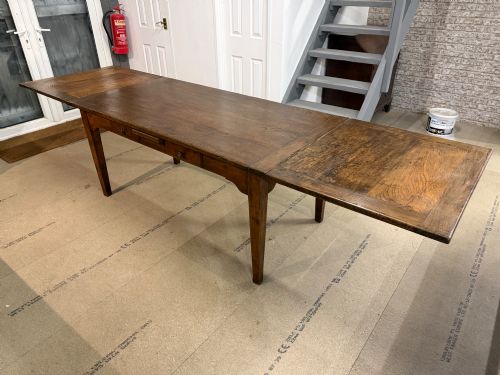
Surface treatments depend largely on historical context, utilising natural wax finishes or traditional soap washing to protect the timber while preserving open grain textures. Iron and brass hardware appear on pieces featuring functional side drawers or extending mechanisms.
Several listings retain old drawer contents, hidden side slides, or deep knife grooves testifying to centuries of stubborn dough rolling.
Assessing quality and character
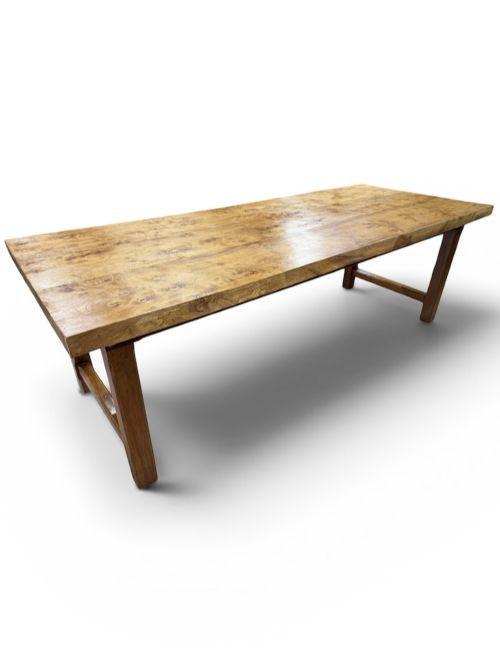
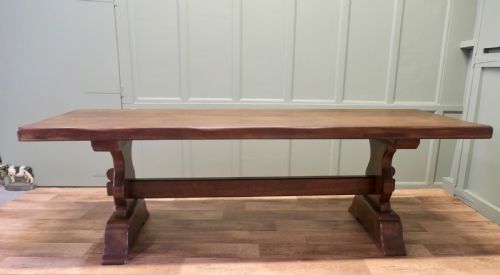
The distinction between ordinary utility tables and superior examples lies in the integrity of the timber selection and the retention of original surfaces. Tables featuring thick, single-board oak plank tops demonstrate a higher grade of craftsmanship than those constructed from multiple narrow strips.
Proportion and structural balance also separate finer pieces from standard workshop output. Desirable tables combine heavy, unwarped tops with tight joinery, minimal historic timber replacement, and a deep, untouched patina earned through continuous domestic service.
The Oak Farmhouse Kitchen Table Glossary
- Refectory table
- A long dining table historically used in communal dining halls and large country kitchens. These forms are characterised by long rectangular proportions supported by substantial legs united by floor-level stretchers.
- Plank top
- A table surface constructed from wide boards laid side by side rather than a single sheet of manufactured timber. This method allows the wood to move naturally with seasonal humidity changes.
- Stretcher
- A horizontal wooden brace connecting the legs of a table to provide lateral rigidity and strength. In country tables, these often double as footrests.
- Patina
- The surface sheen and colour depth developed on wood over decades of handling, cleaning, and exposure to light. It serves as a visual indicator of age and continuous use.
- French provincial
- A regional style originating from rural France outside Paris, reflecting local craftsmanship traditions and practical domestic requirements. These pieces often exhibit softer lines and lighter wood tones compared to formal English counterparts.
Oak Farmhouse Kitchen Table: Frequently Asked Questions
How do I care for an antique oak table?
Maintain the wood by applying a natural beeswax finish periodically to nourish the dry timber and protect against moisture rings.
Avoid placing the table near direct heat sources or in extreme humidity fluctuations to prevent the oak planks from splitting.
Were these tables actually used for food preparation?
Many country tables served as central work surfaces for kneading bread, butchering, and general kitchen prep before fitted cabinetry became common.
Evidence of this utilitarian past often survives as knife marks, staining, and wear patterns embedded directly into the oak surface.
How do I distinguish 18th century from 19th century tables?
Earlier eighteenth-century pieces typically display hand-planed surfaces, pegged joinery without modern adhesives, and distinct tool marks left by pit saws.
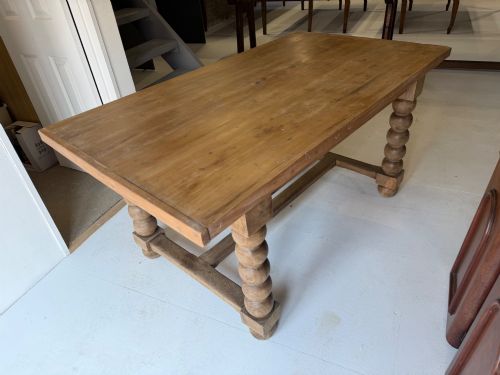
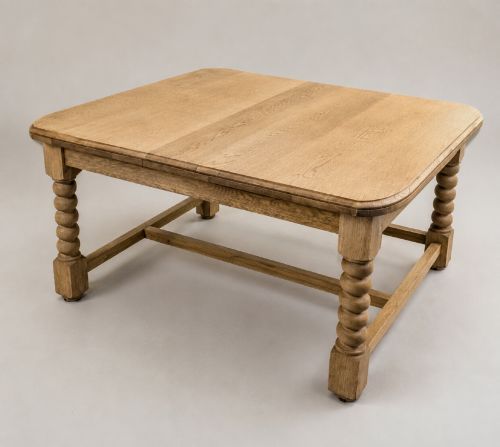
Nineteenth-century examples frequently incorporate standardised milling techniques, sometimes featuring extending mechanisms or turned legs characteristic of Victorian or Edwardian production.
What is the difference between English and French farmhouse tables?
English examples often feature darker oak timber, heavier plank tops, and simple stretcher frames designed for austere practicality.
French provincial versions frequently utilise fruitwood or lighter oak, occasionally incorporating end drawers and softer decorative shaping on the aprons.