
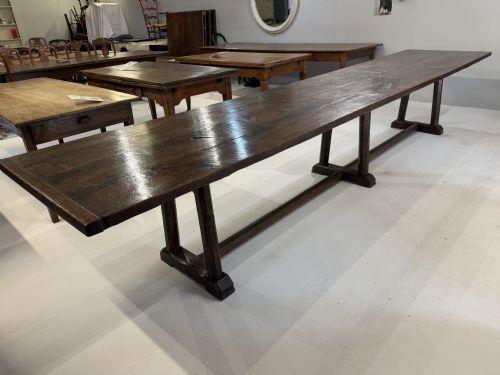
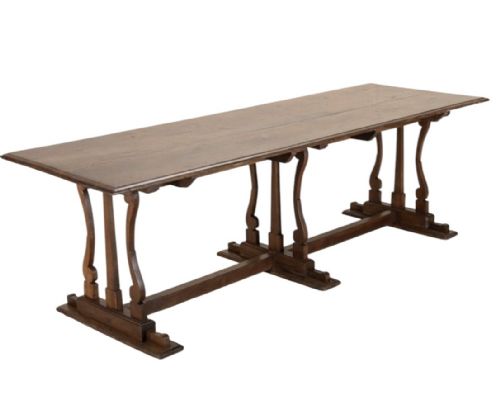


Rustic Oak Monastery Table
A rustic oak monastery table brings substantial timber and grounded presence to a dining space, offering long surfaces built for daily gatherings.
Rustic Oak Monastery Table
When you search for a rustic oak monastery table, you encounter long dining surfaces originating from periods spanning the seventeenth century through to the early twentieth century. These pieces encompass English country forms, French provincial designs, and Gothic revival influences, often described interchangeably as refectory or farm tables.
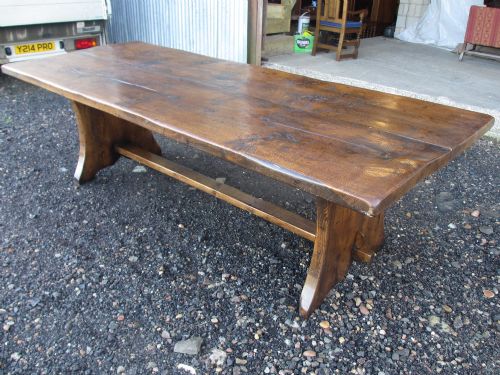
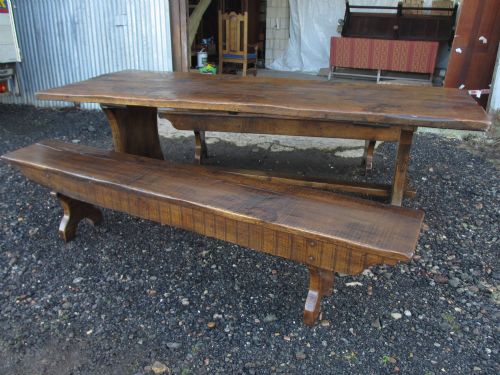
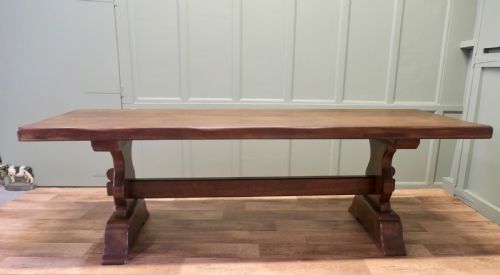
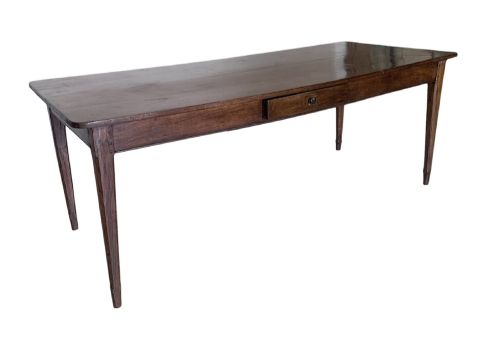
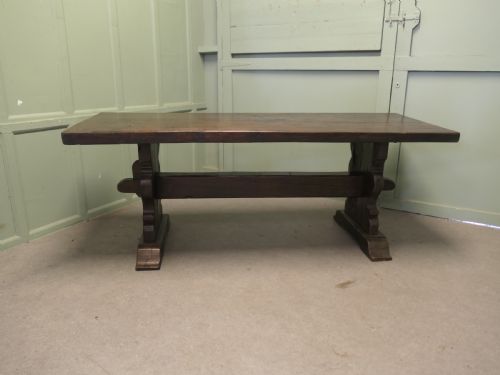
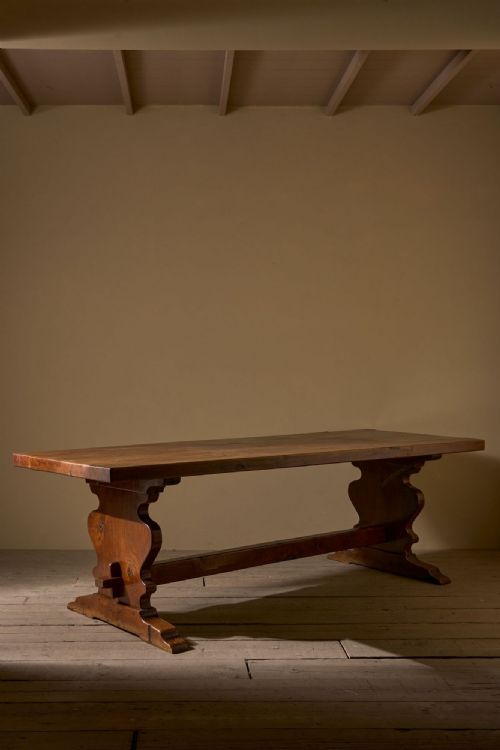
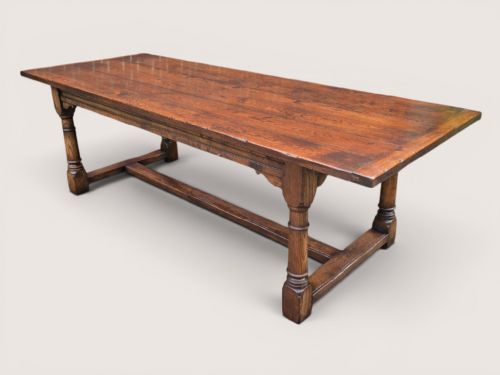
The selections on this page lean heavily towards nineteenth-century French and English examples, alongside Edwardian and earlier seventeenth-century pieces. You will find items constructed with plank tops and trestle ends, sometimes accompanied by matching bench forms or featuring bleached finishes.
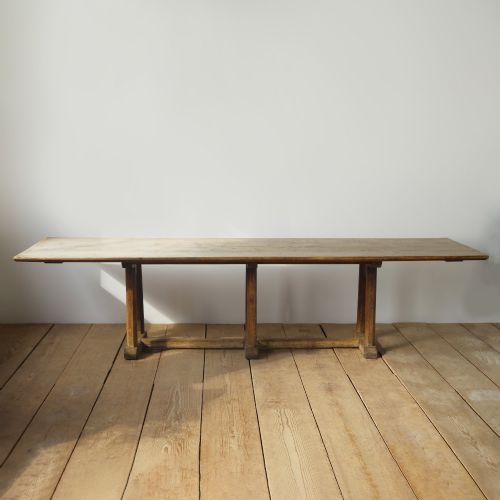
Forms vary from narrow seventeenth-century trestle bases to large nineteenth-century examples capable of seating twelve people comfortably. The materials primarily centre on solid oak, occasionally paired with elm, walnut, pine, iron, or brass details.
Materials and construction methods
Construction relies fundamentally on solid oak timber, frequently utilised in thick multi-plank top configurations such as two or three board arrangements. Carpenters joined these substantial surfaces to robust trestle ends or refectory frames designed to support heavy daily use.
Secondary materials like elm and walnut appear alongside the primary oak timber, while iron and brass provide structural bracing or fixings. Surfaces display historical patination, plain waxed treatments, or lighter bleached oak appearances depending on the period and regional workshop traditions.
Some tables arrive bearing centuries of spilled wine and honest knife marks, saving you the trouble of making them look lived-in.
Evaluating quality and proportion
Quality rests in the integrity of the timber selection, particularly the thickness and width of the planks forming the top. Tables featuring untouched historical surfaces and substantial structural timbers hold greater authority than heavily altered examples.
Proportion and stance separate standard pieces from exceptional ones, as the relationship between the length of the top and the weight of the trestle ends dictates visual balance. Original fixings and honest integration of period elements elevate the standing of a dining table.
The Rustic Oak Monastery Table Glossary
- Refectory table
- A long dining table originally built for monastic or communal dining halls. They typically feature elongated rectangular tops supported by trestle feet or sturdy legs connected by stretchers.
- Trestle ends
- Support structures placed at either end of a table rather than corner legs. They distribute weight evenly and allow maximum legroom along the length of the surface.
- Plank top
- A table surface constructed from individual boards joined edge to edge. Earlier pieces often utilise fewer, wider planks harvested from mature trees.
- Bleached oak
- Timber treated to lighten its natural colour. This finish appears on several twentieth-century and Edwardian interpretations.
- French provincial
- Furniture styles originating from French regions outside Paris. These pieces blend rustic utility with local craftsmanship traditions.
Rustic Oak Monastery Table: Frequently Asked Questions
How do I seat twelve people?
Look for large nineteenth-century or extended refectory formats measuring adequate length to accommodate multiple chairs down each side. Tables described as farm tables or monastery tables often provide the necessary proportions for larger dining parties.
Ensure you check the clearance beneath the trestle base or stretchers so chairs slide in comfortably between the end supports.
Are these tables strictly seventeenth century?
The listings span multiple eras, including seventeenth, eighteenth, and nineteenth centuries, alongside Edwardian and early twentieth-century interpretations. Genuine seventeenth-century examples feature distinct early construction methods and deep age patination.
Later nineteenth-century pieces often emulate these earlier Gothic and refectory styles while offering larger dimensions suitable for modern spaces.
What is a bleached oak finish?
Bleached oak involves treating the natural timber to achieve a lighter, scrubbed appearance. This finish lightens the heavy visual weight traditionally associated with dark brown oak furniture.
Pieces with this treatment often date from the Edwardian era or the early twentieth century and suit brighter interior settings.
Do these tables come with benches?
Certain listings include matching bench forms alongside the main dining table. These accompanying seats match the timber and period style of the primary surface.
Checking individual descriptions confirms whether benches form part of the specific dining set.