
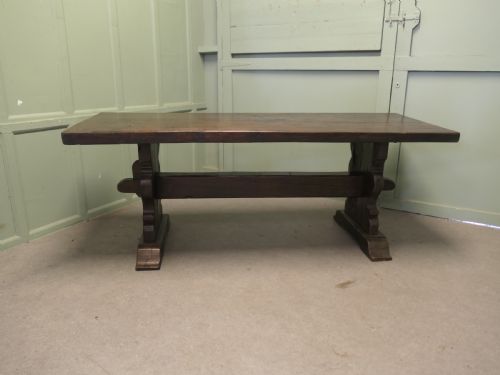
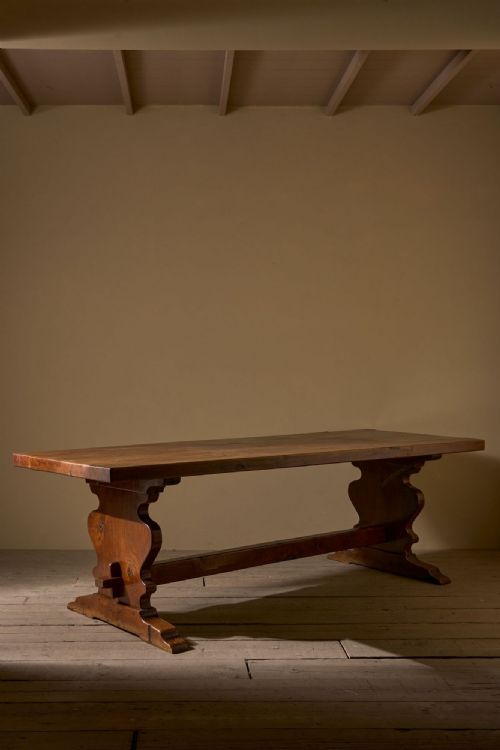


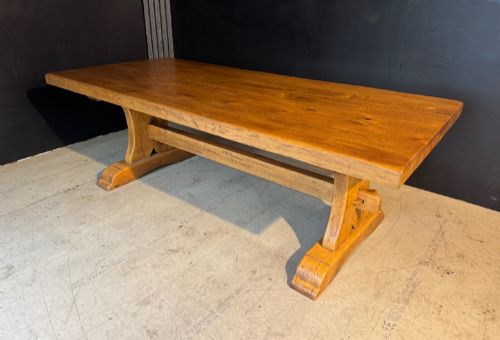


Pegged Oak Refectory Table
A pegged oak refectory table brings historic dining tradition straight into a modern room, offering sturdy construction and rich grain.
Pegged Oak Refectory Table
When you search for a pegged oak refectory table, you encounter substantial dining furniture rooted in centuries of craft tradition. The listings present pieces originating from the seventeenth century through to the nineteenth century and the year nineteen twenty.
The forms span rustic farmhouse designs, French provincial styles, and traditional seventeenth century formats. Solid oak forms the primary substance across these substantial dining tables.
Buyers most frequently meet nineteenth century and nineteen twenty interpretations alongside earlier seventeenth century examples. Each variation delivers a heavy, functional surface designed for communal gatherings.
Distinctions in quality
Quality separates primitive utility pieces from finer stylistic expressions through the depth of the timber grain and the precision of the pegged joinery. Heavy plank tops display varying degrees of natural weathering and surface patina accumulated over generations.
Proportion and the integrity of the original trestle base dictate the desirability of the piece. Tables retaining their early structural fabric command closer attention from those seeking historical authenticity.
The listed pieces span the seventeenth century through to nineteen twenty, featuring solid oak construction across farmhouse and trestle formats.
The Pegged Oak Refectory Table Glossary
- Refectory table
- A long dining table historically used in monasteries and large halls for communal meals. These examples maintain that elongated proportion for modern dining spaces.
- Pegged joinery
- A method of securing wooden joints using cylindrical wooden pins rather than modern metal fasteners. This traditional technique accommodates natural wood movement.
- Plank top
- A table surface constructed from multiple wide boards of solid timber joined edge to edge. This construction method defines the heavy surface of farmhouse tables.
- Trestle base
- A structural support system consisting of vertical posts connected by a horizontal stretcher or beam. Seventeenth century style pieces frequently employ this formation.
Pegged Oak Refectory Table: Frequently Asked Questions
What is a pegged oak refectory table?
A pegged oak refectory table is a long, solid wood dining surface held together with traditional wooden pegs. These pieces draw on historical dining furniture designs.
They provide substantial length and heavy timber construction suited for large gatherings in kitchens or dining rooms.
How do I date an oak refectory table?
Dating relies on examining the construction methods, the wear patterns on the oak plank top, and the style of the trestle base. Seventeenth century pieces differ noticeably from nineteenth century revivals.
Looking closely at the joinery and timber preparation reveals the era of manufacture.
Where were refectory tables used?
Refectory tables originally served in monastery dining halls for communal meals and large gatherings. Their long, narrow proportions accommodated many diners at once.
Today they function as prominent dining tables in large country kitchens and formal dining spaces.
How do I care for a solid oak table?
Solid oak surfaces require regular dusting with a soft cloth and protection from excessive moisture and direct heat. Maintaining consistent room humidity prevents the timber from splitting.
Applying natural wax occasionally preserves the historic patina and protects the wood grain.