
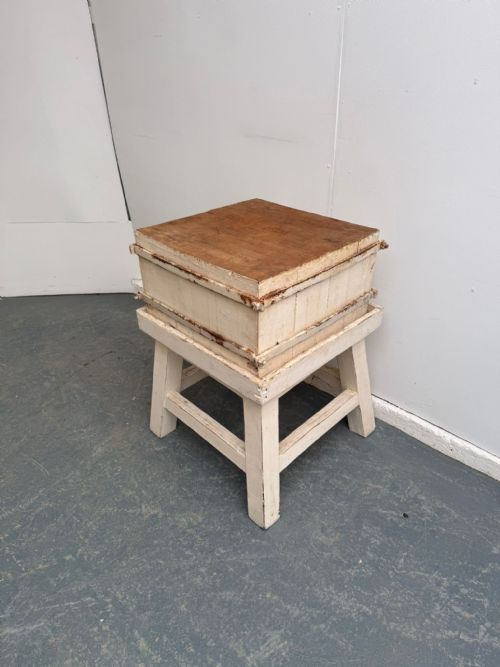


Vintage Oak Prep Table
A vintage oak prep table brings honest utility and deep timber grain into a modern kitchen, offering a sturdy workspace built for real use.
Vintage Oak Prep Table
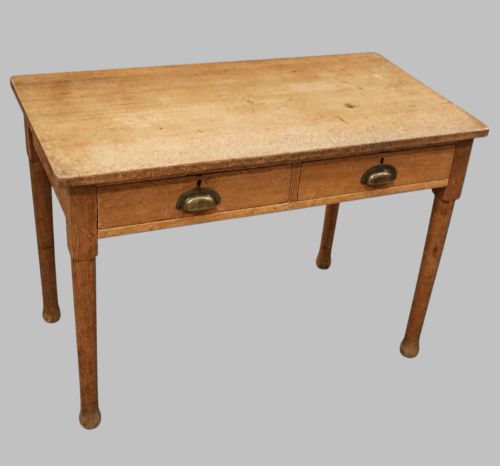
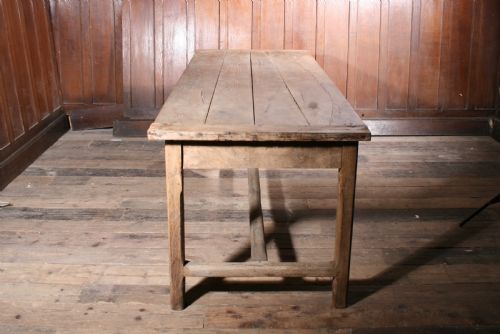
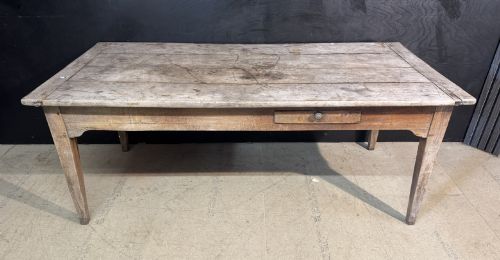
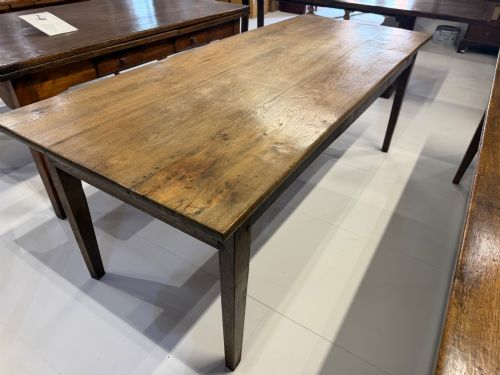
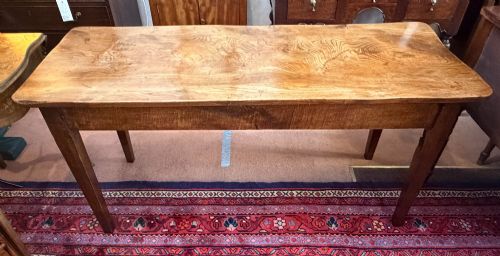
When you search for a vintage oak prep table, you encounter heavy-duty work surfaces designed for practical culinary tasks rather than formal dining. The examples seen here span the nineteenth century up to the nineteen-twenties, incorporating regional British and French country styles.
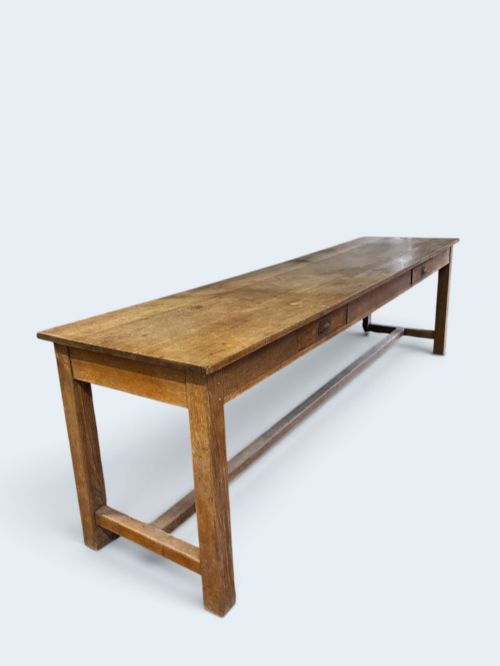
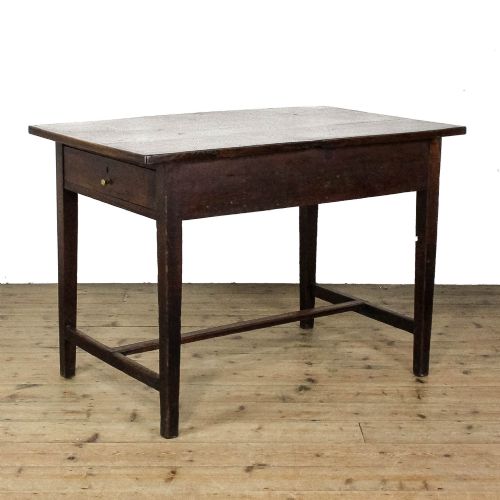
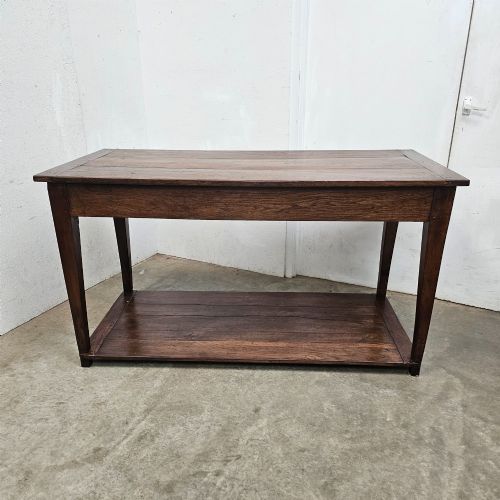
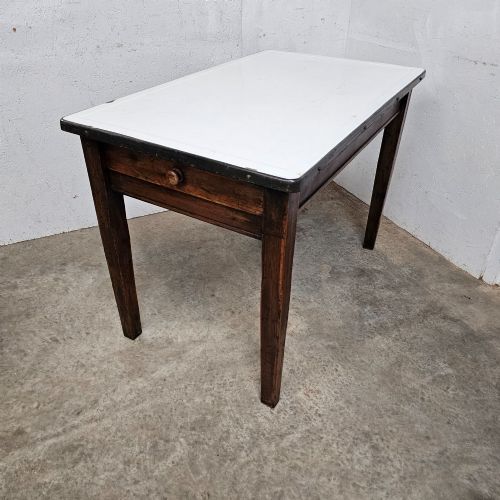
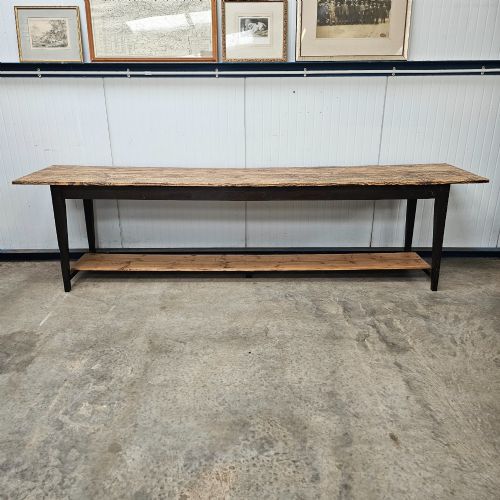
The most common forms on this page include robust farmhouse tables, long drapers tables, and thick butchers blocks. Many pieces feature utilitarian elements like deep drawers, lower shelves, or marble and enamel inserts suited to food preparation.
Origins vary from English workshops to French provincial kitchens and Hungarian workrooms. These surfaces carry the dents, stains, and patination accumulated through decades of actual preparation work.
Materials and construction methods
The primary material across these pieces is solid oak, frequently paired with secondary timbers like pine, beech, elm, or poplar for internal framing and secondary surfaces. Iron brackets, brass fittings, and bronze mounts appear as structural or decorative hardware.
Joinery relies on heavy timber construction designed to withstand intense daily weight and downward pressure. Tops are often constructed from thick planks joined together, occasionally mounted on trestle bases or stout tapered legs.
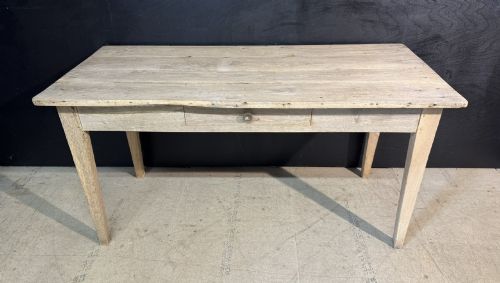
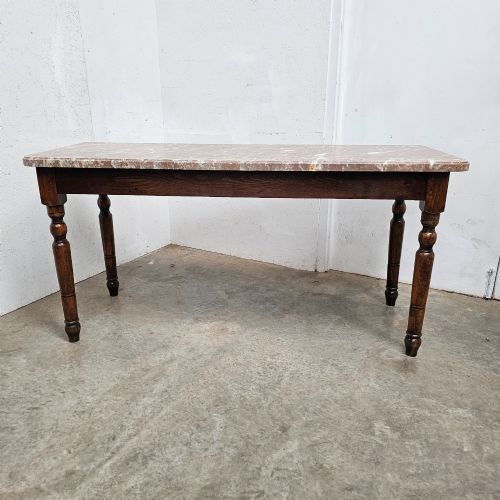
Surface treatments range from natural bleached oak to painted finishes and bare scrubbed timber. Some twentieth-century examples integrate specialised materials such as marble tops, glass inserts, or enamel sections intended for pastry work.
Workshop origins span British, French, and Hungarian traditions, incorporating functional elements like lower tiers, enamel panels, and deep storage drawers.
Evaluating build and condition
Quality in a vintage oak prep table rests upon the integrity of the timber and the honesty of its wear. Pieces with thick, solid oak tops and tight, original joinery stand apart from lighter or heavily altered examples.
Trussant And Cie·Hennes France
The Vintage Oak Prep Table Glossary
- Drapers table
- A long, narrow work table traditionally used in textile shops, frequently featuring multiple tiers or drawers below the main surface.
- Butchers block
- A thick, heavy block of end-grain timber designed to absorb the impact of cleavers and heavy chopping.
- Bleached oak
- Timber that has been chemically or naturally lightened, producing a pale, dry surface appearance common in French country furniture.
- Refectory table
- A long, narrow dining or work table supported by sturdy legs connected by a central longitudinal stretcher.
- Trestle table
- A table supported by two or more structural frames consisting of horizontal feet and vertical posts.
Vintage Oak Prep Table: Frequently Asked Questions
How do I clean a vintage oak prep table?
Wash the timber surface gently using warm water and mild soap, avoiding harsh chemical cleaners that strip the historic finish. Dry the wood immediately with a clean cloth to prevent moisture damage.
Apply food-safe mineral oil or beeswax periodically to nourish dry oak and maintain a protective barrier against spills.
Can I use a vintage prep table for cooking?
Many of these pieces were built precisely for heavy kitchen tasks like kneading dough and chopping ingredients. Solid oak surfaces handle daily culinary use well when properly maintained and oiled.
Consider whether your table has a sealed antique finish or raw timber before performing wet food preparation directly on the wood.
How do I tell an English prep table from a French one?
English examples often feature darker oak, simpler farmhouse proportions, and deep utility drawers. French tables frequently display bleached finishes, slender proportions, or specialised marble and zinc inserts.
Construction details like leg tapering and stretcher placement also reflect regional vernacular building traditions.
What is the difference between a prep table and a drapers table?
Prep tables are generally wider and deeper, designed for standing kitchen work and food preparation. Drapers tables are notably long and narrow, originally utilised for measuring and folding cloth.
Drapers tables often incorporate multiple lower shelves or rows of small drawers, whereas prep tables focus on solid workspace and heavy chopping foundations.