


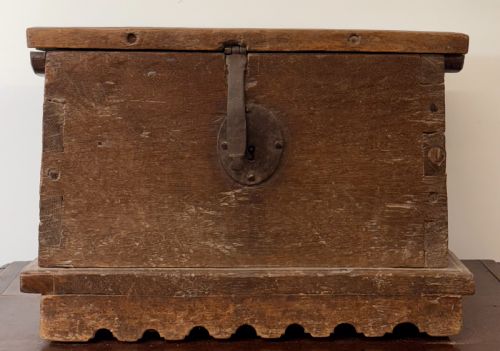
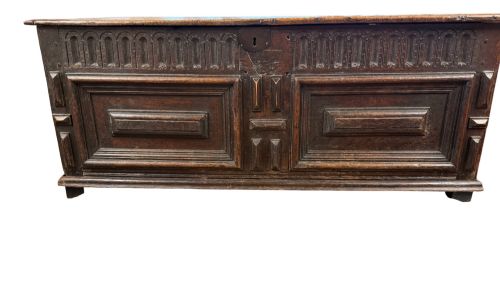
Dark Brown Blanket Box
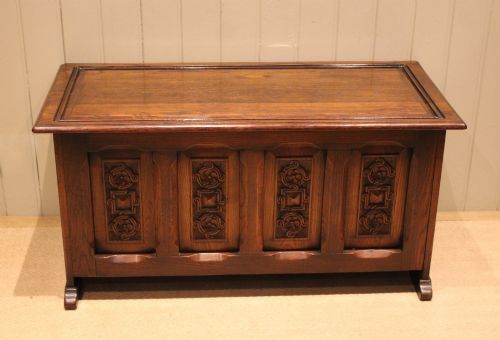
A dark brown blanket box is a sturdy storage piece in timber, mostly oak, shaped to hold linens and textiles.
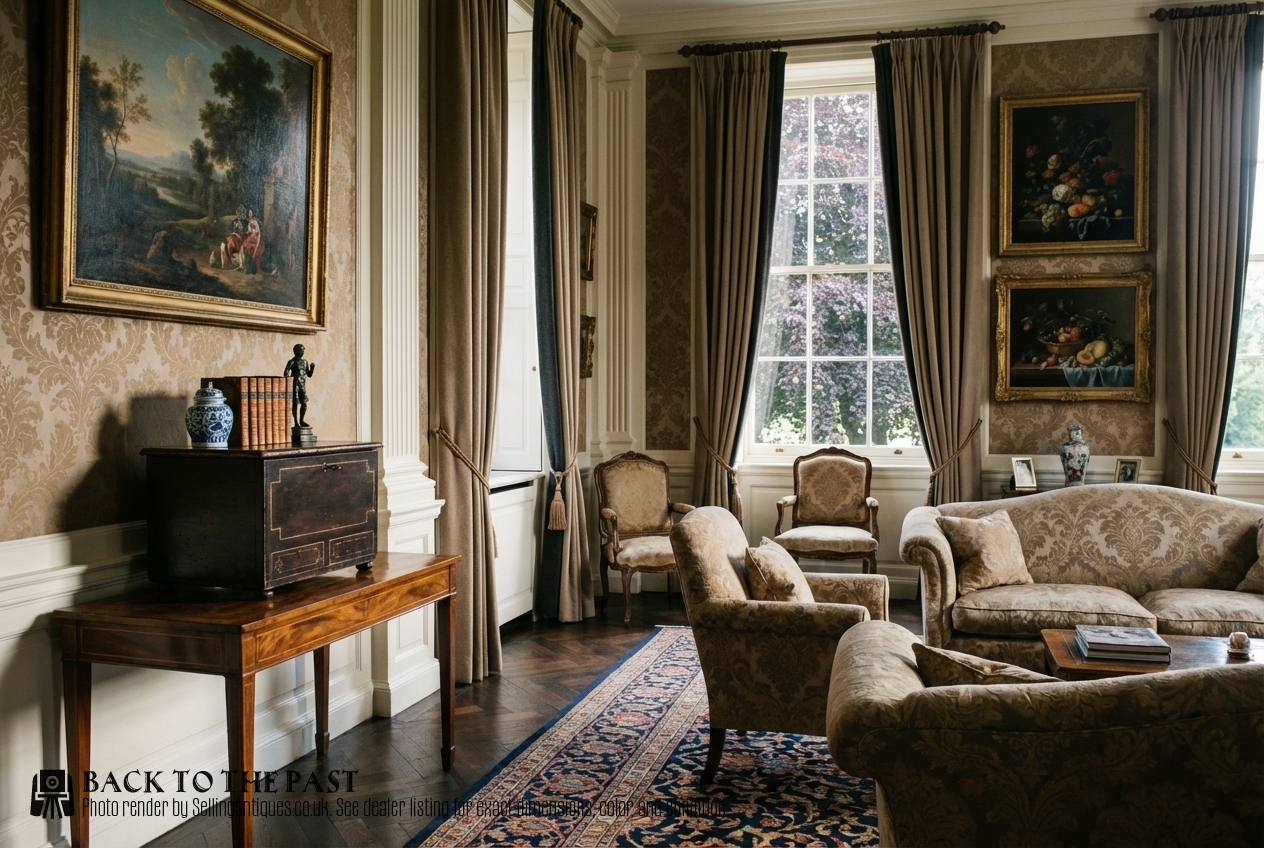
Dark Brown Blanket Box
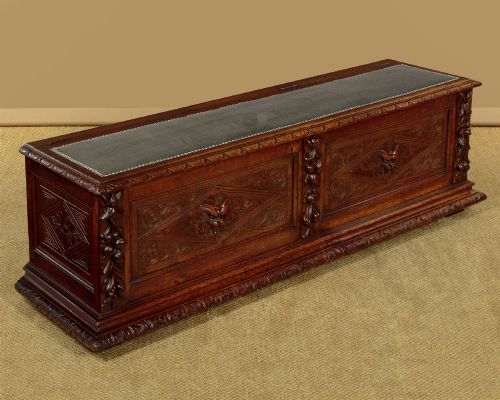
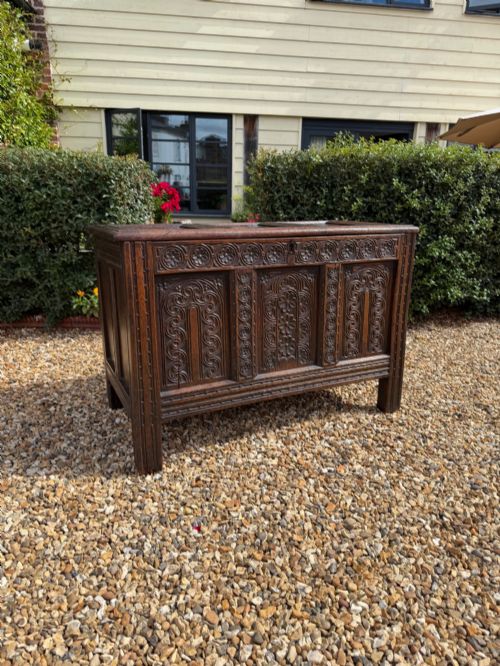
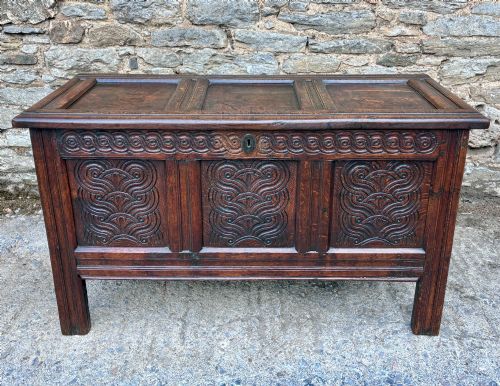
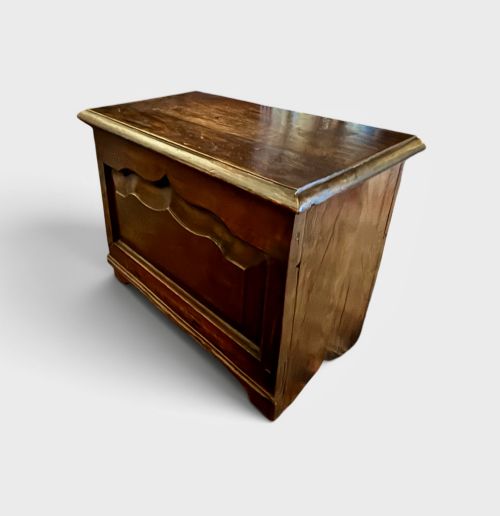
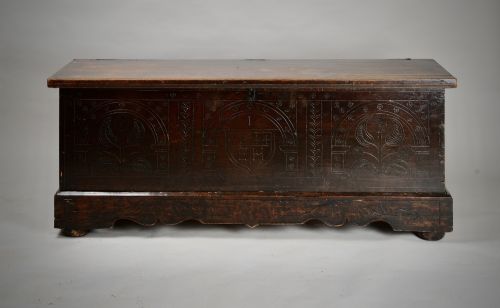
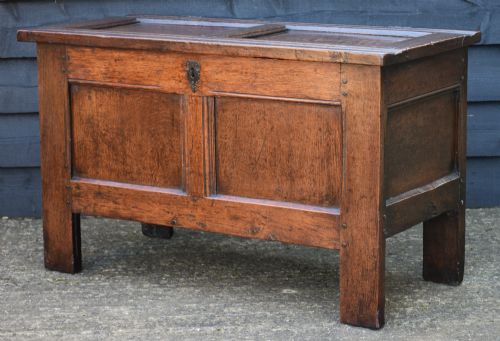
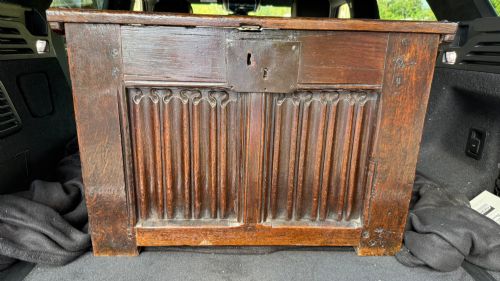
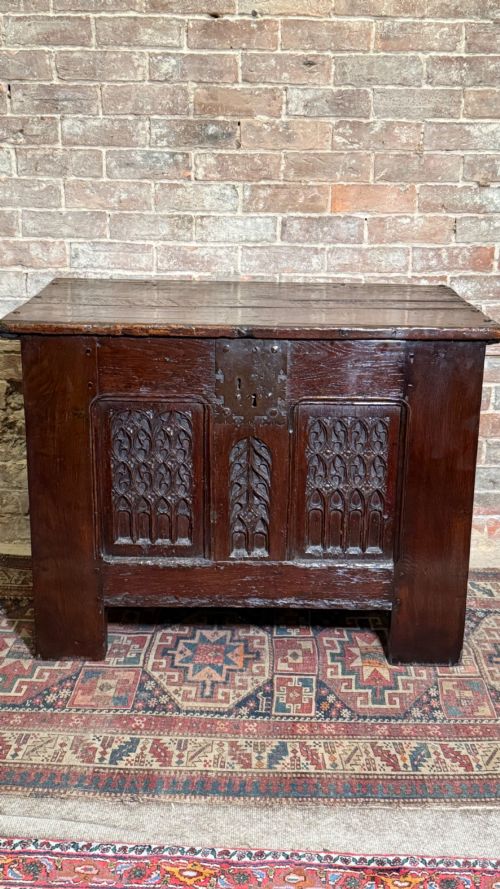
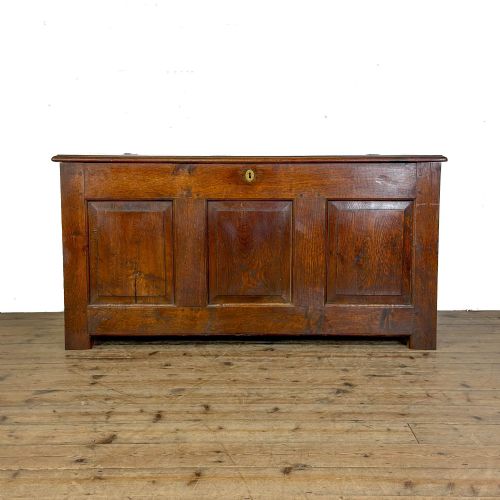
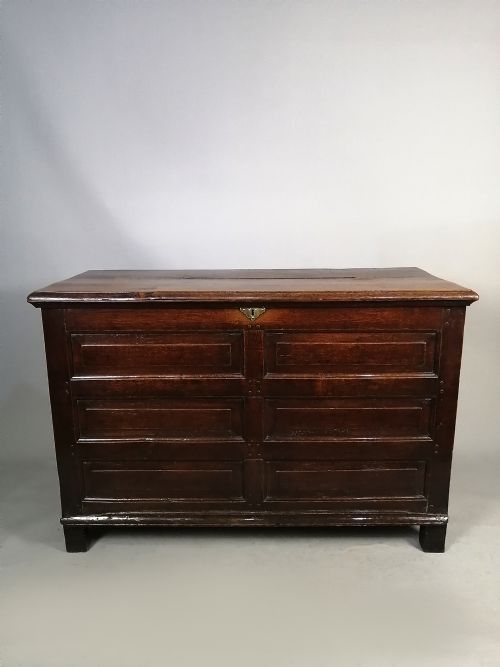
A dark brown blanket box is primarily represented here by oak coffers, blanket chests, and storage trunks dating from the sixteenth century through to the nineteenth century. These forms served utilitarian domestic purposes, storing garments, linens, and household valuables before fitted wardrobes became common.
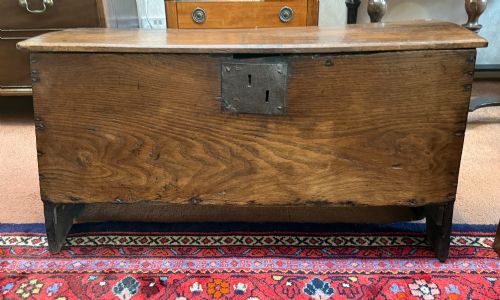
Buyers encounter regional English examples alongside pieces spanning the Elizabethan, Jacobean, and Georgian periods, including boarded, panelled, and carved variants. Simpler elm six-plank constructions and leather-bound trunks with brass studs also appear.
Many of these boxes function today as low tables, window seats, or hallway benches, combining traditional storage capacity with dark wood character.
How they were made
Construction relies heavily on solid oak and elm timbers joined by hand, often utilising pegged mortise and tenon joints in panelled formats or simple edge joining in boarded variants. Wood inlay, carved surface detailing, and fluting appear on formal seventeenth-century examples.
Hardware consists of wrought iron and brass, utilised for hinges, lockplates, carrying handles, and decorative studding on leather-covered trunks. Natural dark tones develop from centuries of wax polishing, ageing timber, and surface patination.
Listings span from the sixteenth century to the 1930s, featuring oak, elm, leather, iron, and brass materials across multiple regional styles.
What varies in quality
Quality separates through the integrity of the timber, the crispness of hand-carved ornamentation, and the preservation of original construction elements like baseboards and hinges. Early boarded or panelled pieces retain distinct tool marks and regional characteristics that denote authentic period craftsmanship.
The depth of patination and surface colour influence visual appeal, with untouched dry timber surfaces commanding greater interest than over-restored finishes. Proportion also dictates desirability, with small proportions and boarded six-plank constructions holding particular appeal.
Samuel Pratt
The Dark Brown Blanket Box Glossary
- Coffer
- A large wooden chest used historically for storing valuables, linens, and documents. These pieces typically feature heavy timber lids and robust construction.
- Mule chest
- A storage chest fitted with one or more drawers beneath the main compartment. This form emerged as a transitional piece between the simple coffer and the chest of drawers.
- Six-plank coffer
- A primitive chest constructed from six distinct boards of timber joined at the edges. Elm and oak are common woods for this construction method.
- Cassone
- A traditional Italian storage chest often highly decorated, though the term occasionally applies to continental European blanket boxes in trade listings.
Dark Brown Blanket Box: Frequently Asked Questions
What is a blanket box?
A blanket box is a deep storage chest designed to hold household linens, woollens, and garments. These items preserve textiles away from dust and light.
Historically constructed from sturdy woods like oak and elm, they double as seating benches at the foot of beds or beneath windows.
How do I date a wooden coffer?
Dating relies on examining construction methods, tool marks, joinery, and timber species. Hand-riven boards and pegged joints usually indicate earlier periods.
Stylistic indicators such as Elizabethan strapwork, Jacobean carving, or Georgian panel layouts help narrow down the decade or century of origin.
Can I use an antique chest as a seat?
Many sturdy oak chests and coffers withstand everyday seating if the lid structure remains sound and well-supported. Adding a loose cushion protects the historic wood surface from wear.
Checking the interior hinges and board stability ensures the lid bears weight safely without straining old timber.
What is the difference between a coffer and a mule chest?
A coffer consists of a simple chest with a top-opening lid and an open interior space. It represents the earliest form of box storage.
A mule chest incorporates one or more drawers beneath the main compartment, providing easier access to stored items without lifting the heavy lid.