
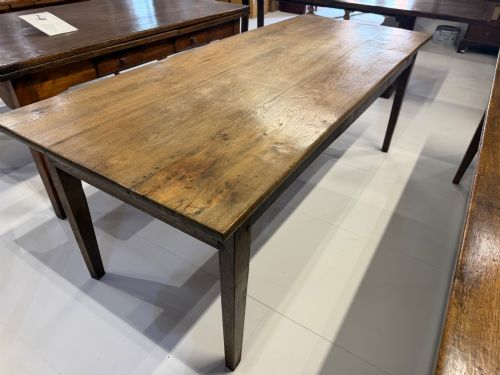
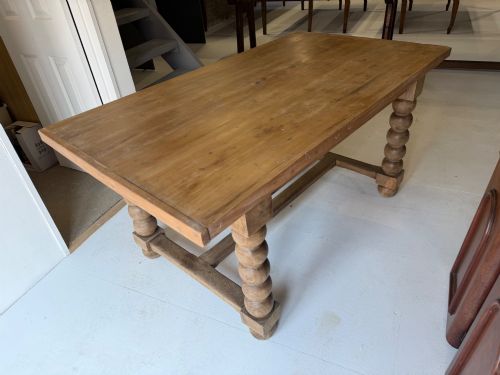
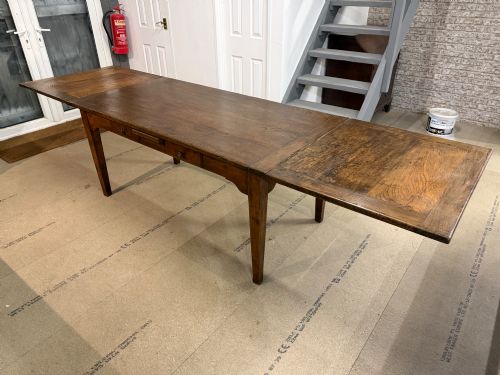
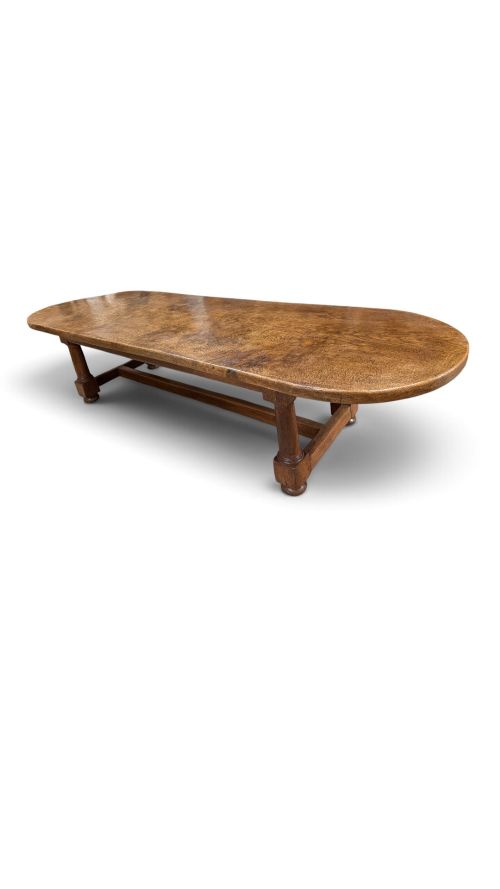
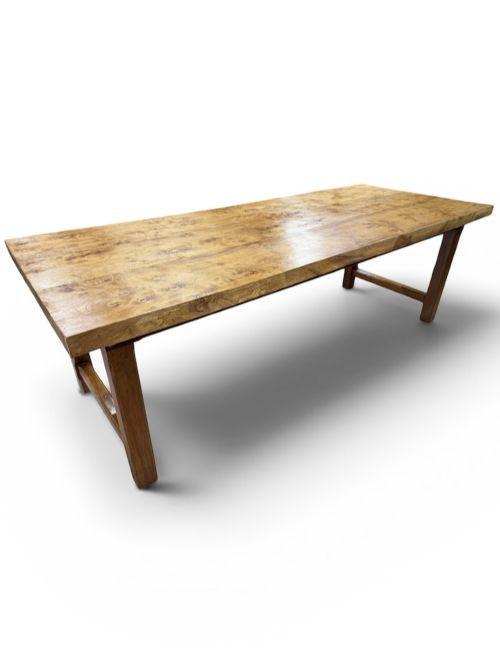
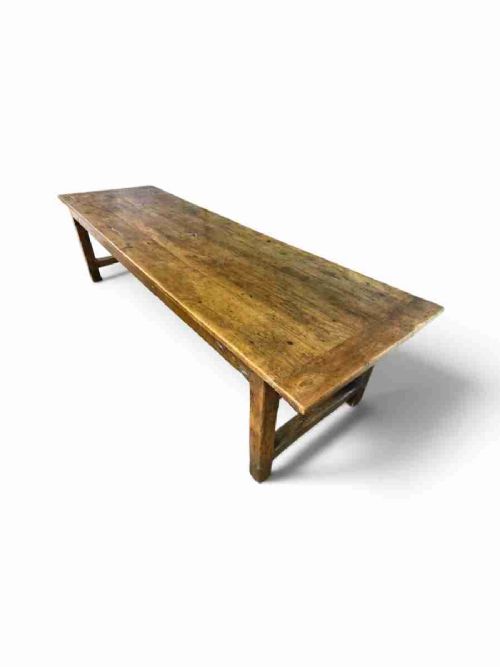
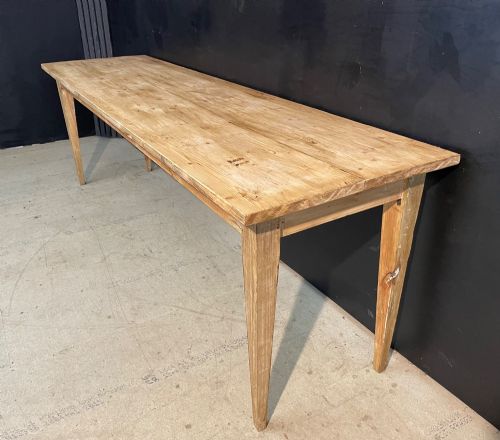
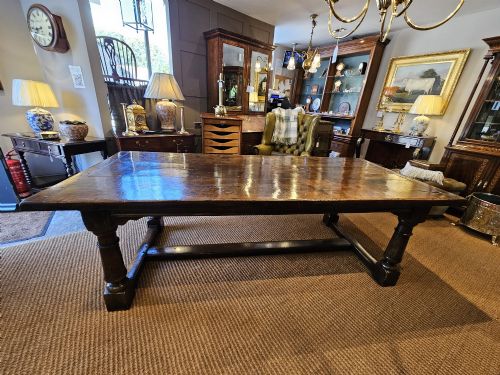
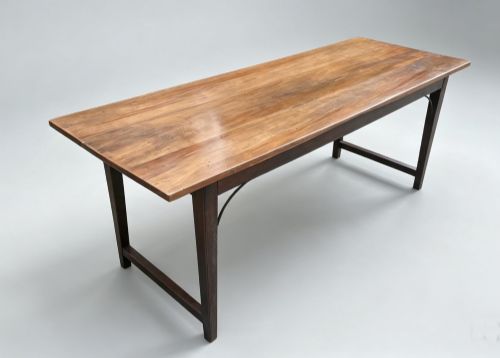

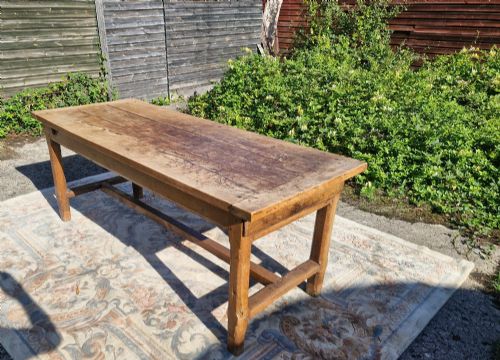
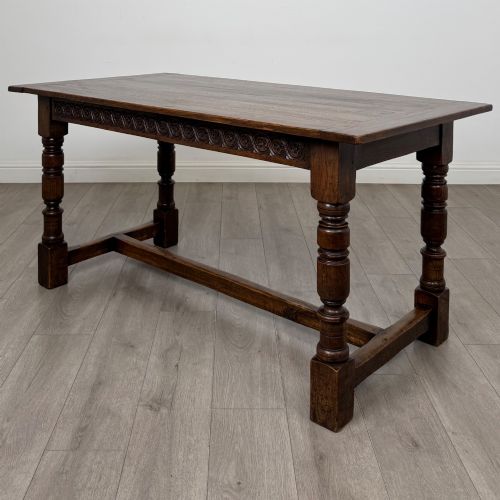
Country Kitchen Dining Table
A country kitchen dining table anchors the heart of the home with honest timber, solid proportions and decades of domestic history.
Understanding country kitchen dining tables
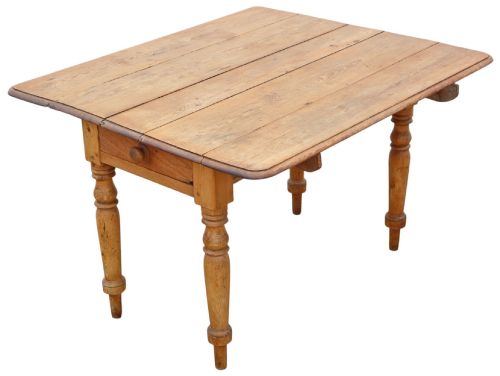
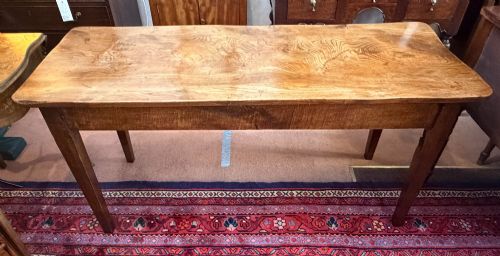
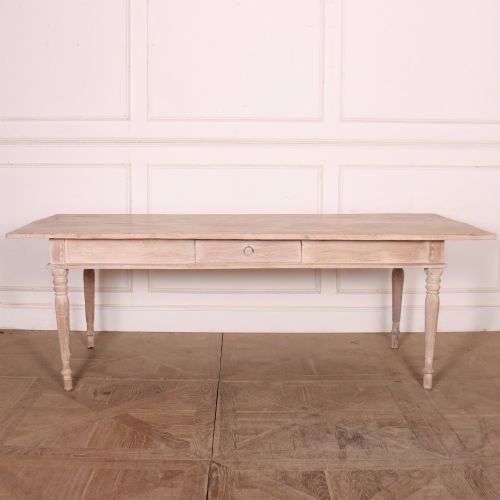
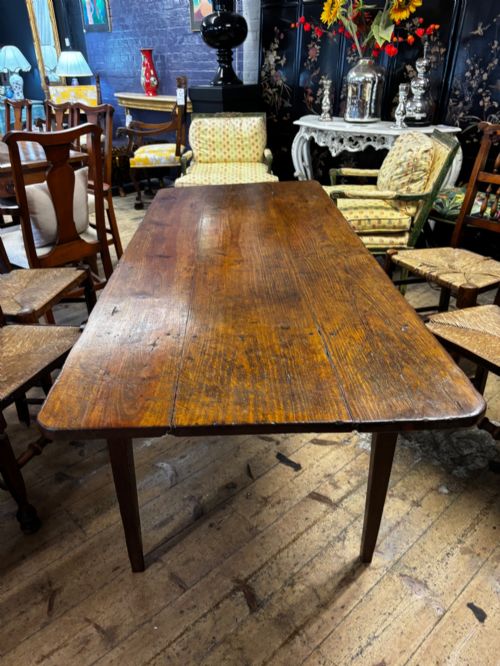
A country kitchen dining table serves as the primary workspace and gathering hub in a rural interior. These pieces emerge from English and French traditions, spanning the eighteenth, nineteenth and early twentieth centuries. When searching for a country kitchen dining table, you encounter robust forms built for daily use rather than formal parlour display.
The selections here present heavy timbers, plank tops and sturdy underframes designed to seat anywhere from four to fourteen diners. English oak and pine examples sit alongside French fruitwood, cherry, elm and poplar alternatives. Gateleg, refectory, trestle and drop-leaf formats dominate the available variations, reflecting regional domestic needs across different eras.
Materials and construction methods
Carpenters relied on locally sourced hardwoods and softwoods, choosing oak, pine, beech, cherry, fruitwood, elm and poplar for their structural integrity. Tops often consist of thick, joined planks secured to heavy underframes with traditional pegging and mortise and tenon joints. Painted wood finishes and distressed green treatments also appear where surfaces received protective layers of colour over generations.
Makers integrated functional elements like drop-leaf mechanisms, gatelegs and under-top storage to maximise utility in busy rooms. Surfaces reveal the tool marks of hand-planing and saw work rather than industrial smoothing, demonstrating the manual labour involved in shaping thick timber boards into stable furniture.
Retail Price Guide 2026
Typical UK retail prices for country kitchen dining table, calculated from the Sellingantiques database of over a million retail prices indexed since 2003. This retail price guide relies exclusively on Sellingantiques data; no external sources or auction records are used, so the figures do not describe the wider market.
Listings feature items spanning the eighteenth century through to the Edwardian period, constructed from oak, pine, beech, cherry, fruitwood, elm and poplar.
Distinguishing quality across pieces
Quality rests upon the selection of timber and the integrity of the structural joints supporting the top. Tables fashioned from thick, solid oak or mature fruitwood with minimal replacement timbers command attention for their longevity. The balance between the scale of the legs and the thickness of the top determines visual proportion and physical stability.
Subtleties in edge moulding, the tightness of the leg joinery and the depth of natural patina separate utilitarian workbenches from refined domestic dining furniture. Original surface treatments, whether unpainted wax finishes or historic layered paint, retain the visual integrity of the period.
The Country Kitchen Dining Table Glossary
- Refectory table
- A long, narrow dining table originally built for communal eating spaces and adapted for domestic kitchens. These pieces utilise sturdy stretchers to connect the legs for added stability.
- Gateleg table
- A table with hinged leaves supported by swing-out legs that resemble a gate. This design allows the footprint to expand or contract depending on seating requirements.
- Patina
- The surface sheen and colour depth developed through decades of handling, cleaning and exposure to light. It serves as a visual indicator of age and continuous use.
- Plank top
- A table surface constructed from several long boards joined edge to edge. Thick plank tops provide the heavy-wearing surface characteristic of rural furniture.
- Mortise and tenon
- A traditional woodworking joint where a projecting tongue fits snugly into a matching cavity. This method secures the framework without relying on modern metal fasteners.
Frequently Asked Questions
How do I choose the right size table?
Consider the floor space available in your room, allowing clearance for chairs to pull out comfortably on all sides. Length dictates seating capacity, with larger refectory and extension formats accommodating multiple guests.
Measure doorways and stairwells before purchasing longer antique formats, as heavy timber construction prevents disassembly on certain designs.
Are these tables suitable for daily family use?
These tables were originally engineered for heavy domestic work, making them exceptionally resilient for modern family life. Hardwood surfaces handle regular dining, preparation and daily activity without issue.
Embrace existing surface marks as part of the historical character rather than attempting pristine maintenance.
How do I care for antique wood surfaces?
Maintain timber surfaces by applying natural beeswax periodically to nourish the grain and protect against moisture. Avoid placing hot dishes directly onto bare wood by using protective mats.
Keep tables away from direct heat sources and drastic humidity shifts to prevent the natural timber from splitting.
How do I distinguish pine from hardwood pieces?
Pine displays a softer, lighter grain structure with occasional knots and pale yellow tones, typical of many English and French country utility tables. Hardwoods like oak, cherry, fruitwood and elm offer greater weight, denser grain patterns and deeper natural colouration.
Examining the underside or joint areas usually reveals the true nature of the underlying timber.