
Colonial Anglo Indian Table
These pieces unite British furniture forms with South Asian craftsmanship, offering richly carved surfaces and dense exotic timbers for practical interiors.

Colonial Anglo Indian Table
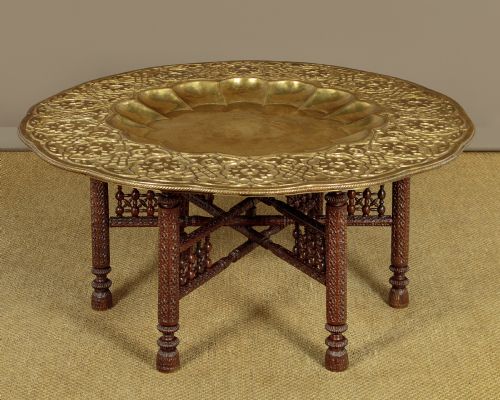
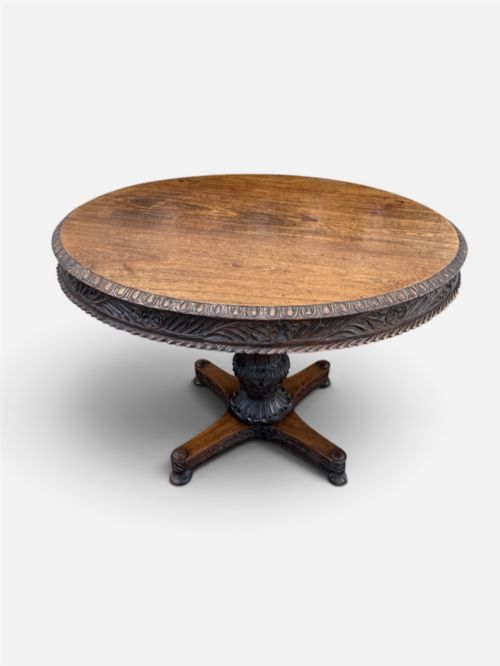
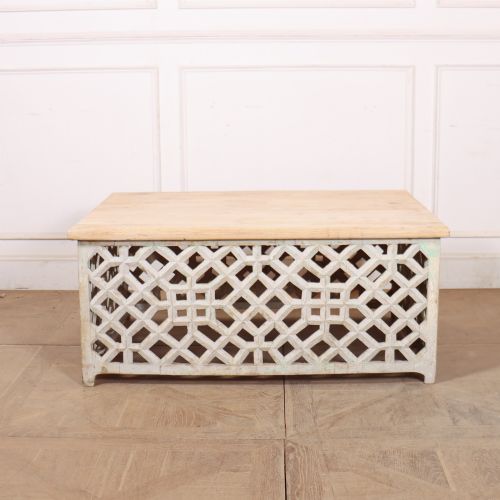
When a buyer searches for a colonial anglo indian table, they encounter a range of forms spanning occasional and centre tables, coffee tables, and desks. These items bridge traditional British domestic requirements with regional woodworking traditions from the nineteenth century onward.
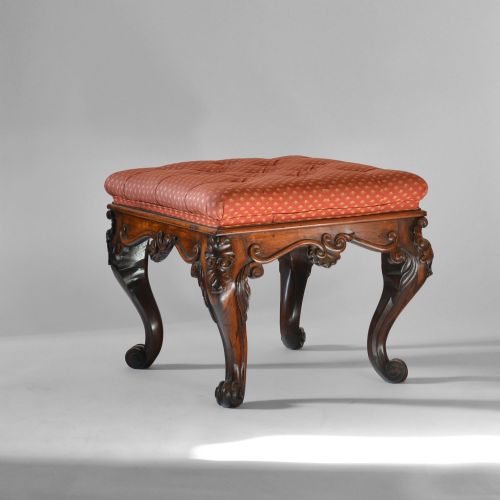
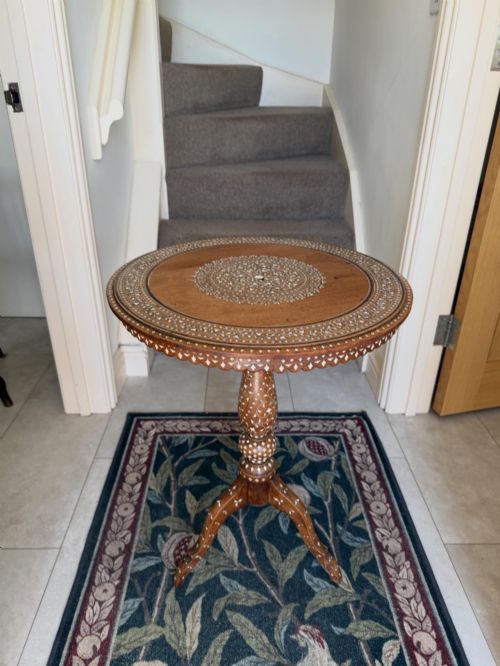
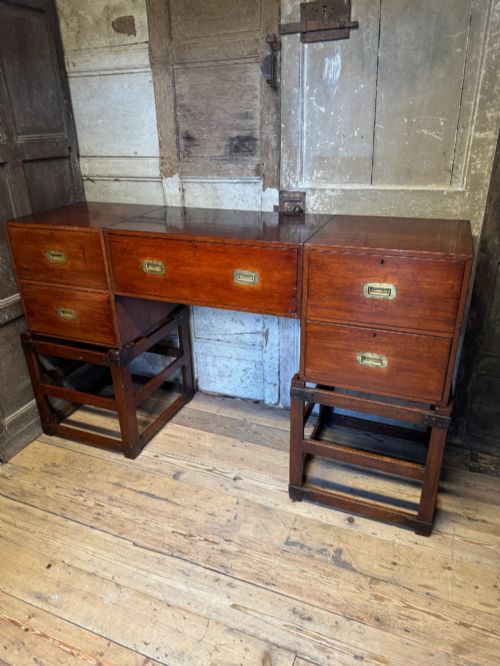
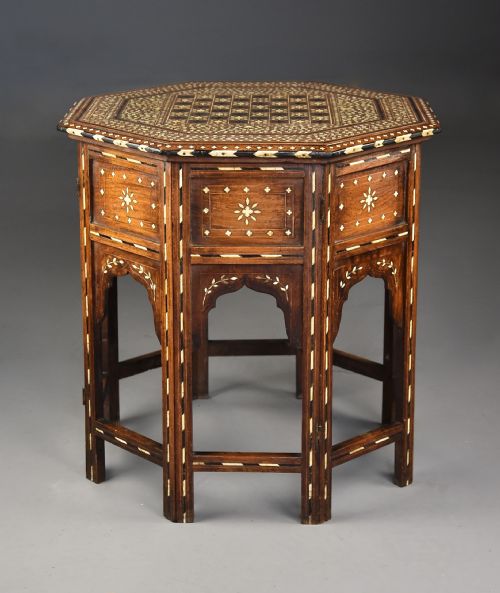
The version most commonly met on this page is the occasional or side table, often octagonal in shape and originating from centres such as Hoshiarpur. Alongside these, buyers find larger centre tables, tripod tables, and campaign pieces produced during the Victorian period.
Origins extend across regions including Burma, Ceylon, and various parts of India. Makers adapted local timber supplies to suit the tastes of British residents and the export market.
Materials and Construction
Carpenters constructed these items primarily from dense hardwoods native to South Asia, including teak, padauk, rosewood, ebony, and satinwood. These heavy timbers provided a stable substrate for intricate carving and inlay work.
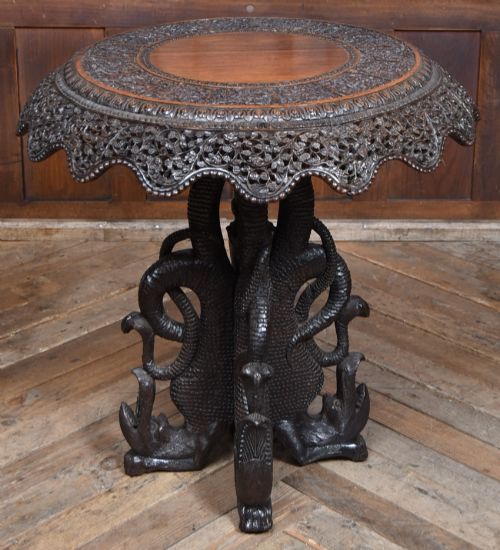
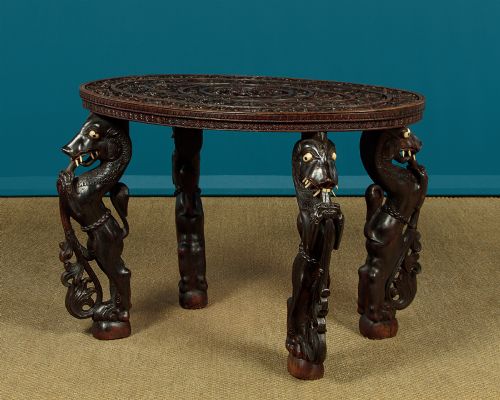
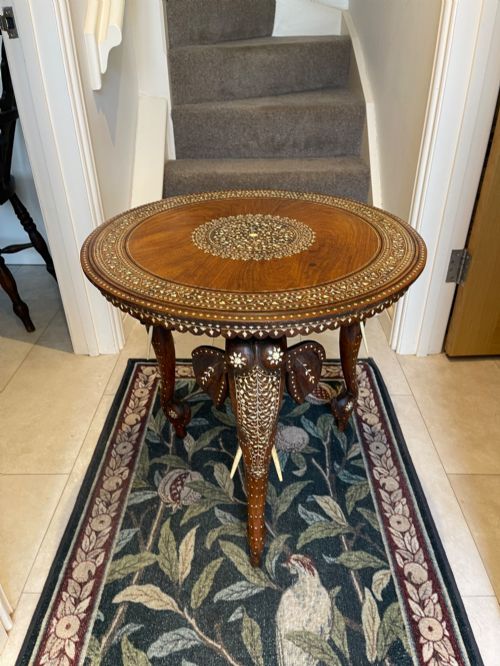
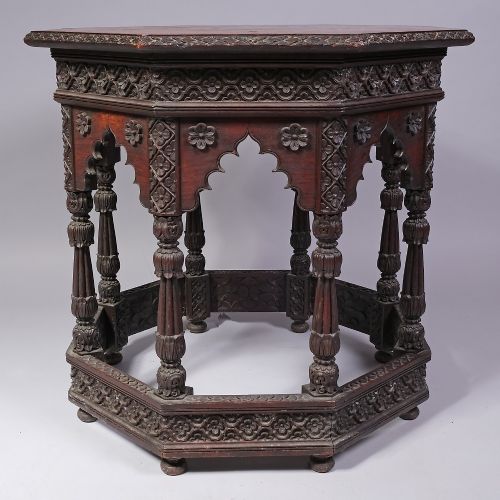
Workshops utilised contrasting materials such as bone, mother-of-pearl, and sheet brass to embellish table surfaces and structural elements. Artisans set these details flush into the wood or combined them with deeply relief-carved foliage and animal motifs.
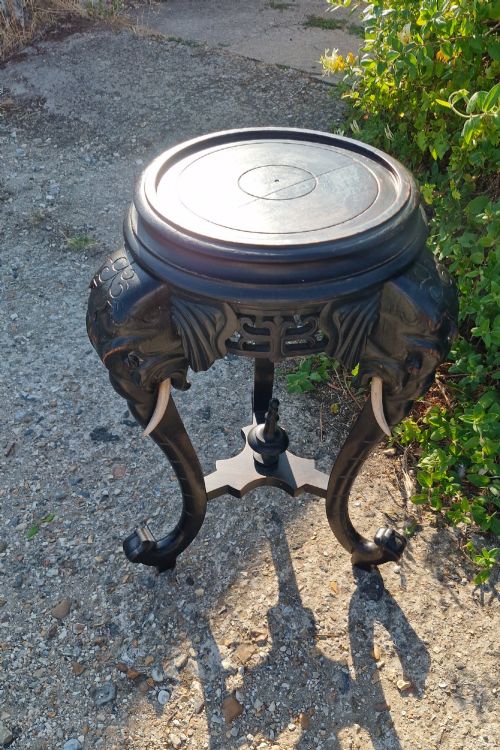
Elephant tables complete with painted wooden tusks add a distinct sculptural presence to nineteenth-century domestic interiors.
Evaluating Quality
The standard of carving determines much of the distinction between individual pieces. Skilled artisans achieved crisp undercut foliage, balanced symmetry, and secure joints, whereas lesser examples display flat, hurried incision with visible timber splitting.
The integrity of the structural timber and the retention of inlaid elements dictate the remaining distinction. Pieces maintaining their original polish and complete bone or brass detailing stand apart from those with later replacements or extensive shrinkage cracks.
The Colonial Anglo Indian Table Glossary
- Hoshiarpur
- A city in Punjab known for intricate woodwork. Tables from this region typically feature dense geometric bone or wooden inlay across octagonal surfaces.
- Campaign table
- Portable furniture designed for military officers or travellers. These examples often incorporate folding bases or modular sections for transport.
- Padauk
- A durable reddish-brown tropical hardwood. Cabinetmakers favoured it for heavy carved side tables and partners desks.
- Tripod table
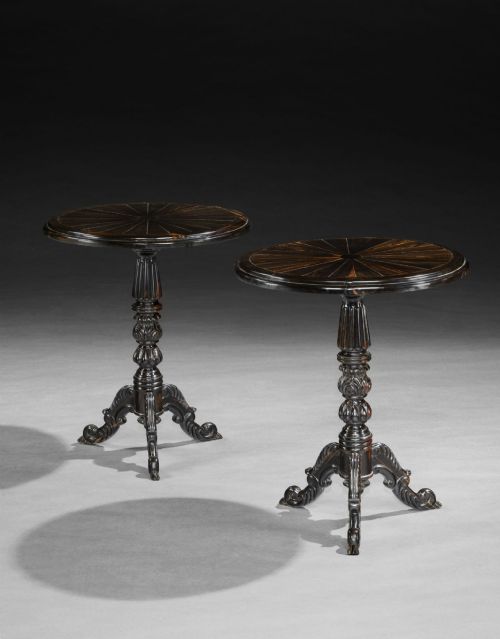
- A small table supported by a pillar above three spreading feet. Ceylonese versions in ebony frequently utilise this format.
- Teapoy
- A small occasional table or chest originally designed to hold tea canisters. Colonial variations adapted this form into decorative stands.
Colonial Anglo Indian Table: Frequently Asked Questions
Where were these tables made?
Production occurred across workshops in India, Burma, and Ceylon during the nineteenth and early twentieth centuries. Artisans in regional centres fulfilled commissions for both local European residents and export merchants.
Specific towns like Hoshiarpur developed distinct specialisms in inlay, whilst coastal regions utilised native ebony and satinwood for heavier centre tables.
How do I care for a carved wooden table?
Maintain stable room humidity to prevent the dense tropical hardwoods from splitting or warping. Dust intricate carved sections regularly with a soft brush to prevent dirt accumulation.
Avoid placing wooden surfaces near direct heat sources or in strong sunlight. Apply occasional natural wax to nourish the grain without building up a sticky residue.
What timber was used most often?
Teak and padauk appear frequently among the surviving pieces, valued for their structural stability and resistance to pests. Rosewood and ebony served in more decorative, high-status items.
Makers selected these dense timbers because they supported deep relief carving without fracturing along the grain.
Are inlaid surfaces durable?
Bone, brass, and mother-of-pearl inlay remain secure when kept away from moisture and extreme temperature swings. Minor losses can occur over decades if the surrounding wood expands or contracts.
Gentle cleaning preserves the adhesive and keeps the contrasting materials firmly seated within the timber ground.