


Anglo Burmese Tripod Table
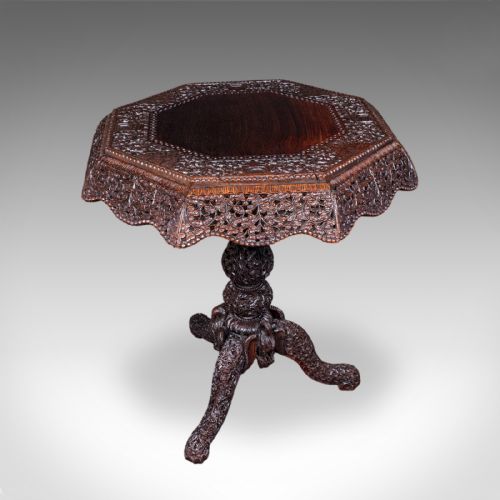
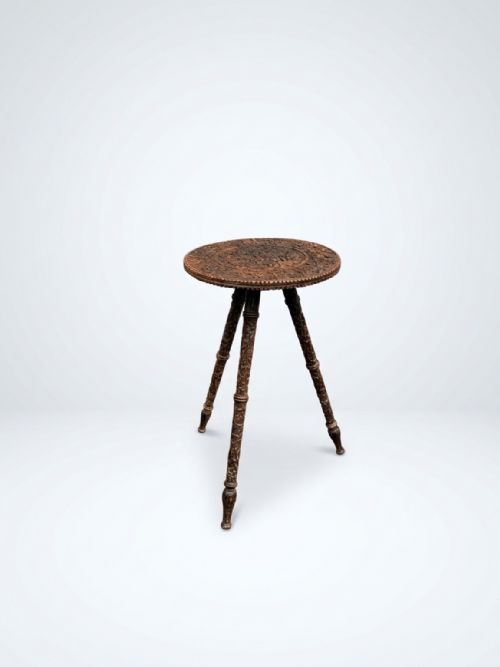
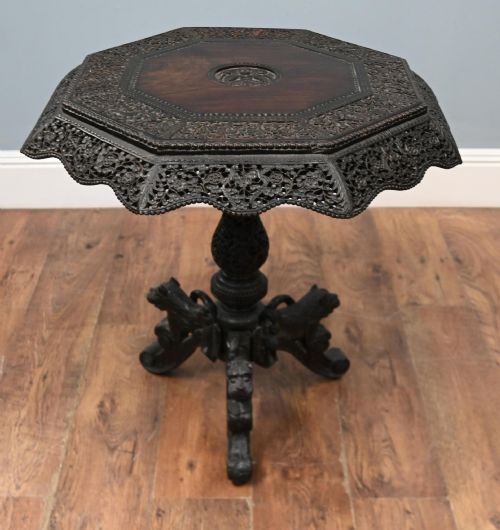
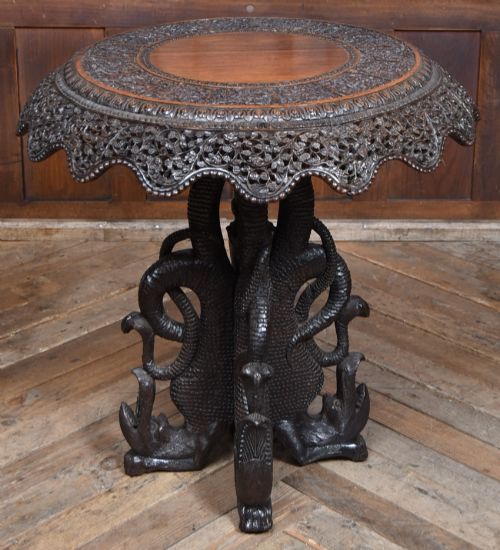
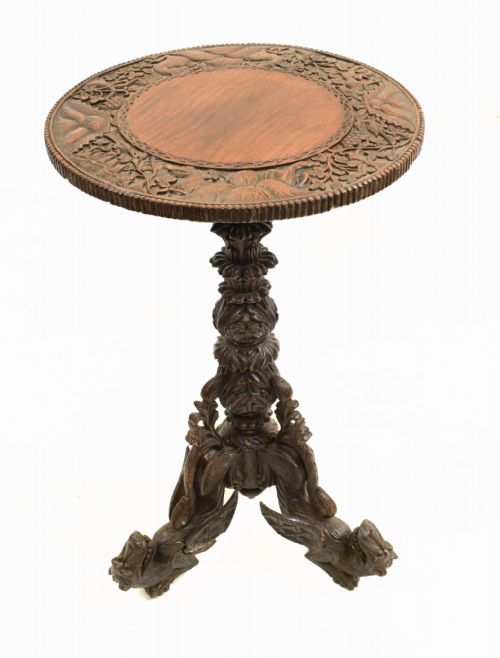
An anglo burmese tripod table brings deep carved tropical timber and colonial craftsmanship straight into a modern interior.
Anglo Burmese Tripod Table
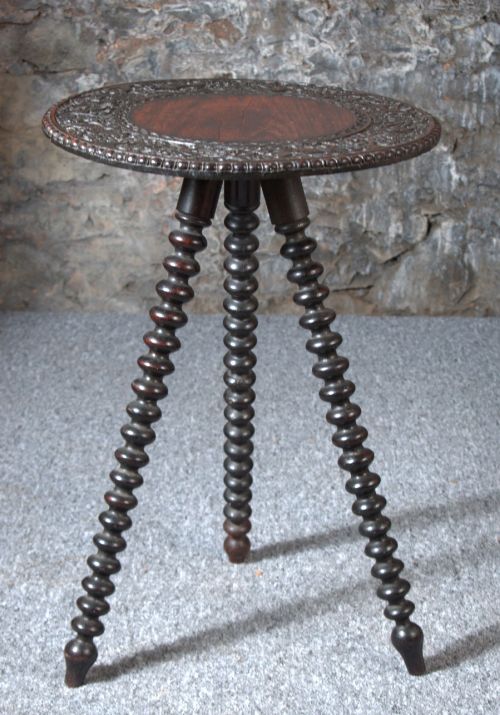
An anglo burmese tripod table is a decorative occasional or side table produced during the nineteenth century, reflecting British colonial trade and local craftsmanship in Burma and Myanmar. These items combine traditional Eastern carving techniques with Western furniture forms suitable for parlours and drawing rooms.
Buyers on this page most commonly meet side tables and occasional tables featuring circular tops supported by three legs. Many examples also function as tilt top tables, allowing the surface to fold away when not in use.
The aesthetic is defined by heavy surface carving, typically executed in dark tropical timbers. These pieces represent a distinct colonial style that bridges domestic utility and ornate sculptural design.
How they were made
Makers constructed these tables from dense tropical hardwoods, utilising teak, padouk, and general hardwoods sourced locally in Burma. These timbers provide the structural stability required for intricate relief carving without splitting.
The decoration relies entirely on hand carving, with artisans chiselling deep floral, foliate, and figurative motifs across the wooden surfaces. This manual labour creates high relief textures that catch the light across the table top and supporting pillar.
Listings span the nineteenth century, specifically featuring pieces dated between eighteen-forty and eighteen-ninety.
What varies in quality
The depth and clarity of the hand carving dictate the aesthetic standing of each piece. Superior examples display crisp undercut details and well-defined motifs, whereas lesser items feature shallow, repetitive tooling.
Timber selection and colour consistency further separate the range. Richly grained padouk and carefully chosen teak with an even tone command greater visual presence than plain or unevenly finished secondary woods.
The Anglo Burmese Tripod Table Glossary
- Padouk
- A heavy, durable reddish-brown tropical hardwood often used for high-end nineteenth-century colonial furniture. It takes a fine finish and supports intricate hand carving.
- Tilt top table
- A table with a hinged top that can be rotated to a vertical position when not in use. This mechanism saved space in nineteenth-century rooms.
- Side table
- A small table designed to stand against a wall or beside seating. These items function primarily for display or holding small objects.
- Occasional table
- A light, movable table used for specific, temporary purposes in a principal room. They form a core part of Victorian and colonial interior arrangements.
- Anglo-Burmese
- A design classification for furniture made in Burma during the British colonial period. It blends European forms with indigenous South-East Asian carving traditions.
Anglo Burmese Tripod Table: Frequently Asked Questions
What is an anglo burmese tripod table?
An anglo burmese tripod table is a nineteenth-century occasional table featuring a carved wooden top supported by three legs. These pieces combine Western furniture forms with traditional Burmese carving.
They emerged from the colonial period and utilise dense tropical timbers such as teak and padouk.
How do I use one in a room?
These tables work well as small side pieces next to armchairs or as standalone display surfaces in a hallway. Their detailed carved tops make them effective focal points.
Many examples feature a tilt top mechanism, which allows the surface to be folded down flat against a wall when floor space is needed.
What timber are they made from?
Makers constructed these tables using native tropical hardwoods, predominantly teak and padouk. These dense woods were chosen for their durability and ability to hold fine hand carving.
The natural colour of the timber ranges from deep golden browns to rich reddish hues.
How do I date an anglo burmese table?
Dating relies on examining the construction methods, timber choice, and stylistic markers recorded in nineteenth-century examples. Most pieces on this page date from the decades between eighteen-forty and eighteen-ninety.
Hand tool marks and traditional joinery help distinguish these nineteenth-century items from later reproductions.