

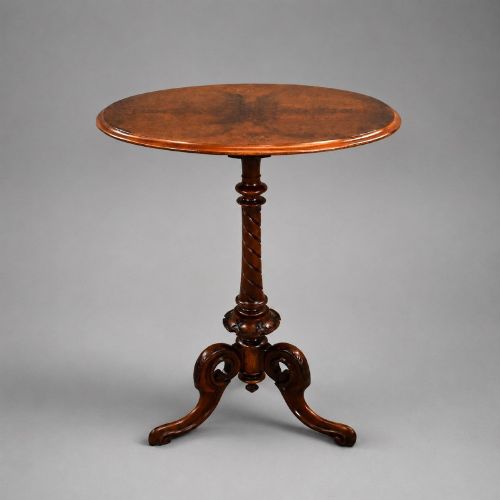
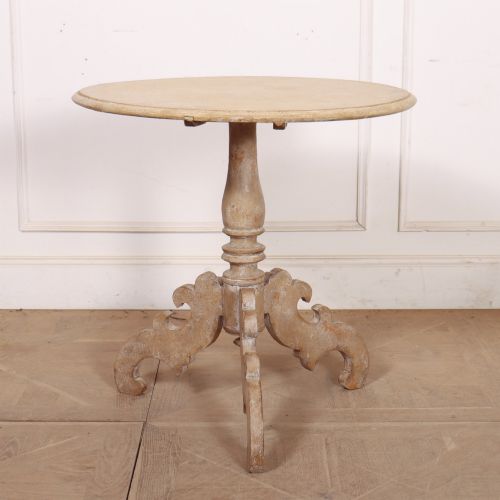
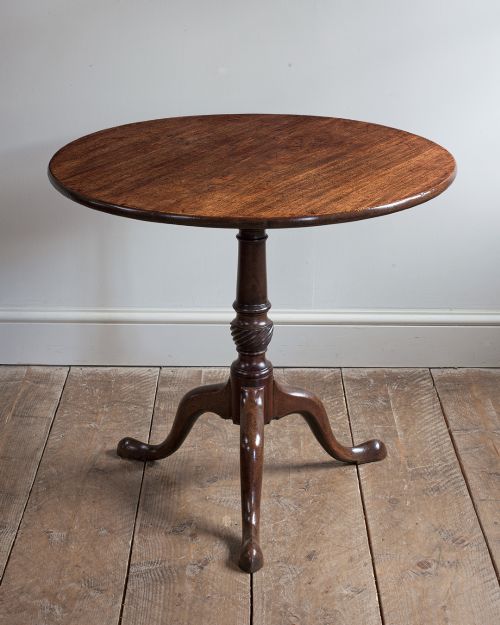
Carved Tripod Accent Table
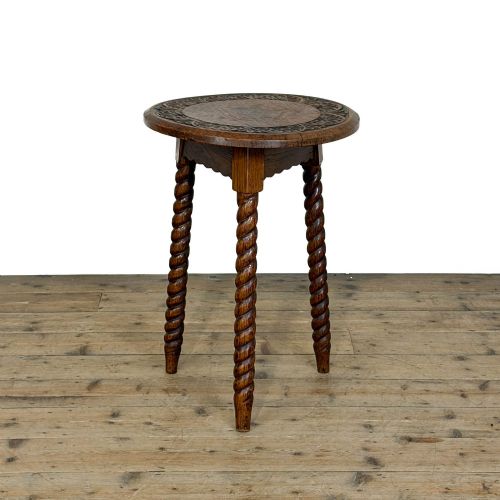
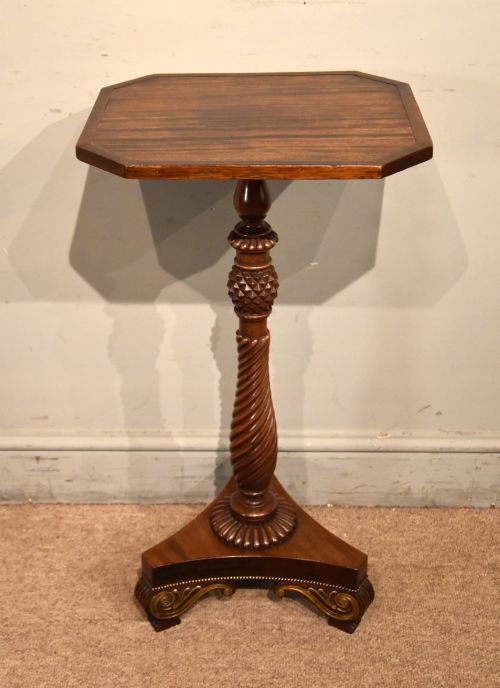
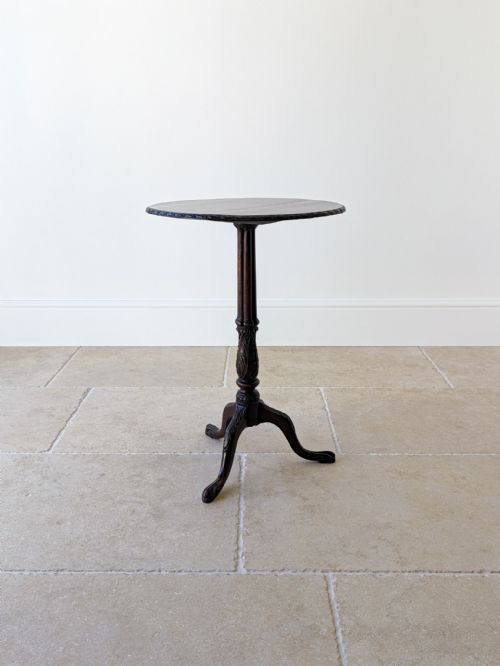
A carved tripod accent table brings compact elegance to a room, offering a sturdy three-legged pedestal base paired with a detailed top.
Carved Tripod Accent Table
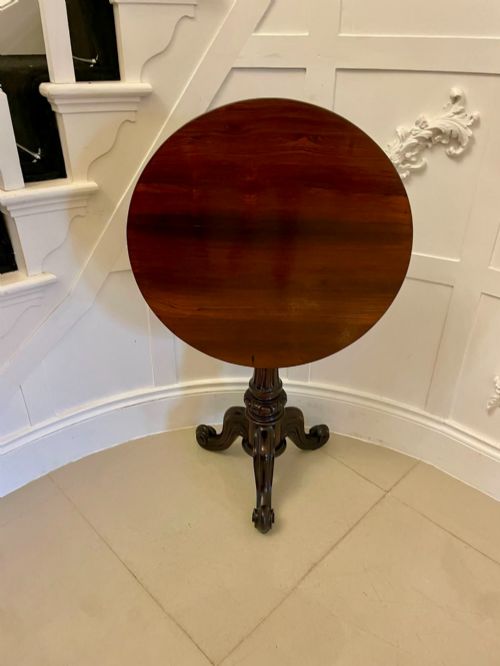
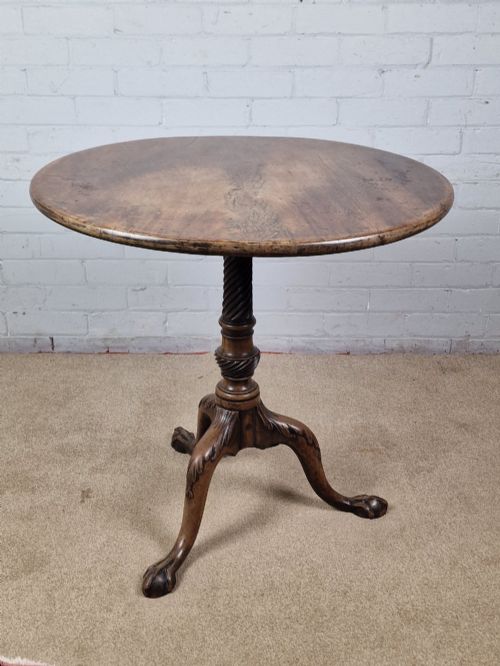
A carved tripod accent table rests on three legs branching from a central pedestal, providing a stable footing on uneven floors while occupying minimal floor space. These pieces function primarily as occasional, side, lamp, or wine tables in domestic interiors.
The selections available span multiple eras, including the eighteenth century, the Regency period, the Victorian era, and the Edwardian years. Forms range from simple cricket tables to tilt-top wine tables and elaborate lamp tables.
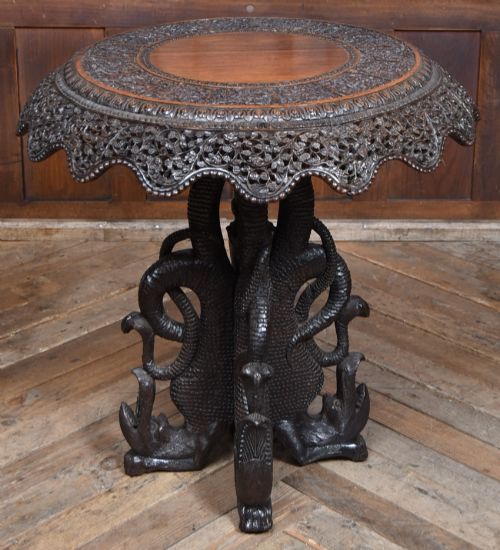
Origin and stylistic variety run deep across these listings, featuring English Georgian designs alongside Anglo-Indian, Burmese, Italian, Swedish, and Black Forest pieces. Makers adapted local timbers and carving traditions to the standard three-legged pedestal format.
Materials and Construction
Cabinetmakers utilised dense hardwoods such as mahogany, walnut, oak, and rosewood for structural stability and fine carving capabilities. Lighter or exotic woods like linden wood, teak, and burr veneers appear on specific regional or decorative examples.
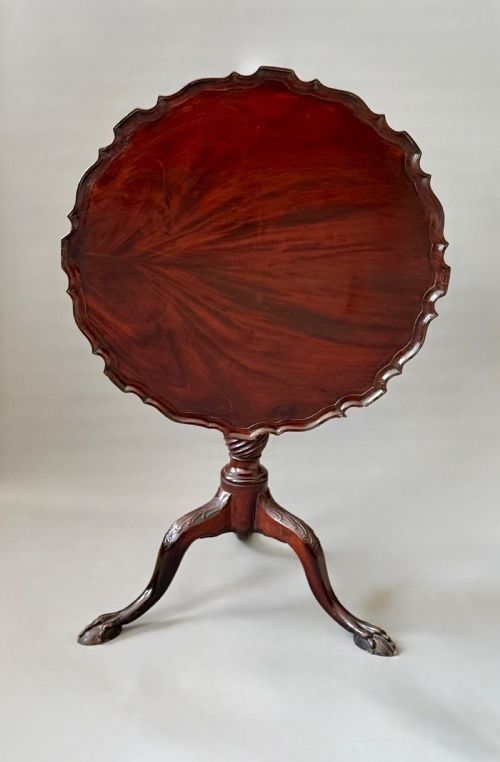
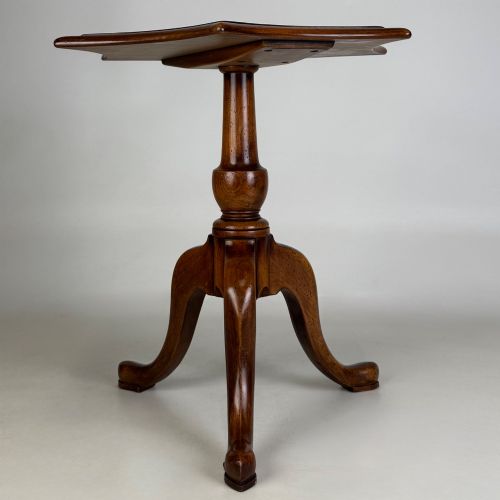
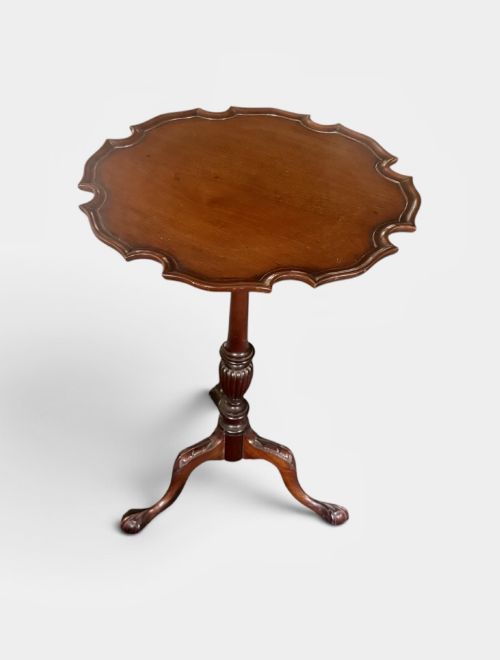
Joinery methods combined traditional turning for the central columns with pegged or dovetailed joints for the leg assemblies. Tilt-top mechanisms incorporated brass catches and wooden birdcage pivots to allow the surface to swing vertical when not in use.
The inventory encompasses periods ranging from the eighteenth century through the Victorian and Edwardian eras into the nineteen-thirties.
Evaluating Quality
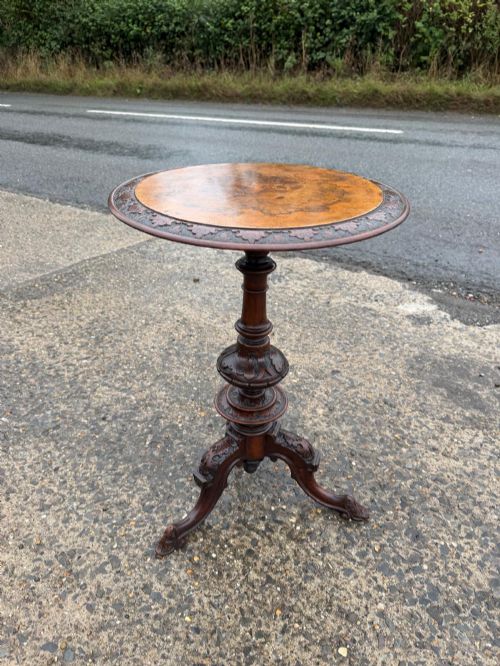
The refinement of the carving dictates the distinction between standard and exceptional pieces, moving from shallow chip-carving to deep, undercut relief work depicting foliage, figures, or animals. Proportions between the diameter of the top and the spread of the tripod base govern the visual balance.
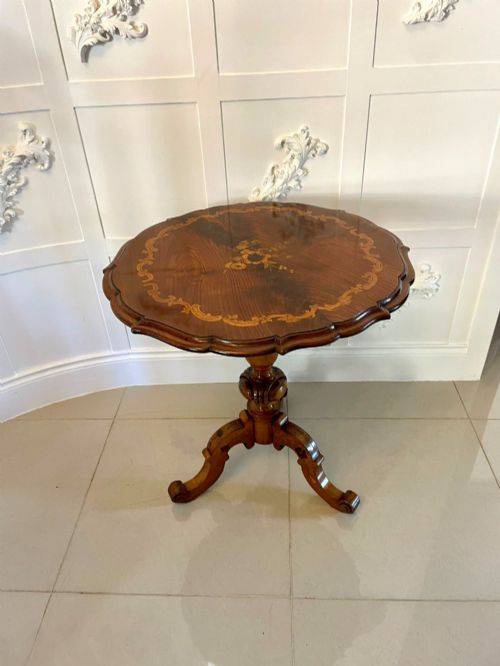
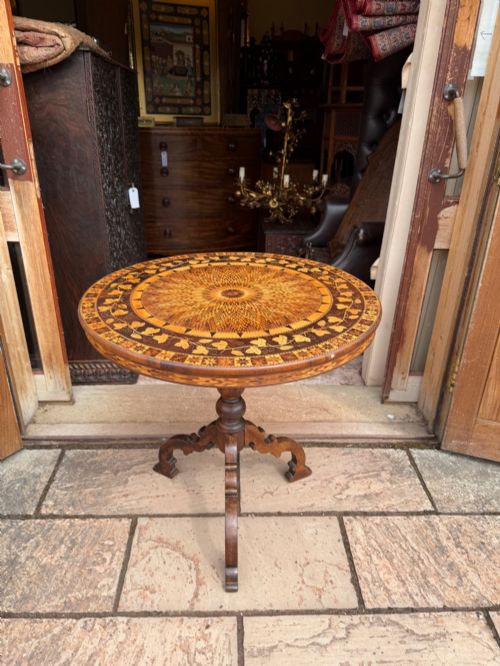
Surface finish and timber selection reveal the original maker's intent, with figured grain patterns, burr wood veneers, and marquetry inlays elevating the status of an occasional table. The integrity of the pedestal turning and the snug fit of tilt mechanisms demonstrate joinery skill.
Gillows
The Carved Tripod Accent Table Glossary
- Tripod table
- A small table supported by a central pillar resting on three legs. This construction prevents wobbling on uneven historic flooring.
- Tilt top
- A table mechanism allowing the surface to rotate and lock vertically. This function enabled owners to store the furniture flat against a wall when the room was needed for other purposes.
- Pie crust edge
- A raised, carved tabletop rim shaped with ornate curves resembling pastry work. Cabinetmakers shaped this moulding directly from the solid timber of the top.
- Marquetry
- Decorative patterns formed by fitted veneers applied to a wooden foundation. Craftsmen utilised contrasting timbers to create floral or geometric pictures.
- Pedestal
- The central vertical column supporting the tabletop above the leg assembly. Turned mouldings or carved fluting often decorate this structural member.
Carved Tripod Accent Table: Frequently Asked Questions
Where do tripod tables originate?
Tripod tables gained widespread popularity in Britain during the eighteenth century, drawing inspiration from classical Italian pedestals. Regional variations soon emerged across Europe and British colonies.
Importers brought back heavily carved examples from Burma, India, and Italy, blending local motifs with standard European table forms.
How do I style a tripod table?
These compact tables fit easily beside armchairs, sofas, or in neglected corners as lamp stands and plant pedestals. Their small footprint allows them to function without crowding a room.
Pairing a walnut or mahogany piece with traditional seating highlights the grain, while painted or inlaid variants add colour and pattern to neutral spaces.
How do I date an antique table?
Dating relies on examining the timber species, joinery techniques, and stylistic ornamentation found across the piece. Eighteenth-century examples often feature solid mahogany with birdcage mechanisms, while Victorian items frequently showcase burr walnut veneers or elaborate turning.
Tool marks on the underside and the method used to attach the legs to the central column provide further clues to the manufacturing decade.