

Small Wooden Plant Stand
A small wooden plant stand brings height and structure to a corner, holding greenery or a lamp upon sturdy timber.
Small Wooden Plant Stand
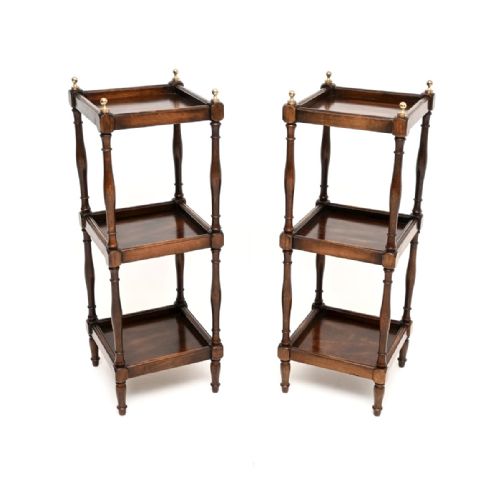
A small wooden plant stand serves to elevate pots, urns, and jardinieres within a room, though many pieces listed double as side tables, lamp tables, or wine tables. You will encounter forms ranging from simple tripod bases to two-tier stands, often created during the Victorian, Edwardian, and early twentieth-century periods.
Makers and workshops constructed these pieces primarily as functional furniture for domestic display, utilising diverse timber species to suit formal drawing rooms or simple rustic interiors. The selection spans distinct design movements, including Arts and Crafts, Jacobean Revival, and Georgian styles.
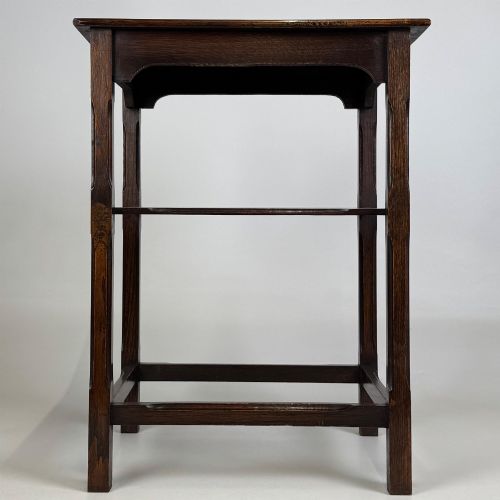
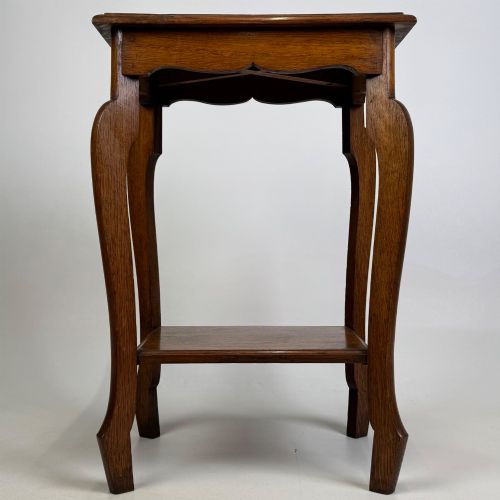
The most common examples on this page date from the Edwardian era and the late nineteenth century, frequently shaped from oak or mahogany. These practical items demonstrate the period preference for dedicated plant holders and occasional surfaces in domestic spaces.
How they were made
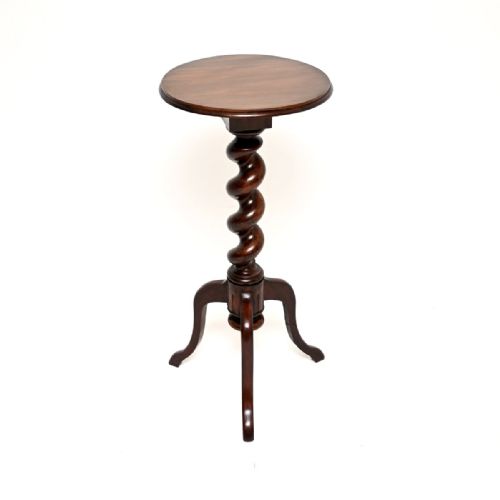
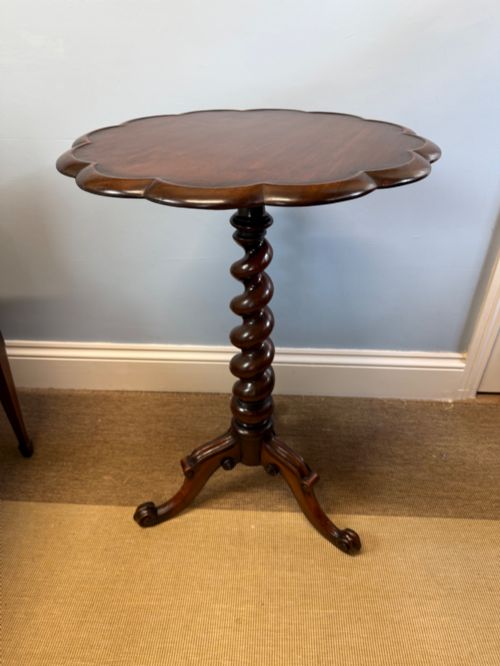
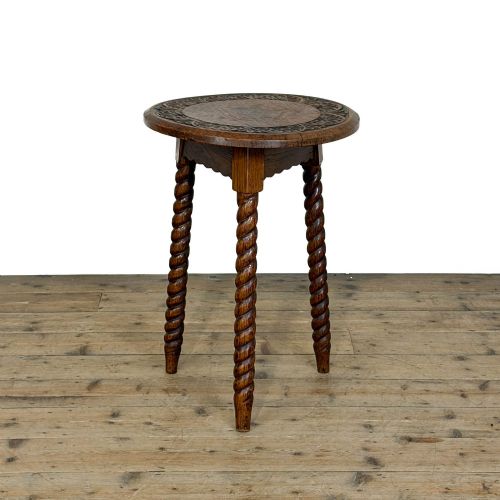
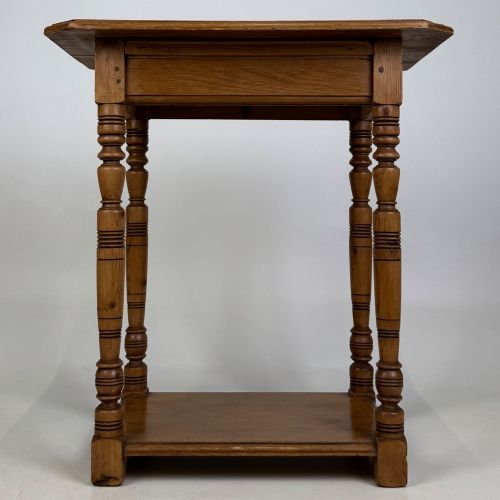
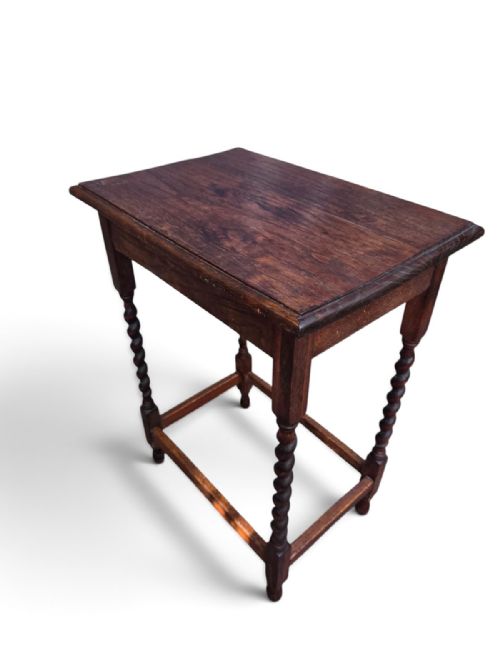
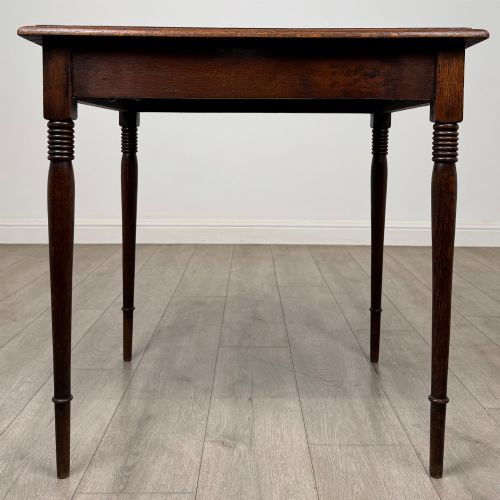
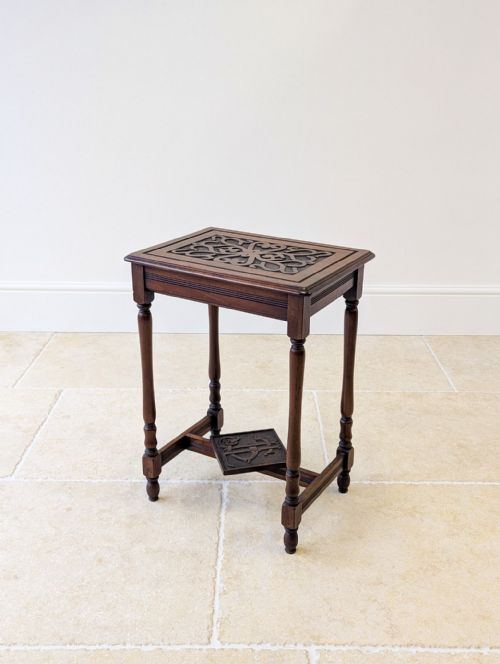
Cabinet makers built these stands using a foundation of solid hardwoods such as oak, mahogany, walnut, and elm, often turning legs on a lathe to create barley twist or bobbin supports. Timber selection dictated the strength of the tripod or four-legged frames necessary to support heavy ceramic or metal plant containers.
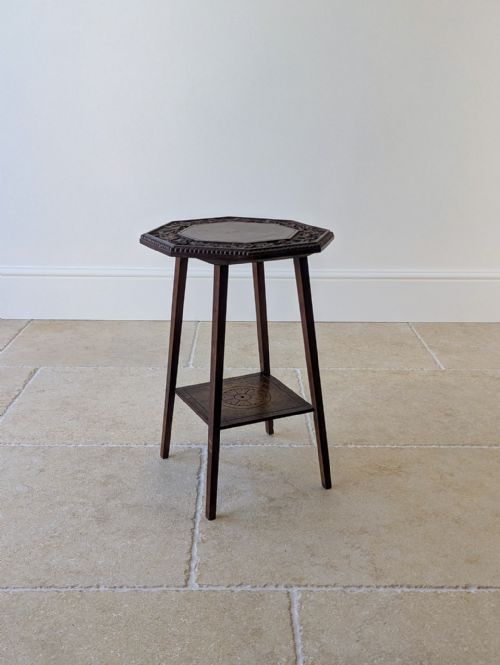
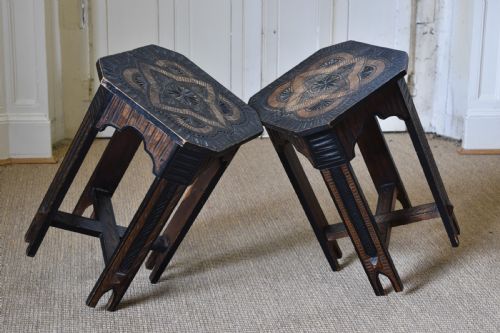
Joinery techniques included mortise and tenon joints for stable frames, alongside detailed surface enrichment like chip carving and wood inlay. Some pieces incorporate brass fittings, while others rely entirely on the natural grain of ebonised wood, hardwood, or rosewood.
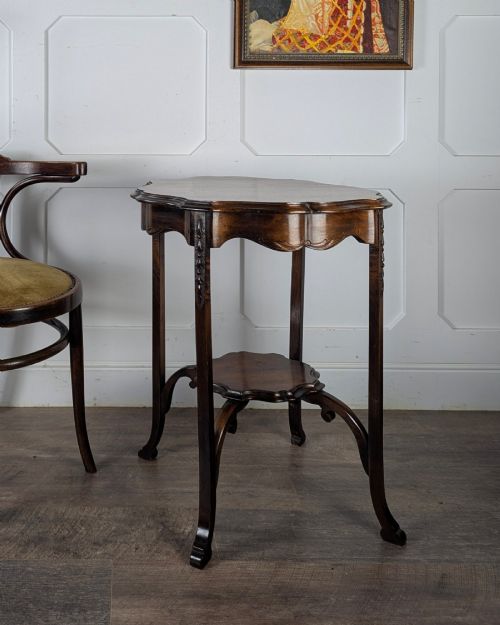
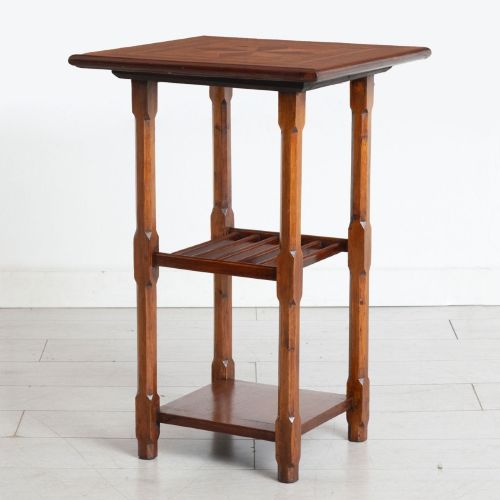
Makers shaped circular, square, and oval tops to fit specific plant pots and urns, sometimes incorporating a second lower tier for stability or storage. The physical construction balances slender vertical height with a wide enough base to prevent tipping under the weight of a planted jardiniere.
Several modest elm stools and rustic tables cross the boundary between seating and plant display with rustic charm.
What varies in quality
Quality rests in the selection of timber and the precision of the turning and carving, where crisp lines on a barley twist or deep chip carving distinguish finer workshop output from utilitarian items. The density and grain pattern of woods like walnut, mahogany, and oak determine the visual depth of the surface.
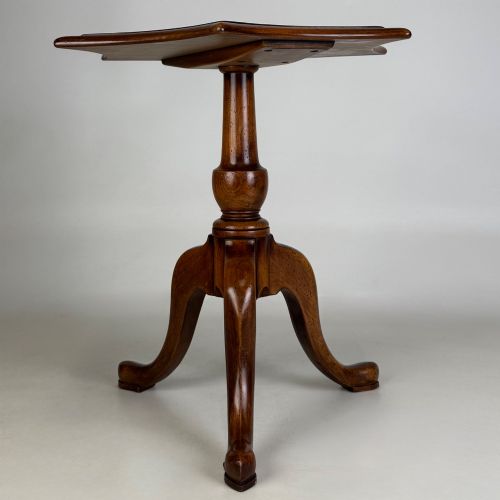
Structural integrity separates simple utility stands from refined occasional pieces, visible in tight joints and balanced tripod legs that sit firmly on the floor without wobble. Subtle details such as fine inlay work or carefully shaped edges elevate a standard plant stand into an accomplished piece of period cabinet making.
Baillie Scott·Druce & Co London
The Small Wooden Plant Stand Glossary
- Jardiniere stand
- A tall piece of furniture specifically designed to hold a ceramic or metal flower container, often with a waterproof liner or flat top. These stands position plants at eye level.
- Tripod table
- A small table supported by three legs radiating from a central pillar, offering stable placement on uneven historic floorboards. This configuration is common in plant and wine stands.
- Barley twist
- A type of decorative turning resembling a spiral rope, frequently found on the legs of Edwardian and Victorian tables and stands. This technique adds vertical texture to slender supports.
- Chip carving
- A method of ornamentation where small chips are removed from the surface of the timber to create geometric or floral patterns. It appears frequently on Arts and Crafts pieces.
- Urn stand
- A small, elevated table historically used to hold a tea urn, now frequently repurposed as a plant or lamp stand. These pieces often feature raised edges or refined oval tops.
Small Wooden Plant Stand: Frequently Asked Questions
What is a small wooden plant stand used for?
These pieces elevate potted plants, jardinieres, and floral arrangements to improve room layout and catch natural light.
They also function as compact lamp tables, wine tables, or side surfaces in tighter spaces.
How do I tell an Edwardian stand from a Victorian one?
Victorian examples often feature heavier timber, darker finishes, and dense ornamentation like elaborate turning or ebonising.
Edwardian and later pieces tend to show lighter oak or mahogany construction, sometimes incorporating simple inlay or clean Arts and Crafts lines.
Can these stands hold heavy ceramic pots?
Most pieces were built specifically to support the weight of planted jardinieres and heavy ceramic urns.
Solid hardwood frames and sturdy tripod bases provide the necessary strength for daily indoor use.
Where should I place a plant stand at home?
They fit well in corners, beside seating, or near windows where plants receive adequate sunlight.
Their compact footprints allow them to occupy narrow hallways and landings without blocking movement.