

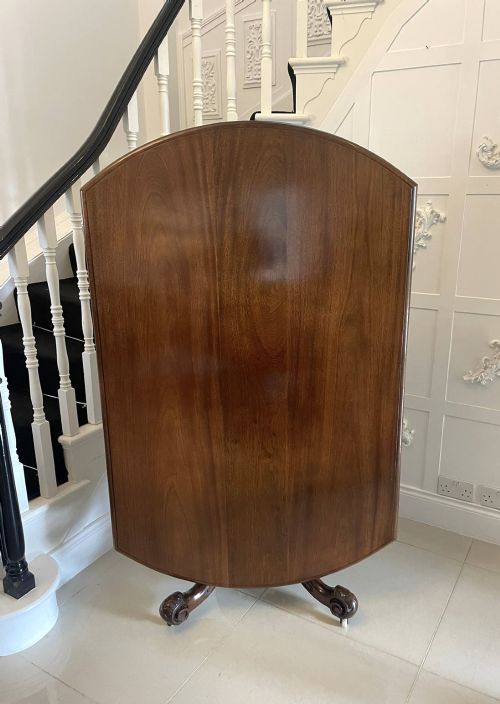
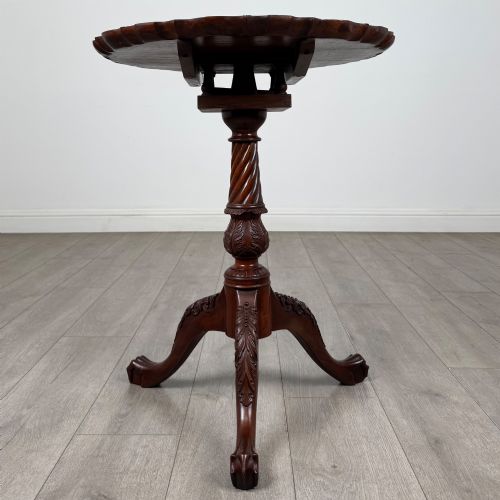
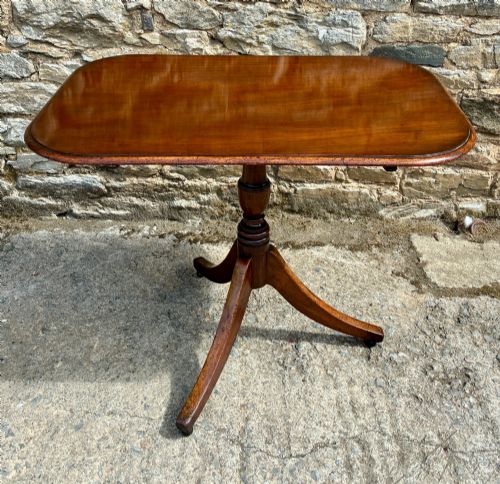
Dark Mahogany Tilt Table
A dark mahogany tilt table combines practical ingenuity with polished timber, offering a versatile surface that pivots away when space is at a premium.
Dark Mahogany Tilt Table
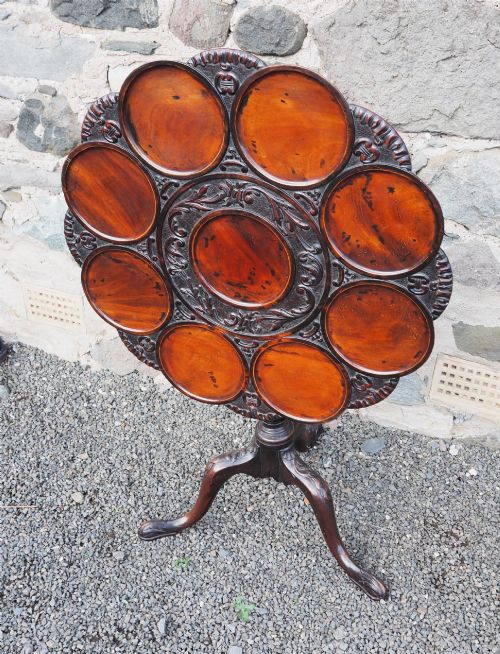
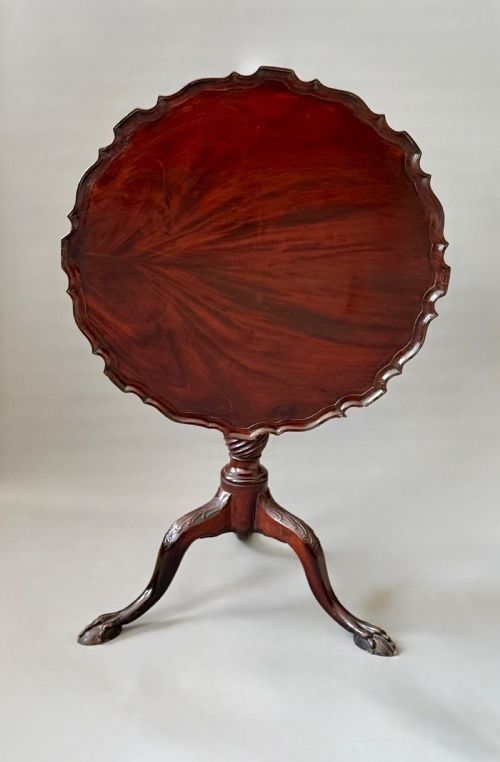
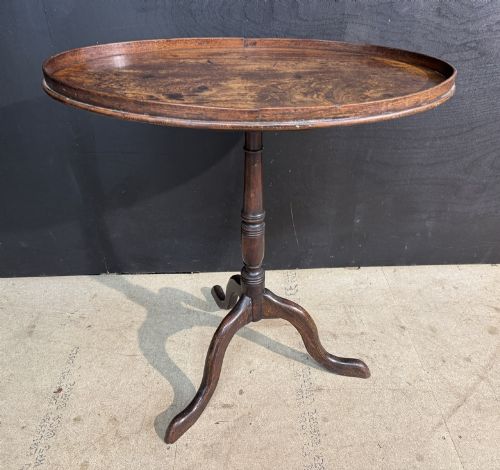
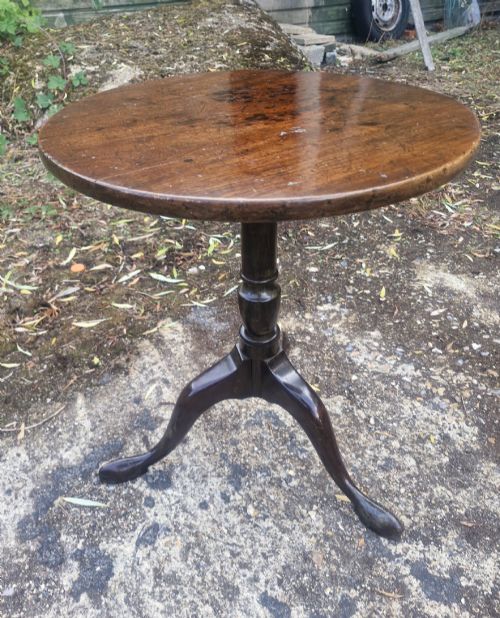
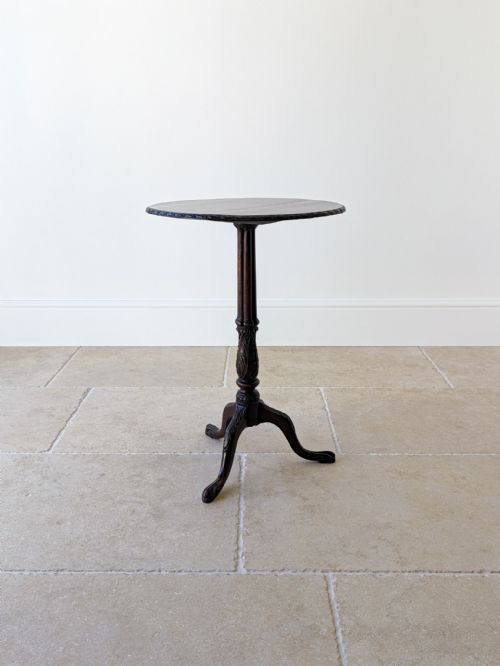
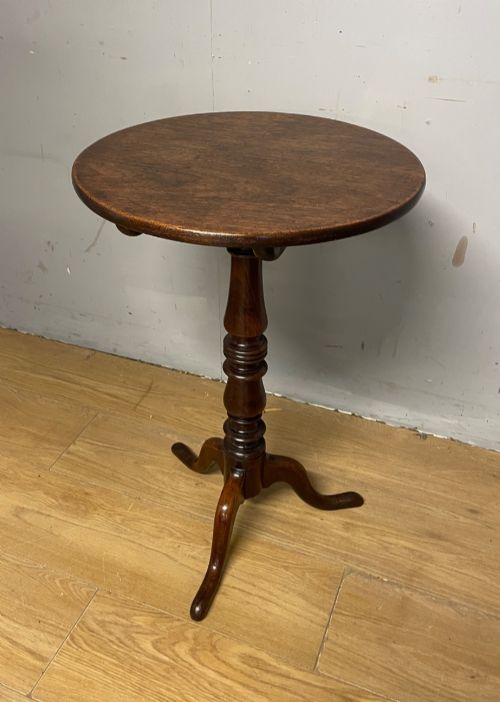
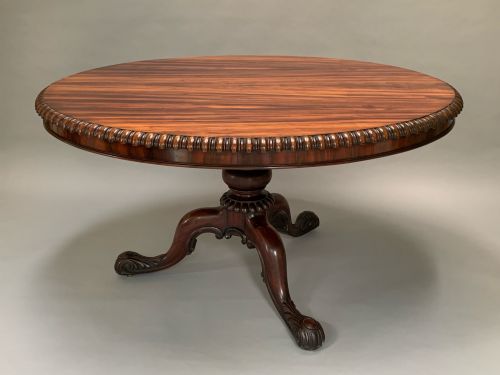
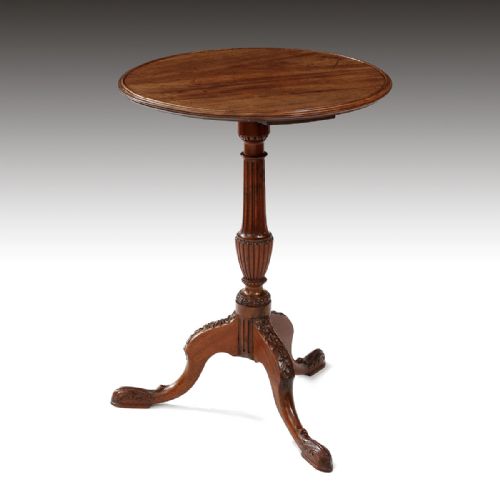
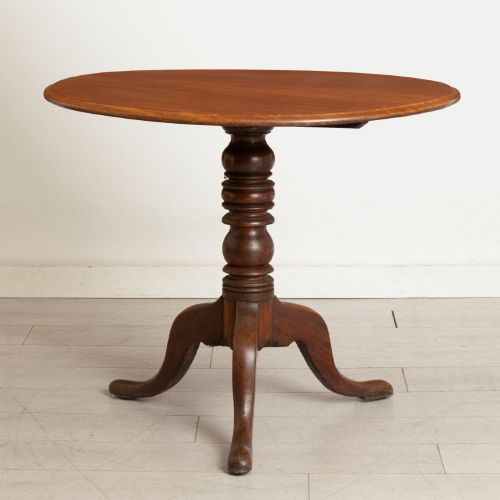
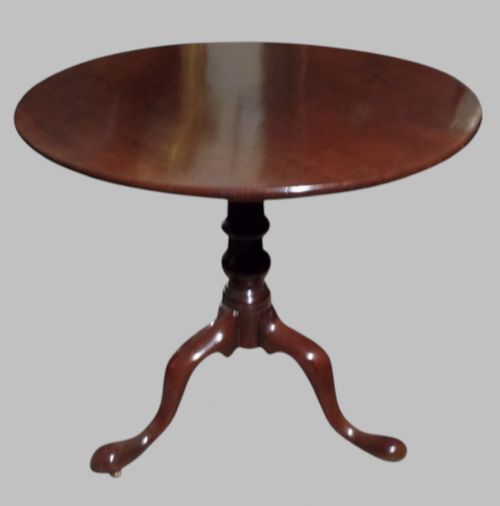
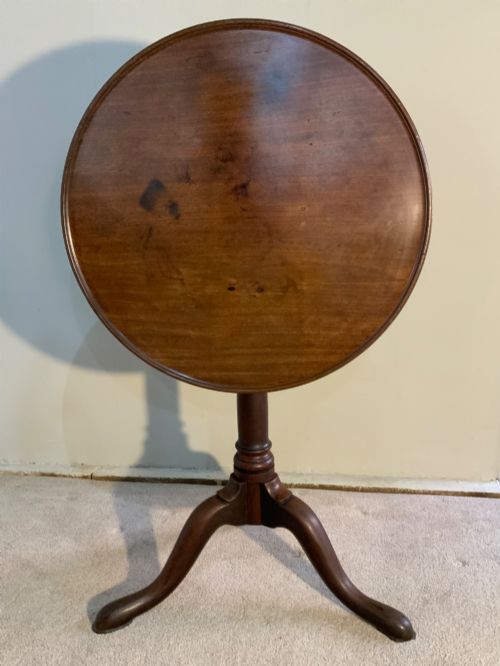
A dark mahogany tilt table appears primarily as a tripod wine table, occasional table, or breakfast table across the 18th century, Georgian, Regency, and Victorian eras. These pieces serve flexible domestic roles, standing ready for tea or reading before tilting upright to clear floor space.
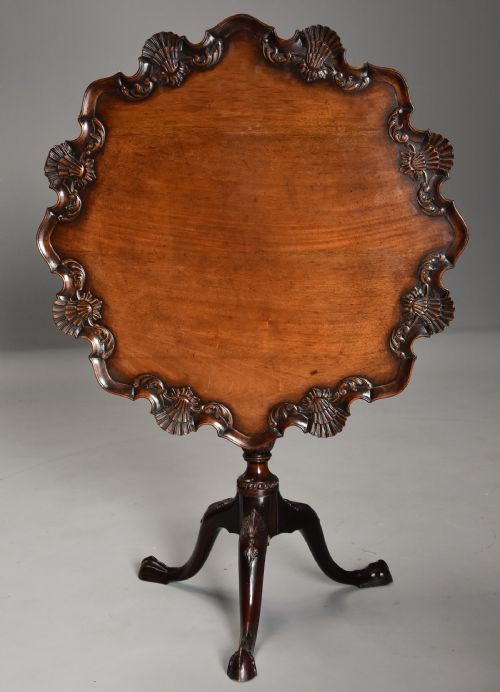
The most common formats on this page are compact tripod wine tables and occasional tables bearing circular, octagonal, or pie crust tops. Pieces date from the 18th century through to the 19th century, drawing on Georgian and Regency design traditions.
Materials and construction methods
Craftsmen built these tables using solid mahogany, Cuban mahogany, and flame mahogany veneer, occasionally incorporating rosewood, walnut, brass, and wood inlay. Timber was selected for deep natural grain and rich colour before being shaped into tops and pedestals.
Makers utilised mechanical elements such as birdcage mechanisms and tilting actions to allow the surface to pivot on a central column and tripod base. Joints were carefully balanced to support the weight of the timber top securely whether flat or upright.
Dark Mahogany Tilt Table Retail Price Guide 2026
Typical asking prices for dark mahogany tilt table among the pieces listed under this phrase on Sellingantiques today, from the lower quarter to the upper quarter. They describe what is for sale here now, not the wider market.
Some tables include hidden birdcage frames that let the top spin like a compass before tipping sideways.
Distinctions in construction and design
Quality rests in the crispness of the timber carving, particularly on tripod legs, birdcage mounts, and moulded or pie crust edges. Superior examples display finely figured flame mahogany or Cuban mahogany with robust central pedestals that maintain a steady balance.
The sophistication of the tilting mechanism dictates refinement, where well-engineered catches and joints allow smooth movement without looseness in the central column. Proportions between the top and the supporting tripod feet define the visual harmony of each piece.
Gillows
The Dark Mahogany Tilt Table Glossary
- Tilt top
- A table top hinged to pivot from horizontal to vertical, allowing the furniture to be stored flat against a wall when not in use.
- Tripod base
- A three-legged support structure commonly found beneath pillar tables to ensure stability on uneven floors.
- Birdcage
- A wooden framework beneath the table top that enables both rotation and tilting of the surface.
- Pie crust
- A decorative carved raised edge shaped in undulating curves resembling pastry work on fine 18th century tables.
- Snap top
- An alternative term for a tilt top table, held horizontally by a spring catch or wooden latch.
Dark Mahogany Tilt Table: Frequently Asked Questions
What is a birdcage mechanism?
A birdcage is an internal wooden assembly placed between the table top and the central pillar. It permits the surface to rotate horizontally and tilt vertically.
This clever engineering allowed owners to tuck tables away into corners of a room when entertaining guests or clearing space.
How do I date a tilt table?
Dating relies on observing leg profiles, timber choices such as Cuban mahogany, and the style of the central column. Georgian and 18th century examples often display slender tripod legs, while Victorian pieces can feature heavier proportions.
Examining construction marks and secondary woods inside the mechanism provides further clues to the manufacturing decade.
Were these tables used for dining?
Smaller versions served as wine tables, tea tables, or occasional furniture for holding books and small items. Larger breakfast tables and centre tables accommodated morning meals or gatherings.
The tilting function made them practical for multi-purpose rooms where furniture needed frequent rearrangement.
How do I care for a mahogany top?
Keep wooden surfaces away from direct sunlight and extreme temperature fluctuations to prevent the mahogany veneer or solid boards from drying out. Routine dusting with a soft cloth maintains the natural lustre of the finish.
Avoid placing damp items directly onto the polished wood to protect the historical surface.