
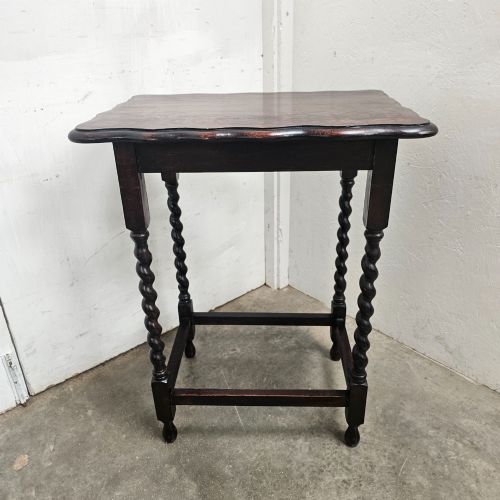
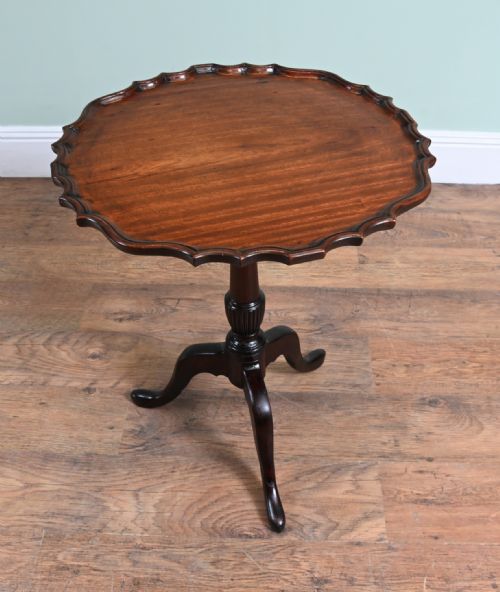


Pie Crust Side Table
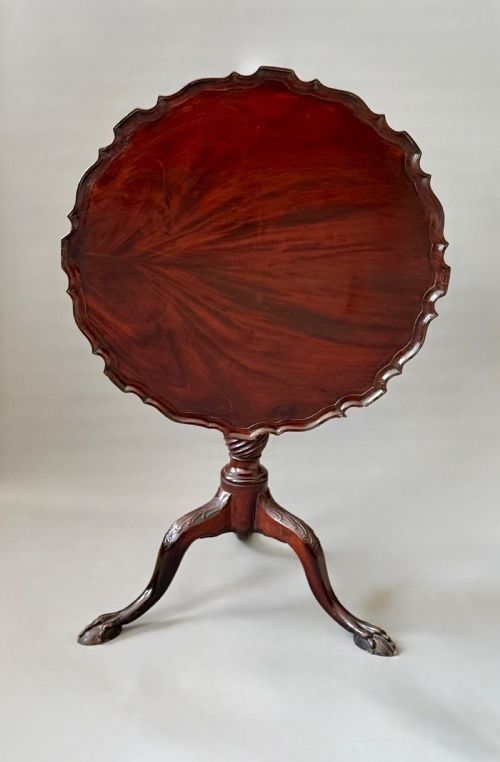
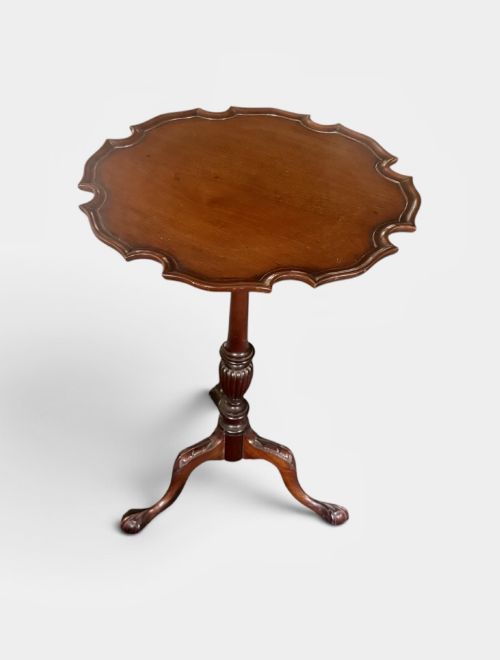
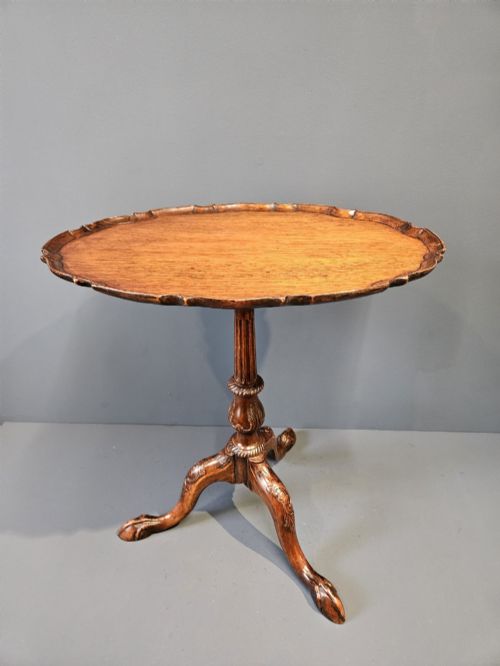
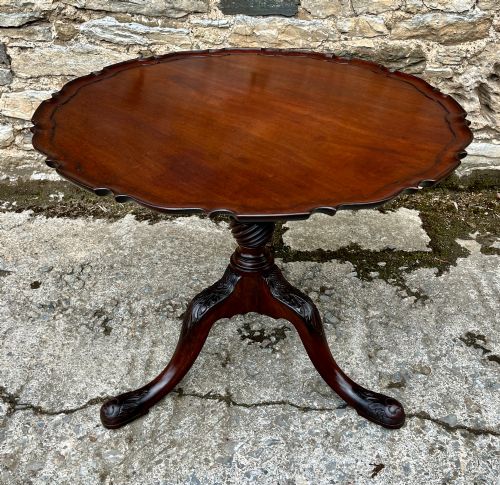
A pie crust side table combines sturdy timber construction with a characteristically raised, carved rim, offering a functional surface suited to a lamp or glass.
Pie Crust Side Table
The pieces appearing on this page span the eighteenth century through the Georgian and Regency periods, alongside Edwardian revivals and later twentieth-century iterations. Mahogany and walnut dominate the selection, appearing in tripod designs, occasional tables, and coffee tables.
Tripod bases with central pillars are common amongst the earlier examples, while later decades introduce occasional tables, nesting sets, and console variants. Many retain functional tilt-top mechanisms designed to save space when not in use.
Materials and construction
Carpenters shaped these tables primarily from solid mahogany, oak, and walnut, often employing figured walnut veneers to create patterned tops. The signature raised edge required skilled hand-carving from a thick solid timber board or careful shaping along the perimeter.
Many examples incorporate a birdcage or tilt-top mechanism, allowing the surface to pivot and lock vertically via a wooden catch or brass fastening. Turned pedestals connect the top to tripod legs, frequently ending in pad feet or carved pad supports.
Pie Crust Side Table Retail Price Guide 2026
Typical asking prices for pie crust side table among the pieces listed under this phrase on Sellingantiques today, from the lower quarter to the upper quarter. They describe what is for sale here now, not the wider market.
Form variations on this page include tripod wine tables, coffee tables, nesting sets, console tables, and supper tables.
Distinctions in quality
Quality rests upon the crispness of the carved rim and the selection of timber, such as heavily figured burr walnut veneer or dense, well-grained mahogany. Finer examples display harmonious proportions between the top diameter, the turned pillar, and the sweep of the tripod legs.
The sophistication of the timber joints and the smooth operation of the tilt mechanism distinguish finer workshop output from later revival pieces. Superior tables retain well-defined moulding along the pie crust edge without softening or wear from historic over-polishing.
Gillows
The Pie Crust Side Table Glossary
- Pie crust edge
- A raised, scalloped perimeter carved into the timber top, mimicking traditional pastry work.
- Tilt top
- A hinged mechanism allowing the table surface to fold flat against the pedestal for storage.
- Tripod base
- A central pillar supported by three radiating feet, commonly used on smaller occasional tables.
- Burr walnut
- A prized timber veneer showing intricate knot patterns and swirls, frequently applied to tabletops.
- Occasional table
- A small, movable surface intended for general use rather than a specific dining function.
Pie Crust Side Table: Frequently Asked Questions
What was a pie crust table used for?
These tables served primarily as movable surfaces for tea, wine, or lamps in eighteenth and nineteenth-century parlours. The raised rim prevented cups and glassware from sliding off when the table was in use.
Tilt-top variants allowed households to fold the surface upright against a wall when the room needed to be cleared for other activities.
How do I tell an 18th-century table from a revival?
Eighteenth-century examples display timber shrinkage, hand-cut joinery, and wear patterns consistent with age on the pillar and feet. Revivals from the Edwardian period or the 1920s often use standardised machine fixings and cleaner, more uniform wood grains.
Examining the underside of the top and the pivot mechanism reveals the construction methods typical of specific eras.
Can I use a tilt-top table daily?
Daily use is practical provided the pivot mechanism and catch remain secure and stable. Placing the table where it receives minimal accidental bumps protects the central pillar and leg joints from strain.
Frequent tilting puts wear on the wooden catch, so many owners leave the surface fixed horizontally in modern settings.