




Coastal Harbour Painting
A coastal harbour painting captures the salt air and shifting light of maritime life, offering a timeless window into historic ports and busy quaysides.
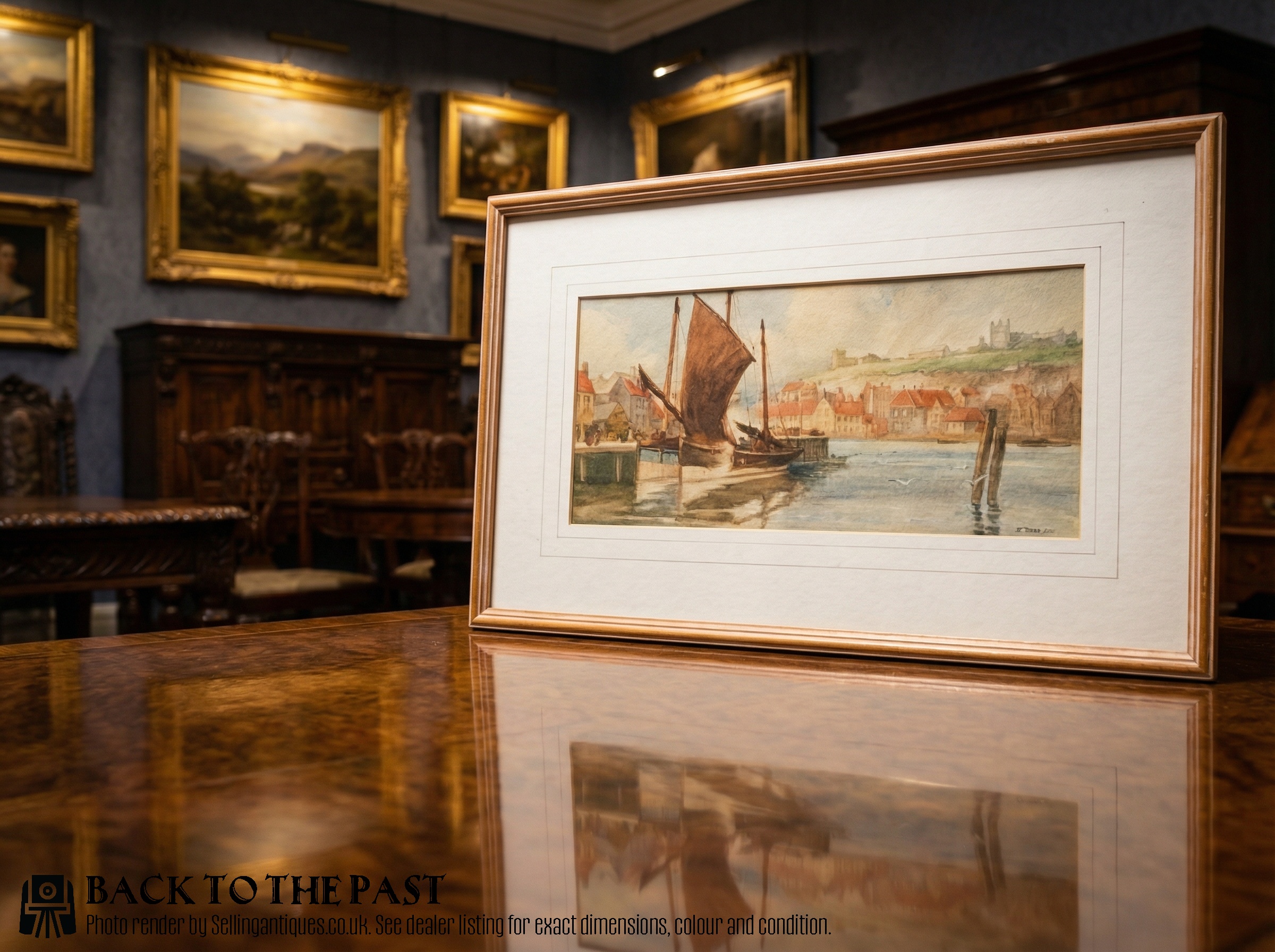
Coastal Harbour Painting
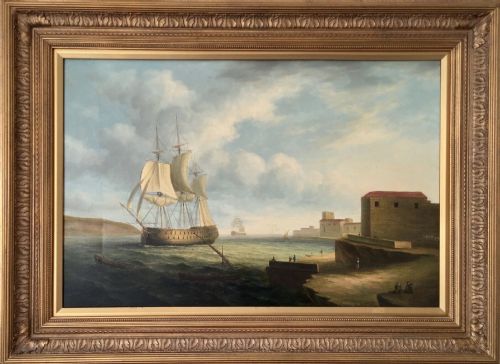
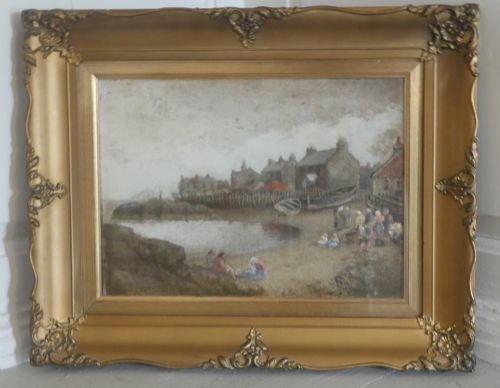
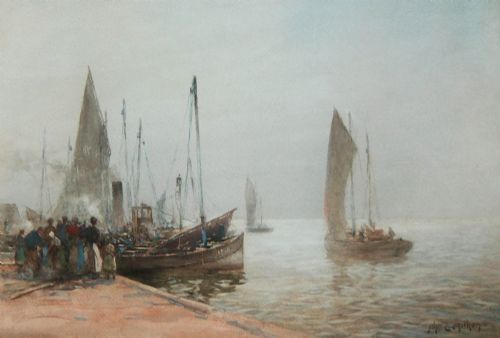
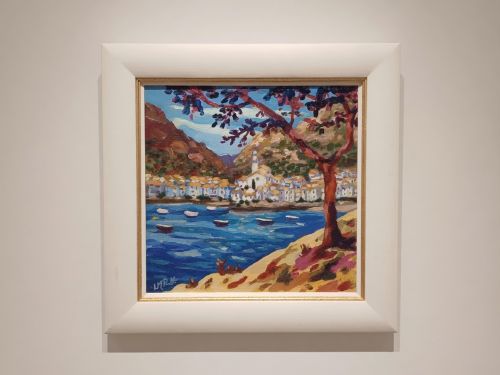
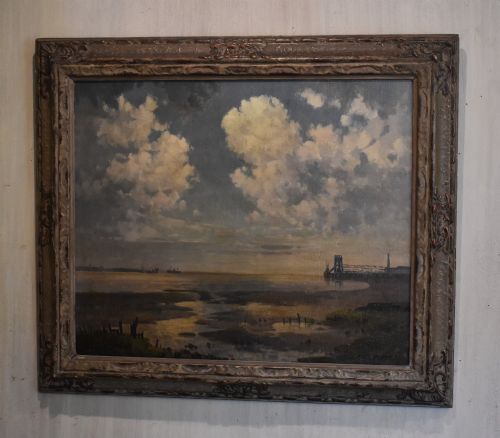
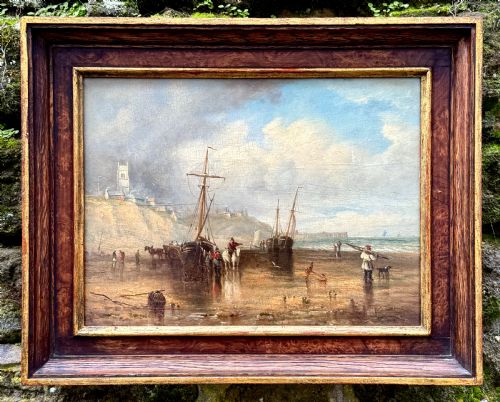
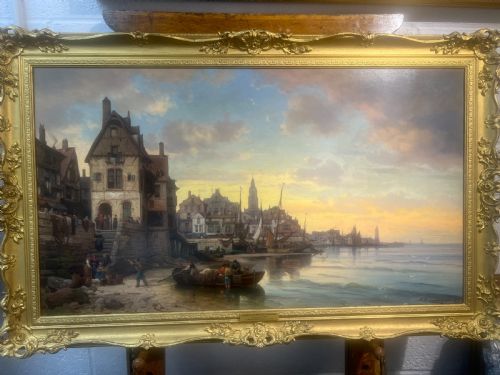
A coastal harbour painting depicts maritime views, from bustling fishing ports and quiet anchorages to open coastal vistas along British and European shores.
Buyers will encounter works spanning the nineteenth century through to the mid-twentieth century, embracing periods like Victorian marine art and mid-century modernism.
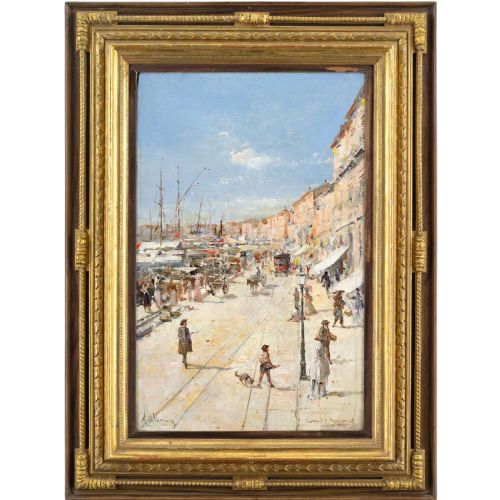
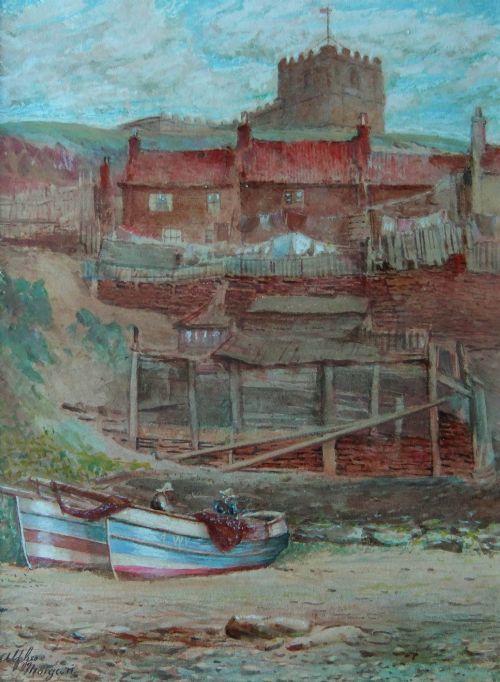
The selection ranges from detailed watercolours on paper capturing local Cornish havens to expressive oil paintings on canvas portraying Mediterranean and domestic docks.
Materials and technique
Artists relied primarily on oil paint applied to canvas or wood panels, or transparent watercolours worked onto heavy paper, depending on the desired atmospheric effect.
Works are frequently housed in period gilt wood frames that complement the maritime subject matter and protect the delicate painted surface.
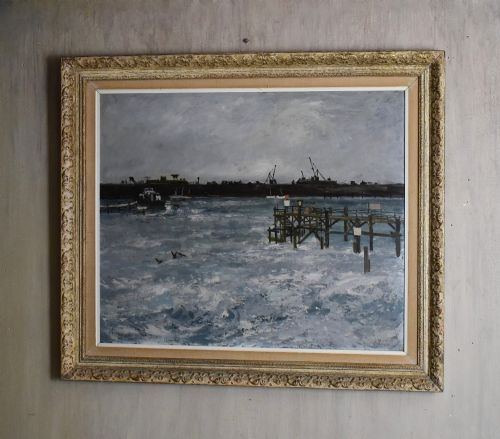
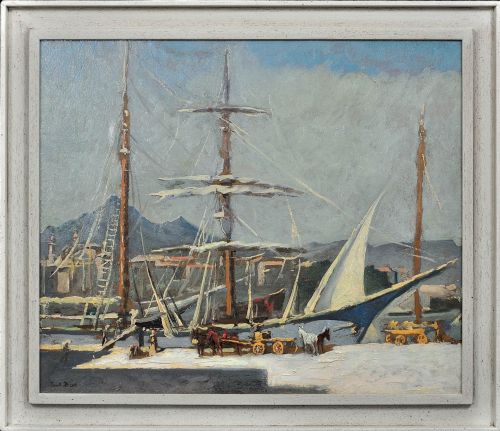
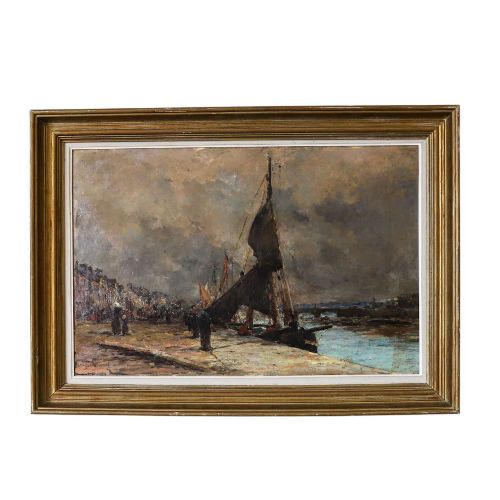
Techniques vary from fine brushwork recording precise rigging on warship panels to looser, impasto applications capturing the energetic movement of waves and clouds.
Several artists captured bustling quaysides while others painted quiet coastal retreats, proving that even canvas ships need a safe harbour.
Assessing quality and execution
Quality rests upon the artist's ability to render light, water movement, and atmospheric perspective with conviction rather than mere formulaic repetition.
Superior examples demonstrate confident handling of medium, whether capturing the transparency of sea spray in watercolour or the heavy impasto texture of a bustling quayside in oil.
Provenance and documented signatures by known practitioners elevate the standing of a piece, distinguishing standard decorative works from fine art paintings.
James Hardy·Kenneth Cozens·Edward Mills·James E Aitken·John E Aitken·William Banks Fortescue·Augusto Alberici·Lucy Pratt·Clive Browne·Peter Brannan·Paul Bret·Hector Caffieri·Thomas Creswick·Charles Euphraisie Kuasseg·Alfred G Morgan·William Matthison·Frank Kelsey·Walter Goodin·F A Roylance·George F Pennington·Paul Delvaux·Lokre·William Edward Webb·Edward Matthew Elliott·Richard Harry Carter
The Coastal Harbour Painting Glossary
- Watercolour
- A painting method in which the paints are made of pigments suspended in a water-based solution. It is traditionally applied to paper to achieve translucent washes of colour.
- Impasto
- The process or technique of laying on paint or pigment so that it stands out in relief from a canvas. This technique adds tactile depth and catches light across the surface.
- Seascape
- A type of fine art depicting the sea, coastlines, and maritime activities. These works focus heavily on the interaction between water, sky, and shore.
- Gilt wood
- Wood that has been treated with a thin layer of gold leaf or gold-coloured pigment. It is commonly found framing traditional nineteenth-century paintings.
Coastal Harbour Painting: Frequently Asked Questions
What subjects appear in these paintings?
The works predominantly depict ships, fishing boats, quaysides, and coastal towns across Britain and continental Europe.
Scenes range from calm inland havens to stormy northern waters and sunlit Mediterranean ports.
How should I display a vintage maritime painting?
These works suit traditional and modern interiors alike, often serving as a focal point above a mantelpiece or sideboard.
Keep them away from direct sunlight and excessive moisture to protect the paper, canvas, and gilt wood frames.
Are watercolours different from oil paintings?
Watercolours on paper offer a lighter, more transparent quality that benefits from protective glass framing.
Oil paintings on canvas or board present richer textures and deeper pigments, often framed without glass.
How can I identify the period of a piece?
Stylistic clues such as Impressionist brushwork or Victorian maritime realism help narrow down the date of execution.
Artist signatures, framing styles, and inscriptions naming specific ports provide further historical context.