



Brown Boat Watercolour
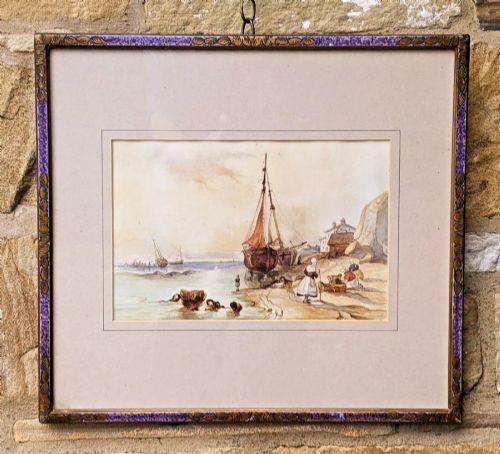
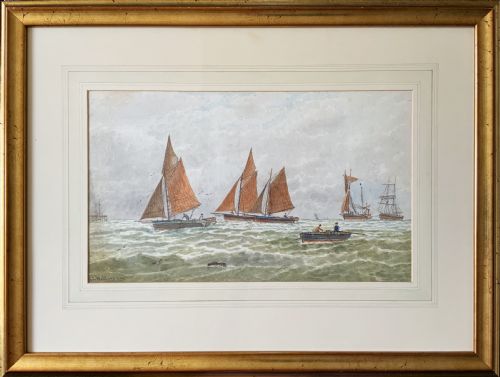
These brown boat watercolour works capture maritime scenes from the nineteenth and early twentieth centuries, offering buyers a glimpse into historic harbours and coastal life.
Brown Boat Watercolour
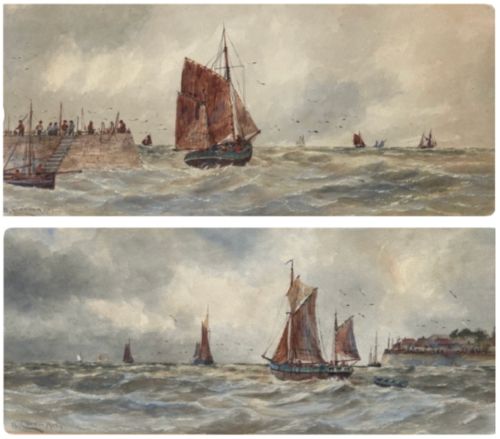
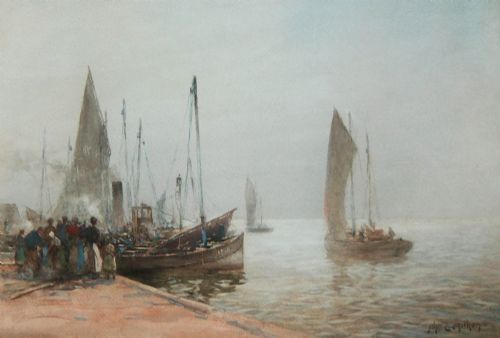
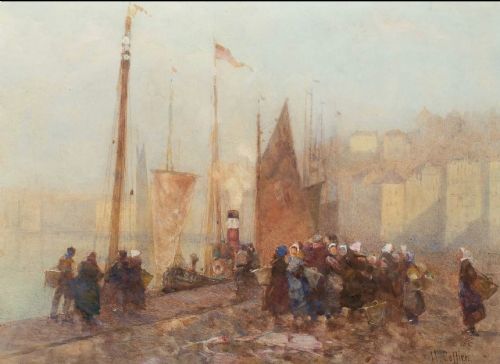
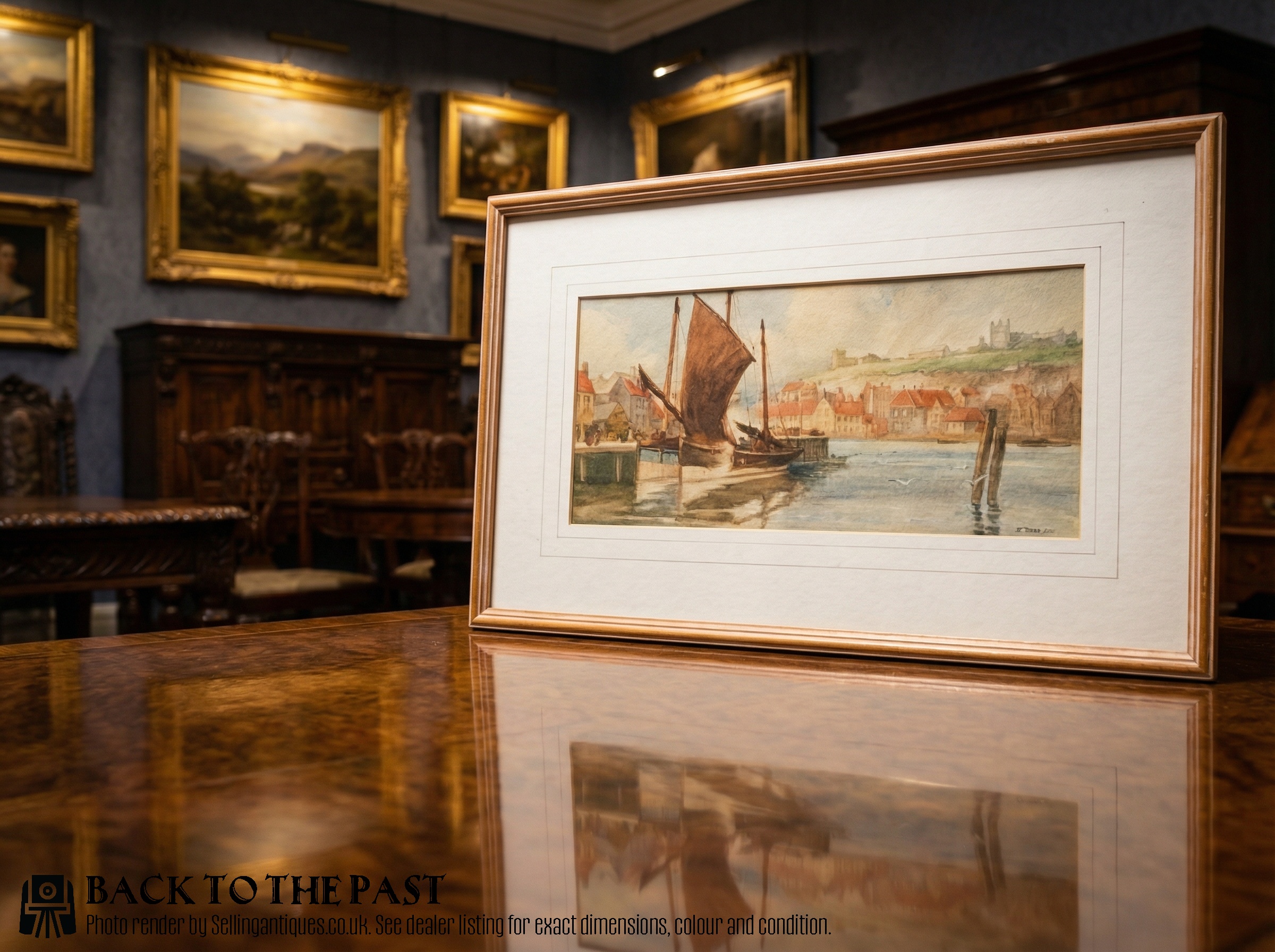
A brown boat watercolour depicts maritime and coastal subjects, focusing primarily on fishing vessels, harbours, and sailing ships rendered in water-based media. Buyers searching for a brown boat watercolour typically seek framed paintings and drawings that document nineteenth-century and early twentieth-century marine life.
The most common version on this page is a nineteenth-century or early twentieth-century British marine painting featuring fishing boats, coastal harbours, or sailing vessels. These works span Victorian and Edwardian periods, frequently capturing scenes from British coastal towns and European ports.
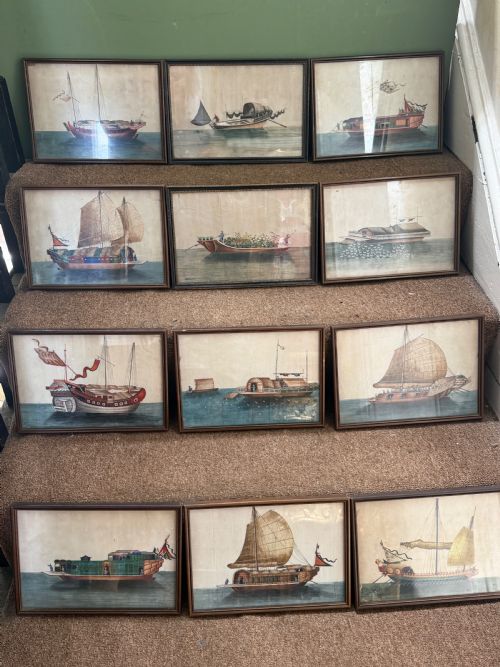
Beyond British coastal scenes, the selection includes Chinese export gouache paintings of junks alongside continental harbour views. The primary subjects remain marine and maritime compositions executed on paper.
Materials and technique
These works are executed using watercolour pigment, gouache, and watercolour paint applied directly to paper supports. Artists built up transparent washes alongside opaque highlights to render water, sky, and vessel details.
Finished pieces are typically housed within wooden frames, often protected behind glass to preserve the paper and pigment from atmospheric damage. The physical construction combines traditional works on paper with period framing materials.
The artistic styles represented span Victorian marine, British Impressionism, and Chinese Export traditions.
What separates the top of the range
Quality in these watercolours rests upon the precision of the brushwork and the artist's ability to capture atmospheric coastal light and movement. Finer examples display confident handling of water and sail, whereas lesser works rely on formulaic compositions.
Attribution and provenance further distinguish the range, as signed works by documented maritime artists command greater attention than anonymous sketches. The preservation of the original paper and pigment vibrancy also determines the standing of an individual piece.
James Orrock·William Cannon·James E Aitken·Hector Caffieri·George Stanfield Walters·Thomas Bush Hardy·Tom Clough·Fred Mayor·Walter Sweet·William Stephen Coleman·Frank Wasley·Charles Edward Wilson·Edward Wesson·Thomas Lound
The Brown Boat Watercolour Glossary
- Watercolour pigment
- A colourant suspended in a water-soluble binder, applied to paper to create translucent washes.
- Gouache
- An opaque water-based medium that includes a white pigment filler, allowing for solid highlights and flat colour areas.
- Chinese Export
- Goods produced in China specifically for Western markets, encompassing maritime subjects such as junks and shipping.
- Marine painting
- Artwork that depicts ships, harbours, coastal views, and maritime activities.
- Staithe
- A landing stage or wharf used for loading timber and goods, frequently appearing in nineteenth-century coastal scenes.
Brown Boat Watercolour: Frequently Asked Questions
What is a brown boat watercolour?
A brown boat watercolour is a painting or drawing on paper depicting maritime scenes, coastal views, and vessels using water-soluble pigments.
These works date predominantly from the nineteenth and early twentieth centuries, capturing harbours, fishing fleets, and sailing ships.
How do I date a maritime watercolour?
Dating relies on stylistic markers, artist signatures, framing materials, and subject matter associated with the Victorian and Edwardian eras.
Paper characteristics and handwritten titles on the reverse also provide clues to the period of creation.
How should I display and care for these paintings?
Watercolours on paper require protection from direct sunlight to prevent the pigments from fading over time.
Keeping them behind glass within stable indoor environments helps preserve the paper support and prevent moisture damage.
Where were most of these coastal scenes painted?
The works originate largely from British coastal towns, Scottish harbours, and continental European ports visited by maritime artists.
Specific locations such as Whitby, Boulogne, and various Dutch harbours frequently appear in the titles.