



Original British Watercolour
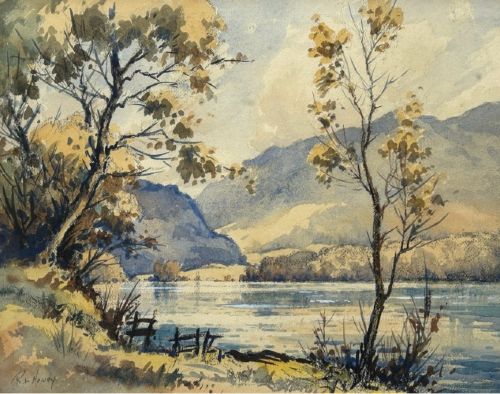
An original british watercolour captures the shifting light and enduring character of the landscape through direct, pigment-on-paper observation.
The Nature of Original British Watercolour
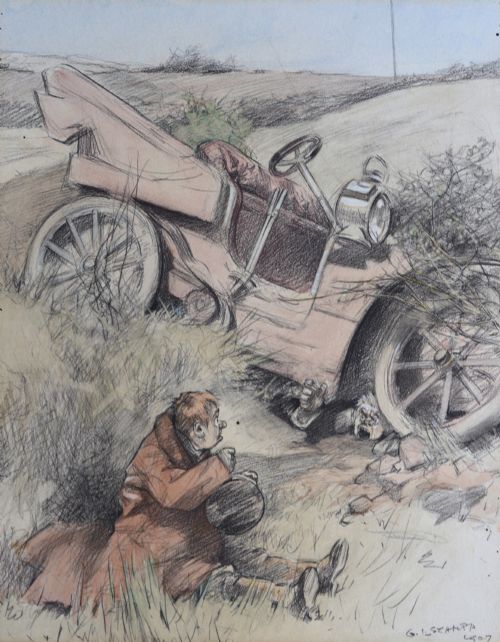
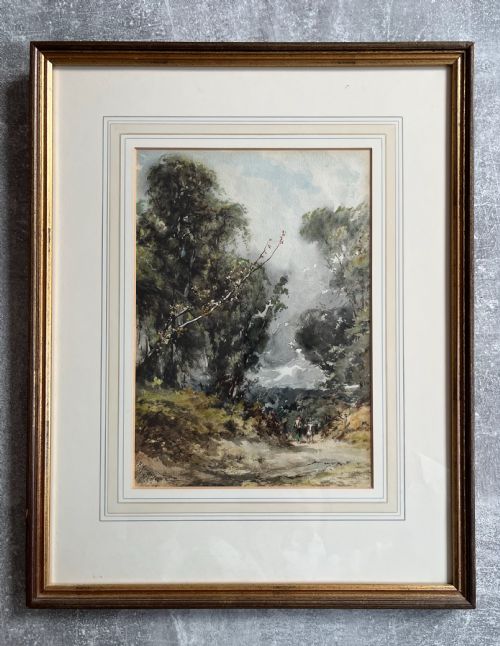
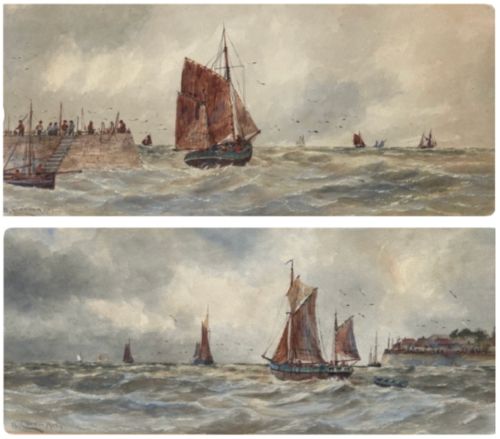
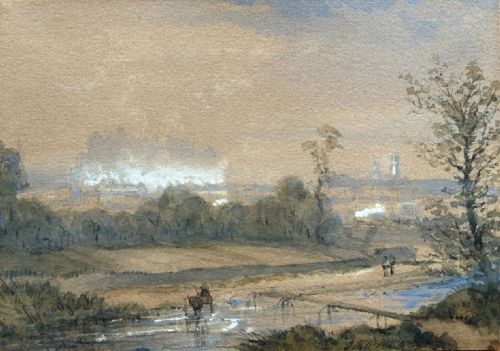
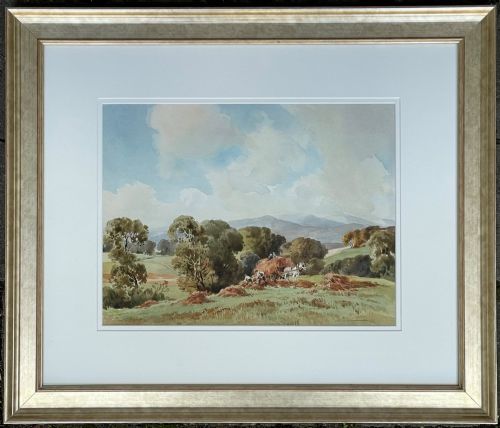
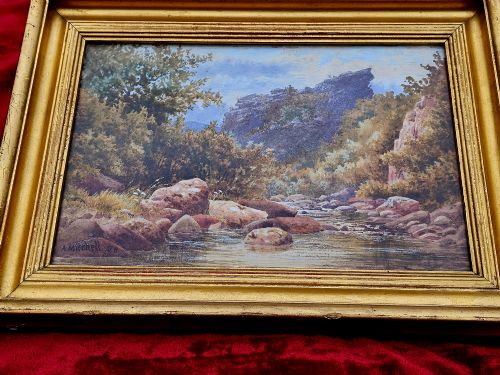
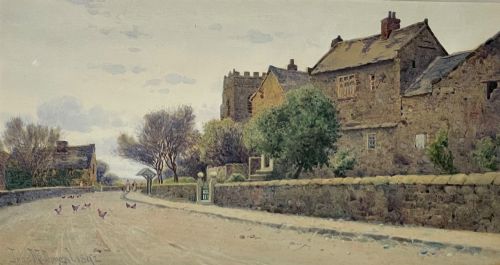
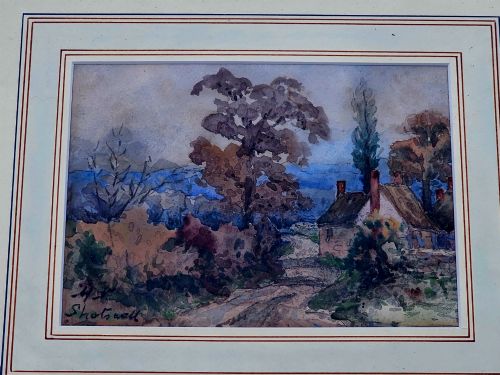
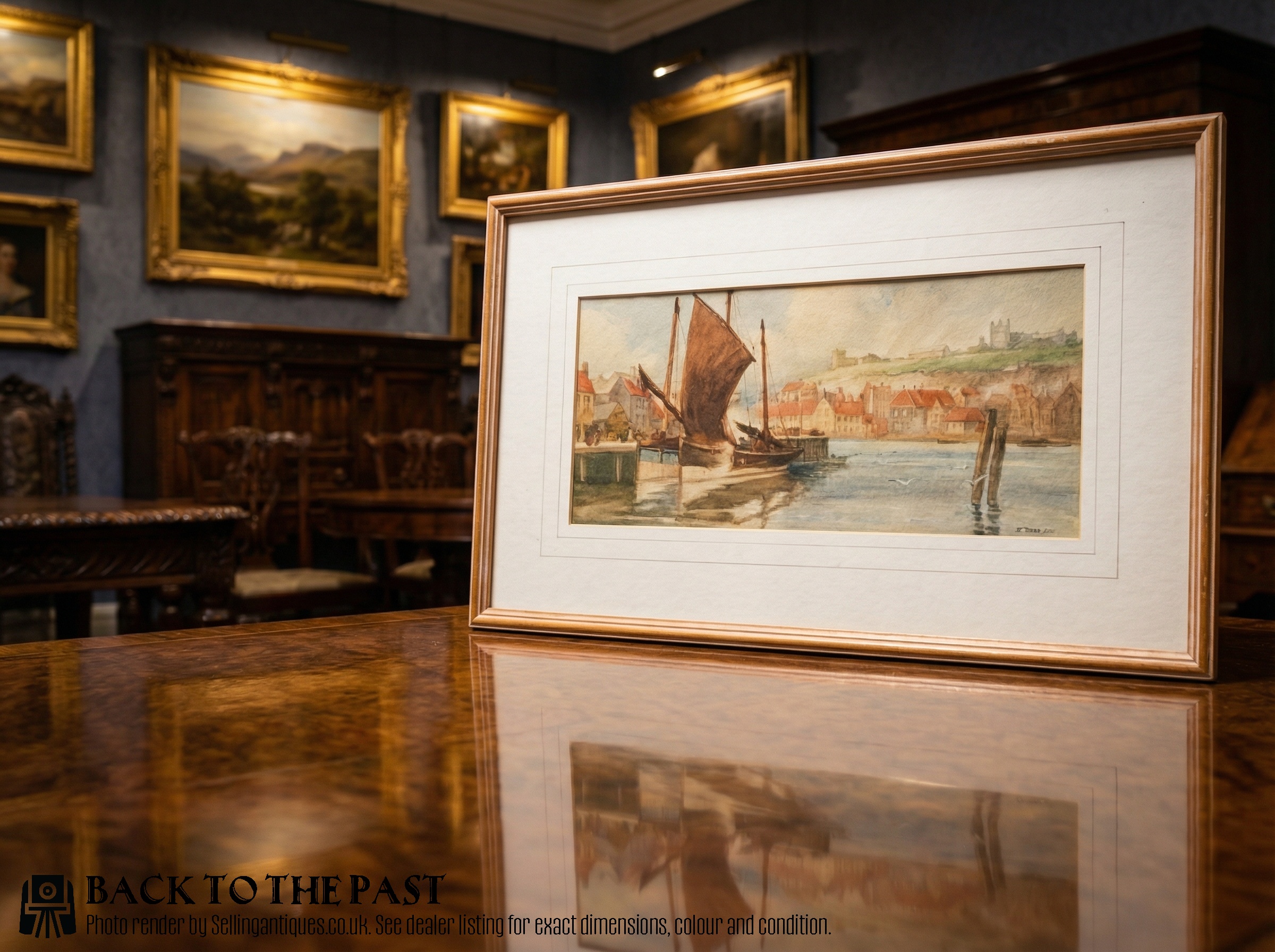
Original british watercolour works encompass landscape, seascape and townscape subjects produced across the nineteenth and twentieth centuries. These paintings record specific locations, from Yorkshire harbours and Welsh rivers to rural cottages and coastal scenes.
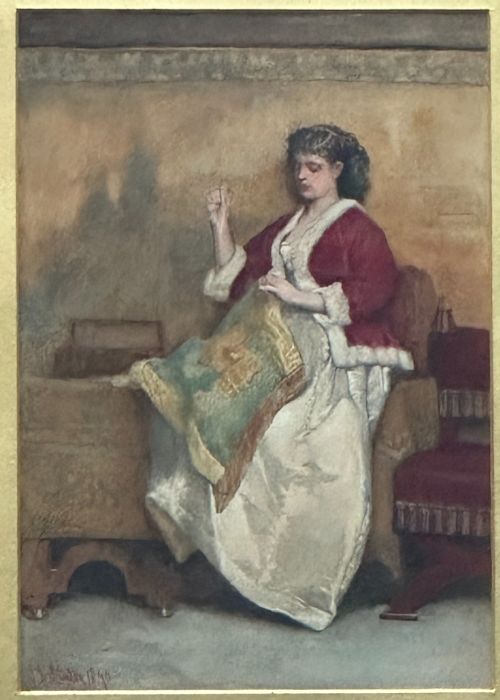
The pieces available here lean toward traditional topographical views and regional scenes executed by named artists and regional schools. Collectors encounter works spanning from Georgian grisaille studies to mid-twentieth century pastoral and impressionistic interpretations.
Subjects frequently celebrate familiar geography, including local rivers, ruined castles, mountain passes and agricultural life. Each sheet serves as a direct window into historical topography and domestic artistic output.
Materials and Technique
Artists utilised water-soluble pigments applied to heavy paper supports, often building up compositions through transparent washes. Many examples incorporate gouache for opaque highlights, ink for definition, or preliminary pencil underdrawing.
Finished sheets required protective framing behind glass, frequently within wooden mouldings and gilt liners that preserved the delicate pigments from atmospheric moisture and light degradation.
Retail Price Guide 2026
Typical UK retail prices for original british watercolour, calculated from the Sellingantiques database of over a million retail prices indexed since 2003. This retail price guide relies exclusively on Sellingantiques data; no external sources or auction records are used, so the figures do not describe the wider market.
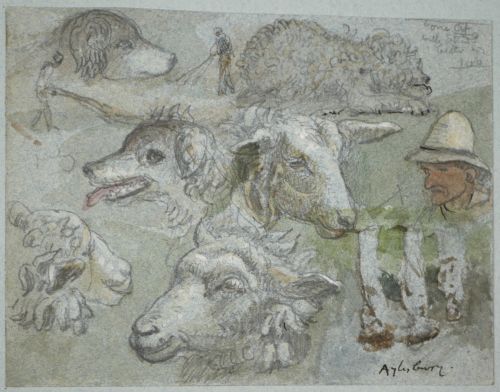
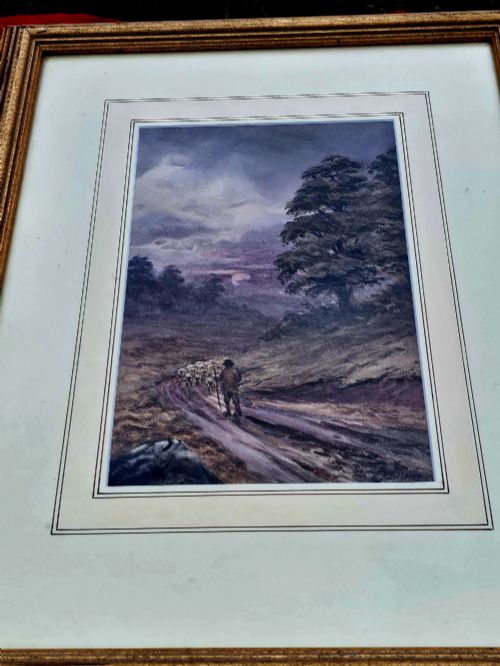
Several watercolours preserve the exact atmospheric dampness of British coastal weather, complete with resolute fishermen and stubborn livestock.
Evaluating Quality and Execution
Quality rests upon the confidence of the brushwork and the artist's ability to capture atmospheric depth with economy. Superior sheets demonstrate assured control over wet-in-wet blending and crisp detailing where the focal point demands.
Condition plays a central role in valuation, as paper can suffer from foxing, fading or acid burn from historic mounts. Stronger works retain their original pigment vibrancy and show minimal paper degradation.
Thomas Maidment·John Augustus Atkinson·Frank Wood·Fred Lawson·Harold Swanwick·Tom Dudley
The Original British Watercolour Glossary
- Foxing
- Small brownish spots caused by iron impurities in the paper reacting to humidity over decades. This chemical oxidation appears frequently in nineteenth-century sheets.
- Gouache
- An opaque water-based paint mixed with a white pigment filler to create solid, light-reflecting highlights. Artists employed this medium to add body to otherwise transparent watercolours.
- Grisaille
- A monochrome painting executed entirely in shades of grey or neutral monochrome. This technique often served as a preparatory method or a finished study during the Georgian period.
- Gilt liner
- A narrow, gold-painted wooden frame insert placed between the watercolour and the outer frame moulding. It separates the paper surface from the glazing.
Frequently Asked Questions
How do I care for an antique watercolour?
Display the painting away from direct sunlight and high humidity to prevent the paper from fading and the pigments from degrading.
Ensure the framing uses acid-free materials and UV-protective glass to safeguard the sheet against environmental damage.
What subjects appear most often?
British landscapes, coastal views, and rural village scenes dominate the surviving output from this tradition. Artists frequently recorded specific regional landmarks, rivers, and agricultural life.
Townscapes and historical street views also feature regularly, documenting architectural changes across centuries.
How can I tell the period of a watercolour?
Stylistic shifts, subject matter, and paper characteristics provide reliable clues to a painting's era of origin. Georgian works often favour monochrome washes, while Victorian and Edwardian examples lean into vibrant realism.
Signatures, framing remnants, and inscriptions verso frequently confirm the precise date of execution.
Are these paintings always signed?
Many sheets bear artist signatures, monograms, or contemporary inscriptions on the front or reverse. Unsigned works frequently emerge from regional British schools or studio archives.
Attributions for unsigned pieces rely on stylistic comparison, handling of pigment, and documented painting locations.