

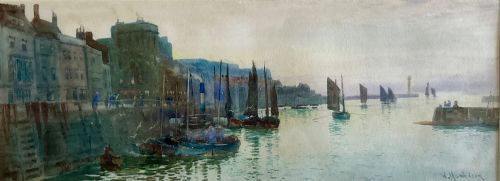


Yorkshire Coast Artwork
Yorkshire coast artwork captures the rugged sea views, bustling harbours and historic fishing villages of the north-east shore through the eyes of Victorian, Edwardian and mid-century painters.
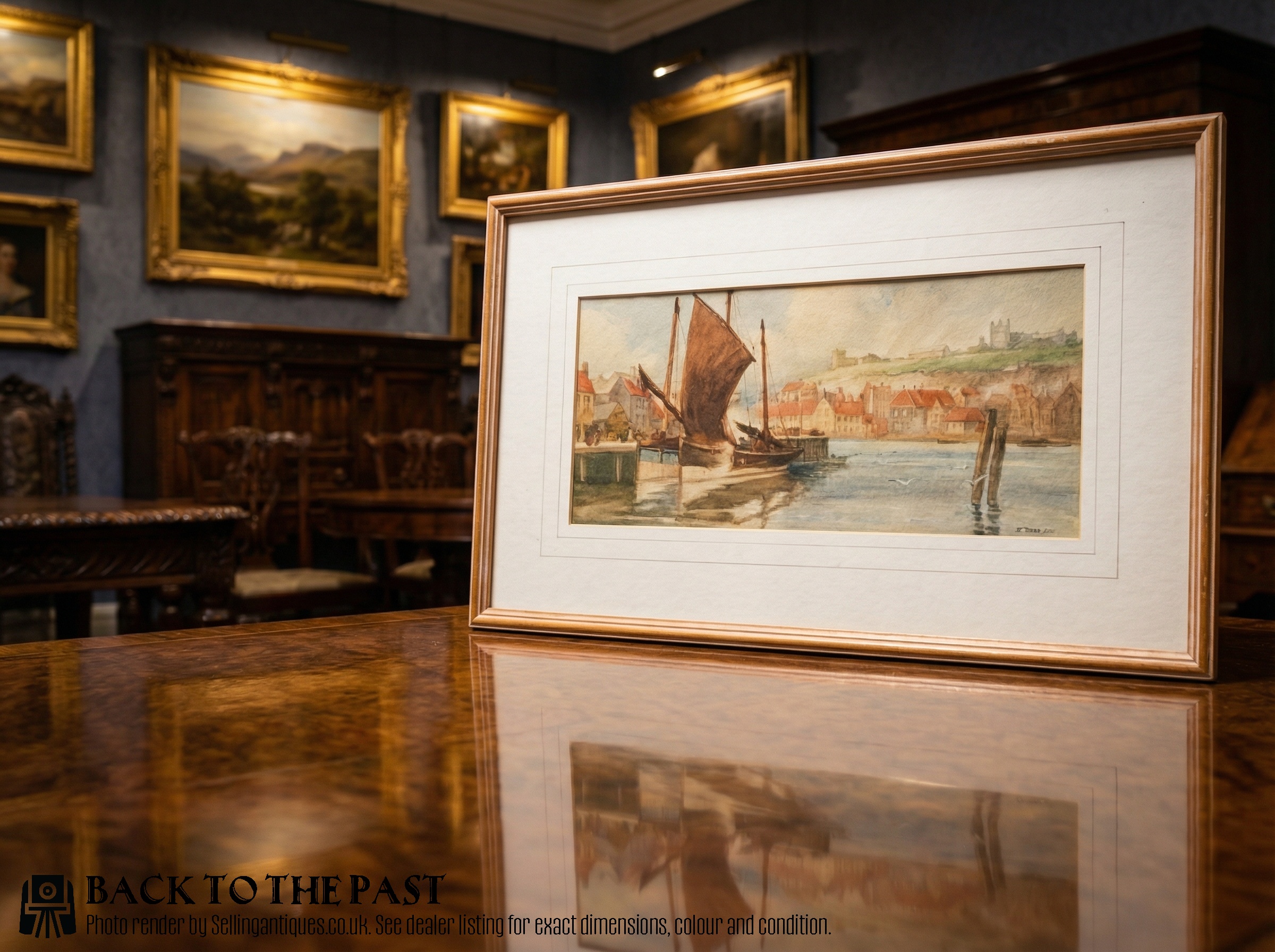
Yorkshire Coast Artwork
Yorkshire coast artwork encompasses paintings depicting coastal scenes, maritime activity and local landmarks along the Scarborough, Whitby, Runswick Bay and Staithes shores. When you search for this phrase, you find regional landscapes that record the maritime heritage and dramatic cliffs of the North Sea coastline.
The pieces appearing on this page span from the late nineteenth century through to the mid-twentieth century, capturing shifts in artistic perception across several decades. You are most likely to meet watercolour paintings and oil paintings created by regional artists who observed the local fishing communities and harbour life firsthand.
How they were made
Artists painted these coastal views using watercolour pigment on paper and oil paint applied to canvas or board. Watercolour allowed for swift, atmospheric captures of changing light over sea and harbour, while oils provided a richer texture for heavier skies and choppy waters.
Paintings were commonly signed by the artist and executed either outdoors before the subject or developed within a studio from initial sketches. Supports range from traditional stretched canvas to wooden board and heavyweight paper.
Several artists clearly fancied a brisk stroll, repeatedly hiking up to Whitby Abbey and the cliffs of Runswick Bay with their easels.
What varies in quality
Quality rests in the handling of light, atmosphere and maritime detail rather than the mere recording of a named location. Stronger works demonstrate a confident brushwork that conveys the movement of the sea and the weight of coastal weather.
The prominence of the artist and the specific composition dictate the distinction between standard topographical records and more accomplished examples of British impressionism or marine realism.
William Matthison·F A Roylance·William J B Jenkins·Robert Leslie Howey·Frank H Mason·George Hamilton Constantine·Frederick William Booty·Kate E Booth·William Kay Blacklock·Julian Drummond·Harry Wanless·James Watson·Edward T Jones·Walter Meegan·Alec Caruthers Gould·Fred Stead·Fred Dade
The Yorkshire Coast Artwork Glossary
- Coble
- A traditional type of open fishing boat native to the north-east coast of England, featuring a flat bottom and high bow. These vessels frequently appear anchored or navigating choppy waters in regional marine art.
- Board
- A rigid flat support made of wood or thick compressed material used by painters instead of stretched canvas. Artists often utilised board for smaller plein air works painted directly on location.
- Watercolour
- A painting method where fine pigment is suspended in a water-soluble binder, traditionally applied to paper. It yields translucent washes of colour that suit the shifting light of coastal skies.
- Marine art
- Artistic works that focus on or draw inspiration from the sea, ships and coastal views. This genre includes depictions of harbours, fishing fleets and maritime architecture.
- Impressionism
- A style of painting that emphasises spontaneous brushstrokes and the accurate depiction of light in its changing qualities. Mid-century and British interpretations of this style appear across several regional landscapes.
Yorkshire Coast Artwork: Frequently Asked Questions
What subjects feature in yorkshire coast artwork?
These paintings depict fishing ports, harbour entrances, cliffs and coastal villages along the North Sea shore. Scenes frequently include local vessels such as cobles and herring drifters, alongside landmarks like Whitby Abbey.
Artists focused heavily on daily maritime labour, recording activities such as spreading nets, gathering seaweed and boats departing on evening tides.
Which periods do these paintings come from?
The available selection spans from the late nineteenth century through the Edwardian era up to the mid-twentieth century. Victorian and Edwardian works sit alongside later mid-century impressionist interpretations.
This timeline covers multiple decades of British coastal painting, showing how artistic styles shifted from detailed realism towards freer brushwork.
How do I care for antique watercolours?
Watercolour paintings on paper require protection from direct sunlight to prevent fading of the pigments. Framing behind conservation glass helps shield the paper from ultraviolet light and airborne pollutants.
Keeping the works away from damp environments prevents moisture damage and foxing spots on the paper support.