


Clear Glass Flower Vase
A clear glass flower vase brings light and structure to a room, ranging from heavy Art Deco geometric forms to ornate Victorian table centrepieces.
Clear Glass Flower Vase
A clear glass flower vase serves to display stems while catching and refracting ambient light through its transparent or crystal walls. These vessels span distinct periods from the mid-nineteenth century through the Art Deco era, encompassing utilitarian spill vases, heavy table centrepieces and tall decorative showpieces.
The selection leans heavily toward twentieth-century production, particularly Art Deco pieces originating from France and the Czech Republic. Alongside these, nineteenth-century Victorian and Edwardian examples demonstrate earlier uses of clear, frosted, cut and enamel-decorated glass.
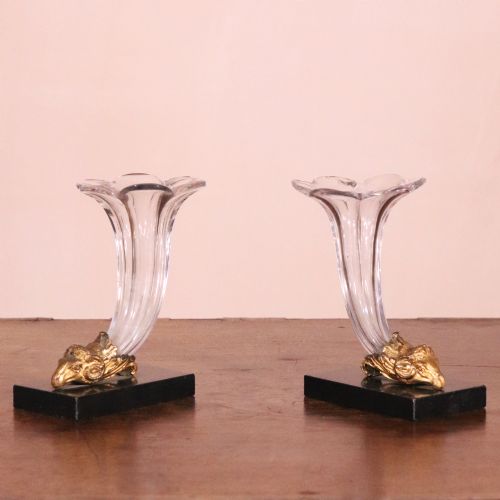
Forms vary from straightforward cylinder vases and cornucopias to elaborate multi-component epergnes and moulded crystal bowls. Many incorporate metal mounts in silver plate or gilt bronze, bridging the gap between simple glassware and decorative desk or dining objects.
How they were made
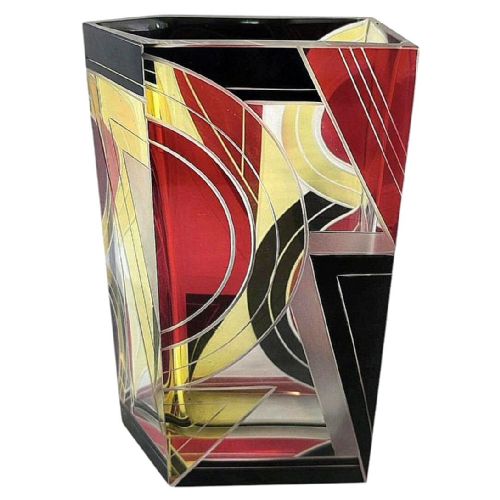
Makers utilised clear glass and heavy crystal as foundations, shaping them through blowing, moulding or wheel engraving. Techniques such as acid etching and surface enamelling created geometric or floral motifs, particularly seen on twentieth-century works.
Metal components involved silver plating or gilt bronze work, providing structural frames, rims and bases for glass bodies. Soda glass and bubble crystal further expanded the repertoire of textures achieved during the manufacturing process.
The inventory records pieces from the mid-nineteenth century through the 1940s, with a heavy concentration in the Art Deco period.
What varies in quality
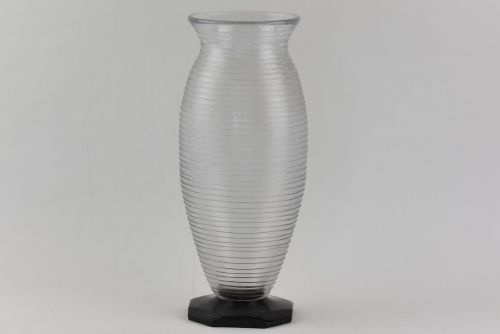
Quality rests upon the clarity and weight of the crystal or glass, together with the crispness of any wheel engraving or acid etching. Heavier specimens, particularly those utilising thick bubble glass or substantial crystal, demonstrate greater ambition in material use.
The integration of secondary materials defines the upper tier of production. Where silver plate, gilt bronze or complex enamel work accompany the glass, the precision of fit and the artistry of the decoration dictate the overall standard of the piece.
Daum·Karl Palda·St Louis glassworks·Val St. Lambert·R Lalique·WMF·Powell or Nazeing·Hukin & Heath·Keith Murray for Stevens & Williams
The Clear Glass Flower Vase Glossary
- Spill vase
- A tall, slender vessel originally designed to hold wooden spills for lighting fires or candles. These pieces often doubled as small floral holders on Victorian and Edwardian mantels.
- Epergne
- A large table centrepiece featuring a central bowl with multiple detachable arms or hanging baskets for fruit, sweetmeats or flowers. They combine glass bodies with metal stands.
- Cornucopia
- A horn-shaped container symbolising abundance, adapted in nineteenth-century decorative arts as a tabletop vase mounted on a pedestal base. They frequently appear in pairs.
- Bubble glass
- A glass-making technique that deliberately traps air bubbles within the thick walls of the vessel for decorative effect. This method creates weight and visual texture.
- Opalescent glass
- Glass that displays milky, iridescent colour variations when lit from different angles. It gained widespread popularity during the Art Deco period.
Clear Glass Flower Vase: Frequently Asked Questions
What distinguishes Art Deco vases?
Art Deco clear glass flower vase examples rely on strict geometric lines, stylized enamel motifs, and heavy bubble glass or crystal structures. They reflect design trends from the 1920s and 1930s.
These pieces often feature signatures from notable makers or workshops in France and the Czech Republic, moving away from organic Victorian curves toward industrial symmetry.
How were centrepieces used?
Table centrepieces served as ornamental focal points on dining or entrance tables during the nineteenth and early twentieth centuries. They frequently held arrangements of fruit, sweets, or fresh blooms.
Larger examples combined silver-plated frames or gilt bronze mounts with cut crystal bowls and matching vases to create coordinated decorative schemes.
How do I identify Victorian pieces?
Victorian clear glass flower vase items typically display organic forms, heavy ribbing, or delicate silver-plated mounts. Their weight and traditional hand-finished traits signal nineteenth-century origin.
Common Victorian styles include celery vases, spill vases, and cranberry glass vessels designed for domestic display.