
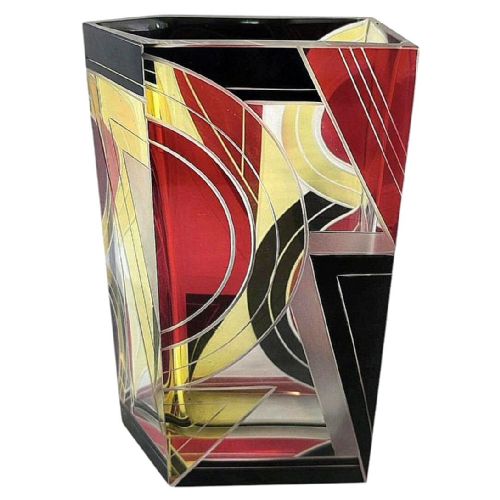


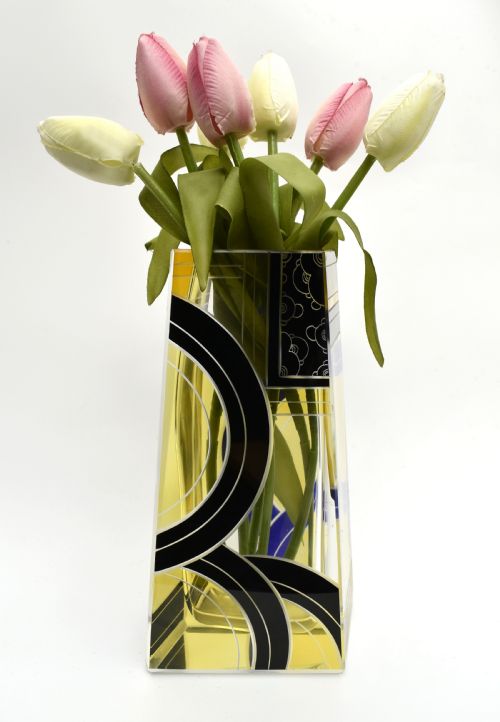


Geometric Enamel Vase
A geometric enamel vase brings sharp, linear modernist design into a room, offering the bold patterns characteristic of the Art Deco period.
Geometric Enamel Vase
A geometric enamel vase represents the height of modernist design from the interwar period. When searching for a geometric enamel vase, buyers encounter distinctive vessels produced primarily during the nineteen-thirties.
The pieces on this page originate predominantly from the Czech Republic, showcasing the renowned glassworks of that region. Tall forms, square profiles, and opaque or uranium glass dominate the available selections.
Makers such as Karl Palda define this category with their characteristic use of acid-etching combined with painted enamel. These items combine utilitarian glass forms with striking abstract surface decoration.
How they were made
Glassmakers shaped these vessels using mould-blown techniques or heavy press-moulding to achieve tall, square, or cylindrical silhouettes. Opaque and uranium glass provided a solid ground for subsequent surface work.
Craftsmen applied contrasting black and coloured enamels by hand, following precise geometric layouts. Acid-etching frequently complemented the enamel work, creating recessed matte textures alongside glossy painted bands.
Holding a blacklight near these shelves causes the uranium glass examples to blaze with an unexpected neon green glow.
What varies in quality
The precision and complexity of the acid-etched motifs separate standard vessels from superior examples. Crisp, deeply bitten lines demonstrate a higher level of workshop execution.
The application of the enamel itself dictates visual merit, with dense, even pigmentation outperforming thin or patchy coverage. Well-preserved painted surfaces retain their original gloss and adherence to the glass body.
Karl Palda
The Geometric Enamel Vase Glossary
- Acid-etched
- A technique using acid to eat away exposed areas of glass, producing a frosted or textured finish. This method creates tactile geometric patterns that contrast with smooth enamelled sections.
- Art Deco
- A design style flourishing between the world wars, characterised by stylised motifs and sleek geometric shapes. Pieces from this era often utilise bold colour contrasts and symmetrical arrangements.
- Enamel
- A glassy substance fused to the surface of glass through heat, providing vibrant permanent colour. Applied designs range from simple linear bands to complex repeating patterns.
- Uranium glass
- Glass containing trace amounts of uranium oxide, which glows brightly under ultraviolet light. This material appears in transparent or opaque forms within modernist European glassware.
Geometric Enamel Vase: Frequently Asked Questions
What is a geometric enamel vase?
A geometric enamel vase is a glass vessel decorated with linear patterns and painted enamel, typically dating from the Art Deco period. These pieces showcase the intersection of modernist design and traditional glassmaking.
Originating largely from Czech workshops during the nineteen-thirties, they utilise forms like tall cylinders and square profiles. Their surfaces feature careful combinations of etching and bold enamel colours.
Where were these vases made?
These vases were manufactured primarily in the Czech Republic, a region renowned for innovative interwar glass production. Local workshops developed distinct methods for combining glass fabrication with surface decoration.
Factories and independent makers in this area exported their modernist wares across Europe and beyond. The geographical origin heavily influences the characteristic aesthetic seen in these listings.
How do I display uranium glass?
Uranium glass vases can be displayed on shelves or tables in standard lighting, where their distinct green or yellow hues remain visible. Natural daylight highlights their inherent material quality.
Introducing ultraviolet light nearby causes the glass to emit a vibrant fluorescent glow. This property adds an unexpected visual dimension when illuminating the collection in a darker room.
How should I clean my vase?
Cleaning requires gentle hand washing with lukewarm water and mild soap to protect the delicate enamel and etched surfaces. Harsh chemicals and abrasive sponges must be avoided entirely.
Allowing the piece to air dry on a soft towel prevents accidental chipping of the rim. Regular, careful maintenance preserves the original finish of the painted geometric patterns.