




Black Geometric Glass Vase
These black geometric glass vases from the Art Deco period combine sharp angles with striking monochrome surfaces that collectors covet for their modernist design.
Black Geometric Glass Vase
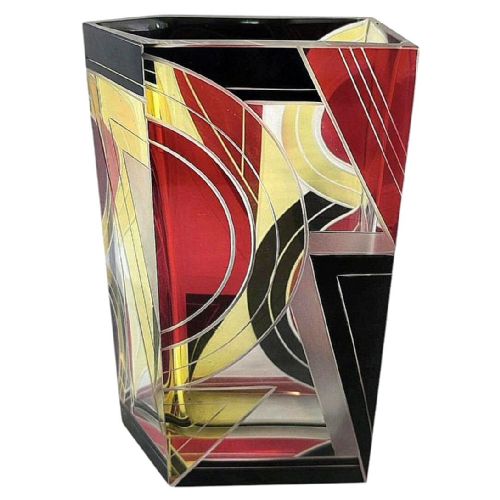
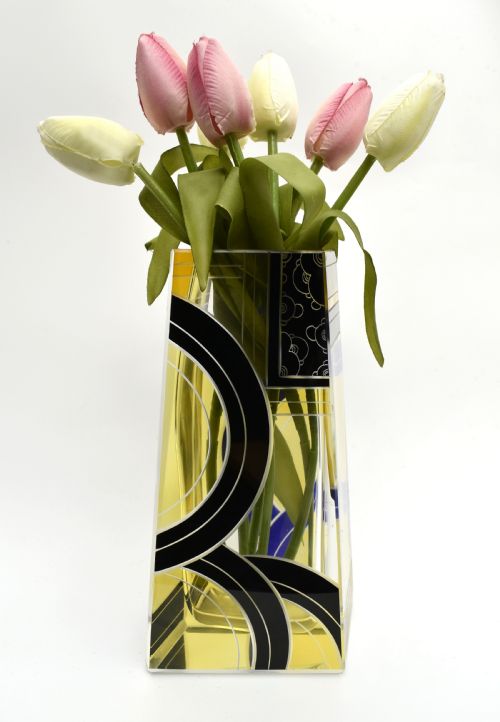
When you search for a black geometric glass vase, you are looking at striking examples of Art Deco design from around nineteen thirty. These vessels showcase the bold forms and clean lines characteristic of the period, often originating from workshops in the Czech Republic.
On this page, you are most likely to meet tall and square glass vases featuring enamel decoration or deep etching. Many examples incorporate contrasting geometric patterns painted in enamel upon the dark body of the glass.
The objects span standard vase forms executed with a strong modernist aesthetic. Makers utilised contrasting textures, pairing opaque glass with frosted surfaces and sharp linear motifs.
How they were made
The makers utilised glass as the primary medium, often working with opaque, frosted, or uranium glass to form the body of the vase. Surface patterns were achieved through deep etching techniques that cut distinct geometric motifs directly into the material.
Enamel decoration was applied to the glass surface to create bold contrasts and intricate geometric patterns. These enamels were fired onto the vessel to ensure durability and a rich, opaque finish alongside the etched lines.
Every listed piece dates from the Art Deco period around nineteen thirty, utilising glass, enamel, and etching.
What varies in quality
The distinction between standard vessels and the finest examples lies in the execution of the surface decoration and the depth of the glasswork. Pieces with deeply etched geometric motifs and precise enamel work command greater attention from collectors.
The integration of form and ornament determines the visual impact of the piece. Superior examples display a balanced composition where the etched lines and enamel details complement the structural geometry of the glass.
Jean Luce·Karl Palda
The Black Geometric Glass Vase Glossary
- Art Deco
- A design style of the nineteen thirties characterised by sleek lines, geometric shapes, and modernist influences. It represents a distinct shift away from traditional ornamentation towards industrial abstraction.
- Etched glass
- Glass that has been treated with acid or abrasive materials to create recessed designs on the surface. This technique produces tactile, frosted patterns that contrast with polished areas.
- Uranium glass
- Glass containing trace amounts of uranium oxide, which causes the material to fluoresce brightly under ultraviolet light. It was frequently utilised in decorative objects during the Art Deco period.
- Enamel decoration
- The application of coloured vitreous glass paste onto a glass surface, subsequently fired to fuse the materials. This adds vibrant colour and opaque graphic patterns to the vessel.
- Opaque glass
- Non-translucent glass that obscures light entirely, providing a solid background colour. It formed an ideal canvas for the contrasting enamel patterns popular in modernist design.
Black Geometric Glass Vase: Frequently Asked Questions
What is a black geometric glass vase?
A black geometric glass vase is a decorative vessel from the Art Deco period featuring sharp angles, linear patterns, and dark glass surfaces.
These pieces reflect the modernist design principles of the nineteen thirties, often enhanced with enamel or etched details.
Where were these vases made?
Many of these vessels originated in the Czech Republic, which was a major centre for innovative glass production during the interwar period.
Renowned designers and workshops in the region produced distinctive modernist glassware for international markets.
How do I identify Art Deco glass?
Art Deco glass is typically identified by its symmetrical geometric patterns, stark contrasts, and use of moulded or etched motifs.
Look for characteristic forms such as squares and tall cylinders that embody the industrial aesthetic of nineteen thirty.
How should I display these vases?
These vases suit minimalist settings where their sharp geometric lines and monochrome surfaces can be appreciated without distraction.
Placing them near natural light allows the etched textures and enamel details to stand out clearly.