


Art Deco Flower Vessel
An art deco flower vessel brings strong geometric lines and rich coloured glass from the interwar period straight into a modern room.
Art Deco Flower Vessel
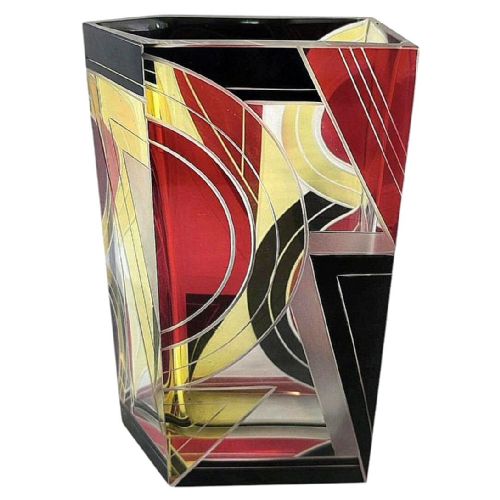
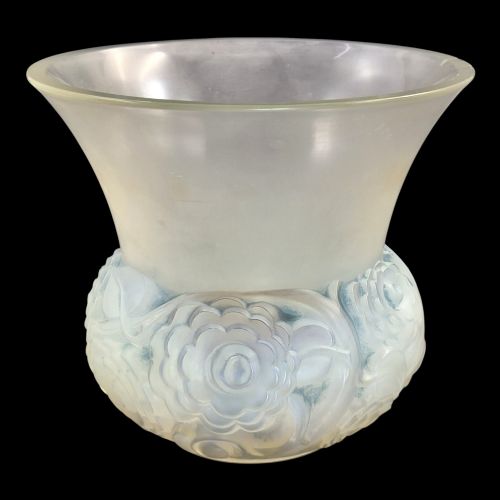
When you search for an art deco flower vessel, you encounter glass and ceramic receptacles designed during the 1920s and 1930s. These pieces range from heavy moulded French opalescent glass to sharply etched geometric vessels from Czech workshops.
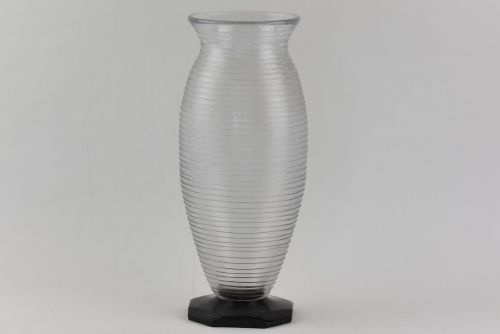
The selections on this page lean heavily towards moulded and enamelled glass vases originating from France, Belgium, and the Czech Republic. Earthenware examples from English potteries also appear among the glass forms.
How they were made
Makers utilised techniques such as acid etching, enamel decoration, and cameo layering to create striking surface patterns on lead crystal and cased glass. Mould-blowing allowed French and Belgian factories to produce complex relief designs with opalescent or frosted finishes.
Potteries relied on earthenware bodies finished with coloured grounds and painted motifs, whilst metalwork vessels utilised plated chrome for a sleek industrial aesthetic.
Listings combine moulded French opalescent glass, Czech geometric enamel-decorated vessels, and English earthenware forms from the 1920s and 1930s.
What varies in quality
Depth of colour and precision in the execution of geometric enamel work set individual pieces apart. Heavy lead crystal and thick cased glass provide a more substantial weight and clarity than thinner moulded alternatives.
The sharpness of relief details in opalescent pieces and the crispness of acid-etched geometric borders determine the visual success of the vessel.
René Lalique·Karl Palda·Charles Graffart for VSL·Schneider·Paul Heller for Booms glass·Royal Doulton·Carter Stabler Adams
The Art Deco Flower Vessel Glossary
- Opalescent glass
- Glass containing ingredients that cause it to milky-blue in transmitted light and warm amber in reflected light. This technique was used extensively by French makers to highlight relief motifs.
- Cased glass
- Glass composed of multiple distinct layers of different coloured glass fused together. Artisans often cut through the top layer to reveal the contrasting colour underneath.
- Enamel decorated
- Painted with coloured glass enamel and subsequently fired to fuse the decoration permanently to the surface. Geometric patterns applied this way typify Czech production.
- Cameo glass
- Glass formed by fusing two or more layers of coloured glass and carving away the outer layer to form a design in relief. This demanding method creates strong colour contrasts.
- Hyalite glass
- An opaque black or coloured glass developed to mimic hardstone. It provides a dense, glossy surface often associated with Czech designs.
Art Deco Flower Vessel: Frequently Asked Questions
What styles define an art deco flower vessel?
These vessels are defined by stylised florals, geometric motifs, and clean architectural lines characteristic of the interwar period.
They reflect a move away from traditional ornamentation towards bold symmetry and industrial influences.
How do I identify Czech glass vessels?
Czech pieces from this era frequently combine clear or coloured glass with bright enamel geometric decoration and acid-etched surfaces.
Many examples originate from known workshops such as those associated with Karl Palda.
Where were opalescent vessels made?
The finest opalescent glass vessels were produced in France by master glassmakers working during the 1920s and 1930s.
These pieces often feature moulded botanical or figurative relief patterns.
How should I display these vessels?
Place them in areas with strong natural light to fully appreciate the transparency, colour saturation, and surface textures of the glass.
Keep arrangements simple to let the strong forms of the vessels remain the focal point.