

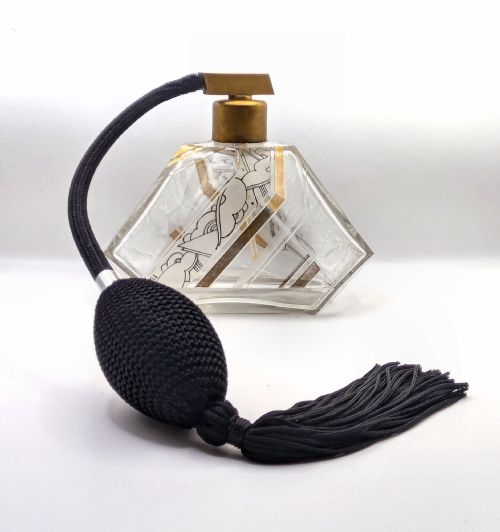


1930s Bohemian Art Glass
When you seek 1930s bohemian art glass, you are looking at bold geometric design executed in vibrant crystal and enamel.
1930s Bohemian Art Glass
When buyers search for 1930s bohemian art glass, they find items created during an era of significant stylistic experimentation in Central Europe. The pieces span practical vessels and decorative objects originating from Czech workshops.
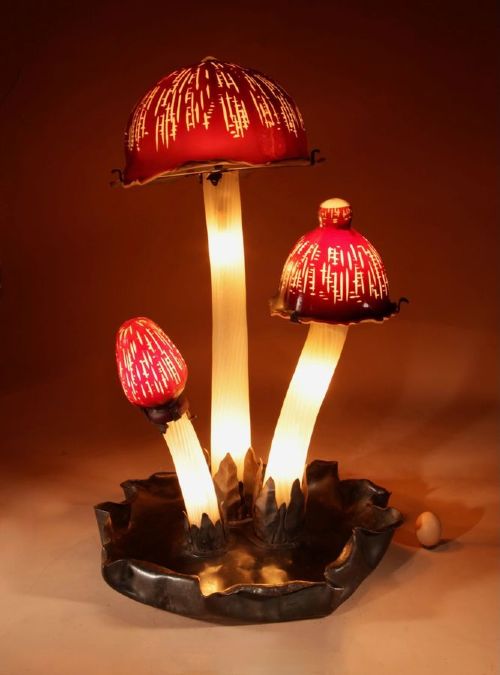
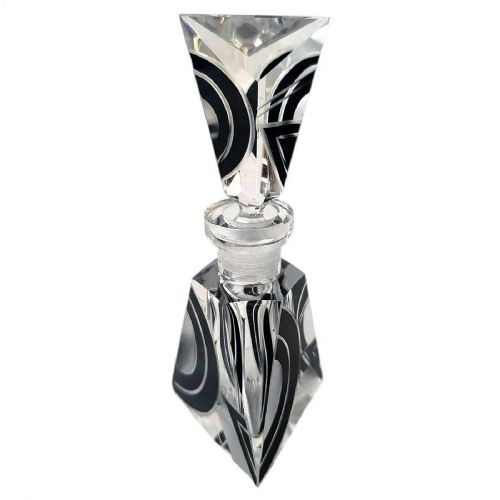
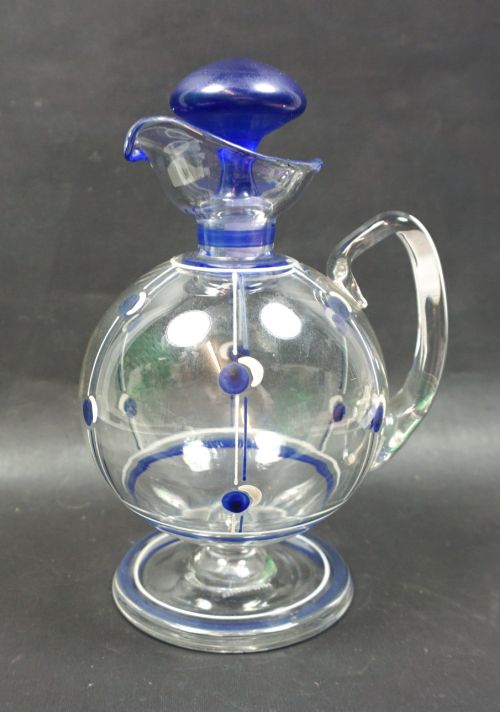
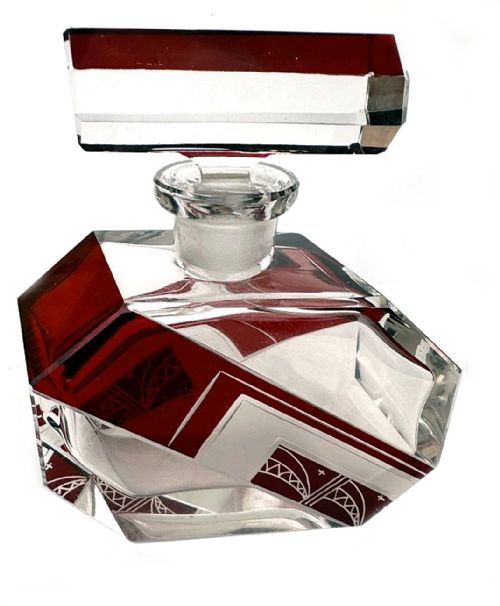
The most common forms on this page include perfume bottles, scent atomisers, decanter sets with matching glasses, and geometric vases. Table lamps and occasional teacups also appear among the glass objects.
These items reflect the dominant Art Deco aesthetic of the period, characterised by strict geometry, sharp lines, and contrasting colour palettes. They represent both domestic utility and modernist display.
Materials and methods
Makers utilised lead crystal, cut glass, and opaque glass as the primary foundations for their designs. Surface decoration frequently involved coloured enamel work, acid etching, and occasional applications of gold leaf.
Mounts and hardware incorporated metals such as brass and chrome, sometimes paired with silver or fabric elements. Artisans combined heavy geometric cutting with hand-painted enamel bands to achieve the signature aesthetic.
Some perfume bottles arrived with matching globes and atomiser pumps designed to make dressing tables look entirely theatrical.
Quality factors in bohemian glass
The standard of execution separates workshop output, visible in the crispness of the geometric cutting and the precision of the enamel lines. Pieces with complex multi-colour enamel work and heavy lead crystal display greater ambition than simpler pressed glass items.
Attribution to documented designers or specific firms elevates a piece, particularly when signatures or distinct design traits are present. The preservation of original atomiser hardware, stoppers, and matching sets also influences the overall integrity of an object.
Karl Palda·Libochovice·Emmy Seyfried·Rudolf Hlousek·Hoffman·Hermanova
The 1930s Bohemian Art Glass Glossary
- Art Deco
- A design style spanning the 1920s and 1930s marked by geometric shapes, stylised motifs, and modern industrial materials. This aesthetic defines the architectural and decorative language of the items listed here.
- Uranium glass
- Glass containing uranium dioxide, which glows brightly under ultraviolet light. This material appears in transparent green vases and vessels from the period.
- Atomiser
- A spray bottle mechanism fitted to perfume flasks, often featuring a bulb and mesh hose. Many period dressing table bottles survive with these metal fittings intact.
- Lead crystal
- A heavy, clear glass variety containing metal oxides that allow for deep, sharp facet cutting. It forms the translucent body of many decanter sets and heavy perfume bottles.
- Enamel decoration
- Opaque vitreous pigments applied to the surface of glass and fired to create colourful geometric patterns. This technique provided sharp contrast against black, green, or clear glass bodies.
1930s Bohemian Art Glass: Frequently Asked Questions
How do I identify 1930s bohemian art glass?
Look for heavy geometric cut crystal, distinctive Art Deco silhouettes, and contrasting enamel bands in black, white, or bright colours. Czech production often incorporates thick glass bodies with acid-etched panels.
Maker signatures are occasionally etched into the base or body, though many pieces remain unmarked but attributable through known workshop catalogues and specific decorative motifs.
Were decanter sets used daily or displayed?
These matching sets of decanters and glasses were typically kept on sideboards or drinks trolleys for entertaining guests during the interwar period. Their bold aesthetic made them centrepieces of modern domestic hospitality.
While functional, many survived with little wear because owners treated them as decorative items for the dining room or drawing room.
What is uranium glass in this period?
Uranium glass is a transparent green or yellow material formulated with trace amounts of uranium to produce a vivid colour and a distinct fluorescent glow under black light. It was widely utilised by Czech glassworks for vases and dressing table sets.
The inclusion of uranium was standard practice for achieving specific luminous optical effects popular in modern design.
How should I clean enameled glass?
Dust these items gently with a soft dry cloth and avoid submerging pieces with delicate enamel or gold leaf in water for extended periods. Harsh chemical cleaners can strip surface pigments and damage metal mounts.
Careful spot cleaning with lukewarm water and mild soap protects the fragile painted decoration and preserves the original finish.