


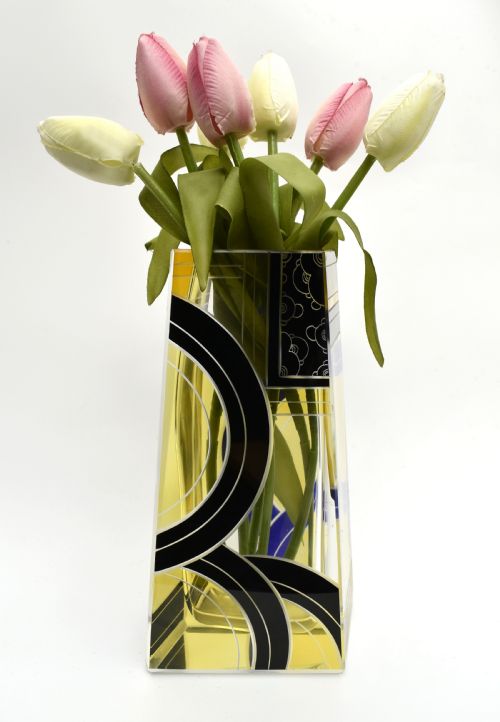


Czech Art Deco Vase
A czech art deco vase brings bold geometric lines and vibrant coloured glass into a room, capturing the modernist spirit of the interwar years.
Czech Art Deco Vase
A czech art deco vase represents the striking glasswork produced in Central Europe during the nineteen-twenties and nineteen-thirties. Buyers frequently encounter tall vessels, square profiles, and globe shapes that reflect the geometry of the period.
Makers utilised pressed glass, coloured glass, and uranium glass to achieve varied visual effects. Pieces often incorporate figural motifs such as dancing nymphs or structured geometric panels.
The aesthetic bridges traditional Bohemian craftsmanship with modern industrial design. Most examples date from around nineteen-thirty, showing distinct influences from the Art Deco style alongside occasional Art Nouveau survivals.
How they were made
Glassmakers shaped molten material through moulding and pressing techniques to create structural bodies. Etching and enamel decoration were frequently applied to the cooled surface to add pattern and contrast.
Some vessels received sterling silver overlay, bonding metal directly to the glass. Enamel colours were painted by hand and fired onto black, amber, opaque, or transparent glass bases.
Some vessels contain invisible uranium traces that wait patiently in the dark for an ultraviolet torch to reveal their radioactive green glow.
What varies in quality
Quality depends upon the depth of the etching and the precision of the enamel work. Crisp geometric lines and cleanly applied surface decoration distinguish finer pieces from simpler productions.
The weight and clarity of the glass itself also dictate standard. Heavy pressed glass bodies and well-executed silver overlays demonstrate greater artisanal skill.
Karl Palda·Libochovice·Amphora
The Czech Art Deco Vase Glossary
- Uranium glass
- Glass containing uranium oxide that glows bright green under ultraviolet light. This material was widely utilised during the nineteen-thirties for decorative vessels.
- Silver overlay
- Sterling silver applied to the exterior of a glass vessel in decorative patterns. The metal is chemically bonded to the surface.
- Pressed glass
- Molten glass forced into a metal mould under pressure. This method allowed for the rapid production of complex geometric shapes.
- Enamel
- Opaque vitreous composition fused to glass through heat. It provides bright surface colour and linear contrast.
Czech Art Deco Vase: Frequently Asked Questions
How do I identify a Czech Art Deco vase?
Look for characteristic geometric forms, etched patterns, and vibrant glass colours typical of the interwar period. Many pieces combine black or amber glass with hand-painted enamel.
Familiar maker attributions and distinctive techniques such as pressed glass construction further help identify these items.
What is uranium glass?
Uranium glass contains trace amounts of uranium within the glass batch, giving it a distinctive yellow or green colour. Under ultraviolet light, the material emits a bright green glow.
This glass type appears frequently in modernist vessels from the nineteen-thirties.
How were silver overlays applied?
Makers applied a liquid silver solution directly onto the glass surface in decorative patterns. The object was then fired so the silver bonded permanently with the glass.
This technique added metallic contrast to coloured and etched glass bodies.
Where were these pieces made?
Production centred primarily in Bohemia and the wider Czech region, known for its long glassmaking tradition. Factories and workshops adapted traditional skills to modern modernist designs.
Works from this area reached international markets during the nineteen-twenties and nineteen-thirties.
How should I display my vase?
Place the vessel in a well-lit space where light can pass through the coloured or transparent glass. Placing uranium glass near ultraviolet lighting highlights its luminescent properties.
Keep pieces away from direct heat sources to protect enamel and silver elements.