






Vintage Geometric Glass Vase
These vintage geometric glass vase examples bring sharp lines and bold colour from the 1930s straight into a modern room.
Vintage Geometric Glass Vase
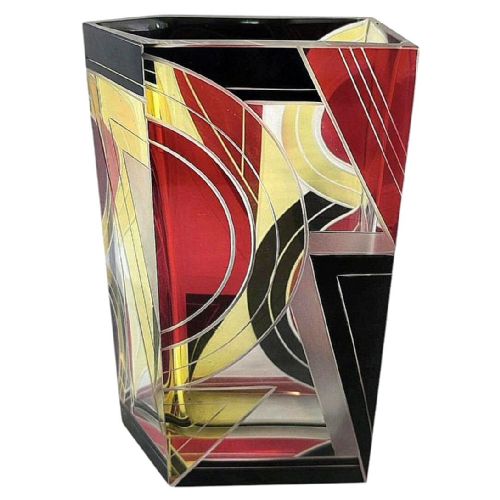
A vintage geometric glass vase reflects the clean angles and architectural motifs of the Art Deco period, typically dating from around 1930. These pieces focus on squares, panels, and repeating linear patterns rather than organic floral curves.
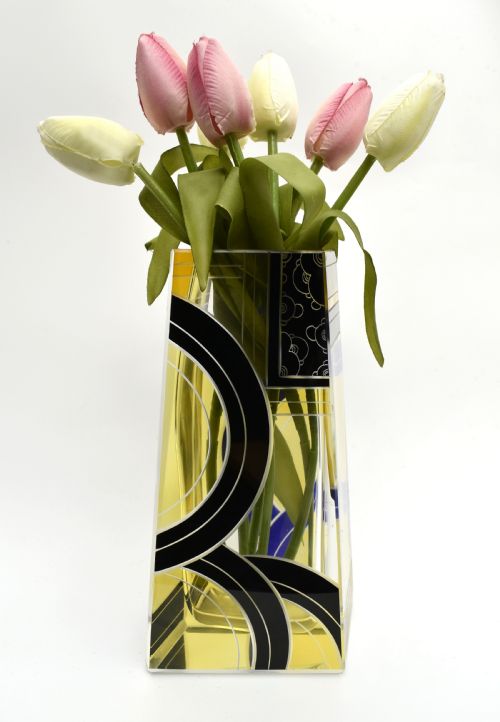
The version most commonly met on this page is the Czech or Belgian production from the interwar years, often combining heavy lead crystal with acid-etching or enamel work. Tall cylinders and square profiles dominate the selection, built to command attention on a mantelpiece or sideboard.
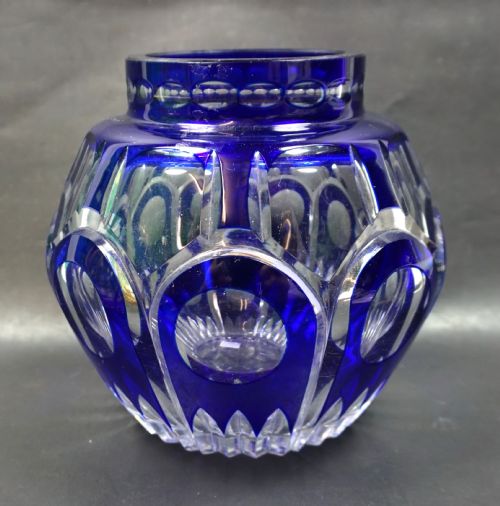
Makers from this era utilised contrasting colours and faceted surfaces to catch the light from every angle. The search phrase covers both restrained modernist vessels and highly decorated enamelled showpieces.
What varies in quality
The depth and crispness of the cut or etched line separates the finer works from standard production pieces. Superior examples display absolute symmetry in their repeating patterns and sharp transitions between the clear crystal and the coloured overlay.
Weight and metal content also define the hierarchy, with heavy lead crystal bases providing better stability and refraction than lighter pressed glass. The precision of the enamel work, free from bleeding edges, indicates the skill level of the decorator.
Some of these 1930s vessels glow an intense neon green under ultraviolet light because makers added uranium to the batch.
Charles Graffart·Joseph Simon·Jean Luce·Karl Palda·Val St. Lambert
The Vintage Geometric Glass Vase Glossary
- Cased glass
- Glass formed of two or more distinct layers of different colours fused together while molten. This technique allows artisans to cut through the outer layer to reveal the contrasting colour beneath.
- Lead crystal
- Glass containing metallic lead oxide to increase weight, brilliance, and clarity. It allows for deeper and sharper facet cutting.
- Acid-etched
- A decorative technique using hydrofluoric acid to eat away exposed portions of the glass surface. It creates a frosted, matte finish that contrasts with polished areas.
- Overlay glass
- A synonym for cased glass where a thin layer of coloured glass covers a thick clear or contrasting body. The outer layer is partially removed by cutting or engraving.
- Uranium glass
- Glass containing trace amounts of uranium oxide, which glows bright green under ultraviolet light. It was widely utilised during the Art Deco period for vibrant tableware.
Vintage Geometric Glass Vase: Frequently Asked Questions
How do I style a geometric glass vase?
Place the vessel in a spot where direct sunlight can pass through the coloured glass and project patterns onto the surface beneath. Keep floral arrangements sparse so the angular cut lines and enamel work remain the primary focus of the display.
Pair the piece with plain wooden or metal surfaces to let the sharp 1930s silhouettes stand out without visual clutter. A single stem or architectural branch works best in tall cylinders.
Are these vases safe to hold water?
Most of these vessels were designed as decorative display objects rather than functional flower holders, though heavy crystal examples can hold water safely. Check the interior for any residue from original manufacturing or historical use before filling.
Avoid using hot water or harsh modern detergents on enamelled surfaces, as the vintage pigments can degrade over time. Lukewarm water and a soft cloth are sufficient for routine care.
How can I tell Art Deco from Victorian glass?
Art Deco pieces rely on strict symmetry, straight lines, and repeating geometric blocks inspired by machinery and modern architecture. Victorian glass tends to feature ornate, curved forms, ruffled edges, and naturalistic floral motifs.
The colour palette also shifts, with 1930s items favouring deep sapphire blues, dense reds, and striking uranium greens applied to heavy, planar forms.
What is cased glass?
Cased glass consists of two or more distinct layers of glass fused together during the blowing process. Typically, a clear or coloured body is covered by a contrasting outer layer.
Artisans then cut or etch through the outer layer to expose the base glass underneath, creating striking two-tone geometric patterns.