


Red Glass Enamel Vase
A red glass enamel vase brings intense colour and detailed surface work to a room, spanning from Victorian cranberry glass to Art Deco geometric designs.
Red Glass Enamel Vase
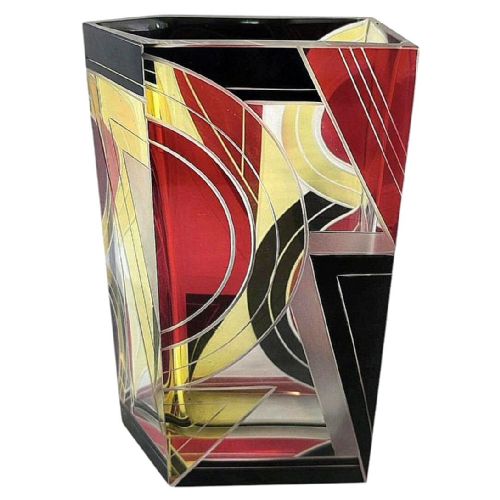
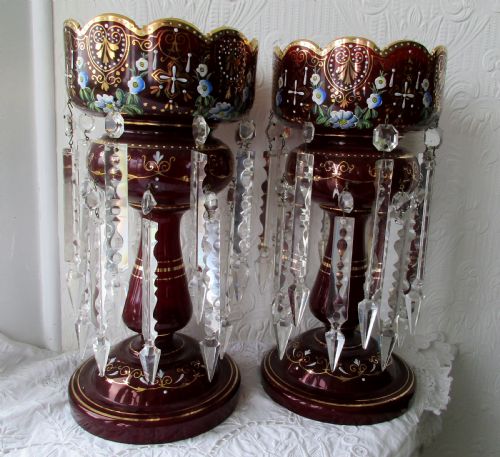
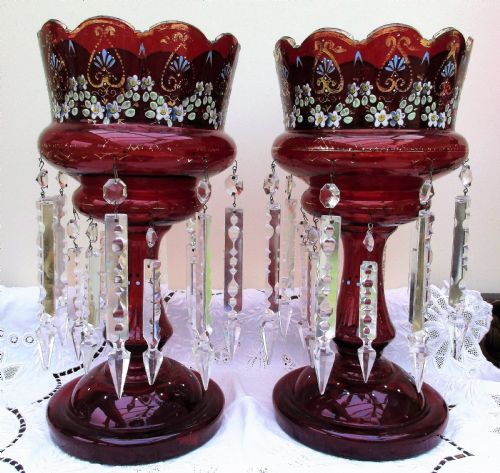
When you search for a red glass enamel vase, you encounter a range of forms from nineteenth-century Victorian mantle lustres and table centrepieces to Art Deco decorative glassware. The pieces on this page heavily feature Victorian cranberry glass and ruby glass, alongside Art Deco geometric items from the nineteen-thirties.
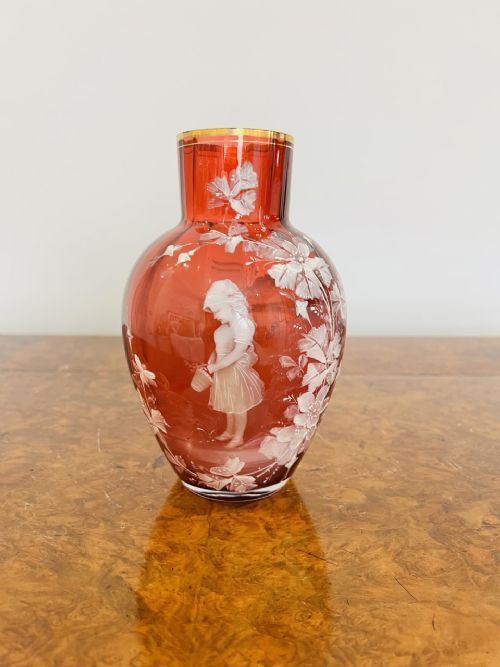
The assortment includes English and Bohemian pieces, ranging from small Mary Gregory decorated items to large pairs of lustres hung with glass drops. Alongside standard vases, you will find epergnes and goblets that utilise similar ruby and cranberry hues.
How they were made
These items rely on glass bodies formed in ruby, cranberry, or opaque shades, often utilising lead crystal or standard glass. Makers applied white enamel, gold leaf, and painted motifs directly onto the heated or finished glass surface.
Techniques range from the freehand silhouette painting seen on Mary Gregory pieces to the precise geometric enamel patterns characteristic of Art Deco production. Lustres and centrepieces incorporate applied details and hanging crystal prisms to catch the light.
Materials appearing across the selection include ruby glass, cranberry glass, lead crystal, gold leaf, and white enamel.
What varies in quality
Quality rests upon the crispness of the enamel work and the richness of the underlying ruby or cranberry glass body. Pieces with intricate gold leaf detailing or well-executed botanical and geometric motifs sit at the higher end of the spectrum.
The depth of colour in the glass and the preservation of the applied enamel and gilding dictate the overall merit of each piece. Pairs of lustres with intact crystal drops show greater desirability than incomplete examples.
Legras
The Red Glass Enamel Vase Glossary
- Cranberry glass
- A transparent pink-red glass produced by adding gold chloride to the molten batch. It gained immense popularity during the Victorian era for tableware and decorative items.
- Mantle lustre
- A decorative glass vase or pedestal fitted with a rim of hanging glass prisms or crystal drops. They were designed to sit on a fireplace mantelpiece and reflect candlelight.
- Mary Gregory glass
- Glassware decorated with white enamel silhouettes of children, often depicted in natural settings. The style originates from the late nineteenth century.
- Ruby glass
- A deep red glass coloured with copper or gold particles. It provides a dark, saturated tone frequently utilised in nineteenth-century decorative glassware.
- Epergne
- A large table centrepiece featuring a central bowl with multiple detachable arms, trumpets, or baskets for holding flowers. Cranberry glass versions are particularly notable.
Red Glass Enamel Vase: Frequently Asked Questions
What is a red glass enamel vase?
It is a decorative vessel made from coloured glass and decorated with painted enamel or gilt patterns. These pieces range from Victorian examples to Art Deco geometric designs.
They serve primarily as ornamental objects on mantelpieces, tables, and cabinets, bringing vibrant red hues to an interior space.
How do I identify Victorian pieces?
Victorian examples often feature deep ruby or cranberry glass, sometimes decorated with white enamel figures or heavy gilding. Forms such as mantle lustres and epergnes are typical of this period.
Later styles tend to adopt geometric motifs and opaque glass bodies, distinguishing them from nineteenth-century work.
Where were these vases made?
The listings include pieces from England, Bohemia, and continental workshops such as Legras in France. Production centres varied across Europe during the nineteenth and early twentieth centuries.
Each region brought distinct glassblowing and enamelling traditions to the final decorative objects.
How do I care for enamelled glass?
Clean these items gently using a soft, dry cloth to remove dust. Avoid submerging pieces with gold leaf or delicate enamel in water for extended periods.
Protect them from direct sunlight and sharp impacts to preserve the integrity of the painted surface.