




Etched Clear Glass Vase
An etched clear glass vase brings crisp geometry and soft frost into a room, catching daylight on worked surfaces.
Etched Clear Glass Vase
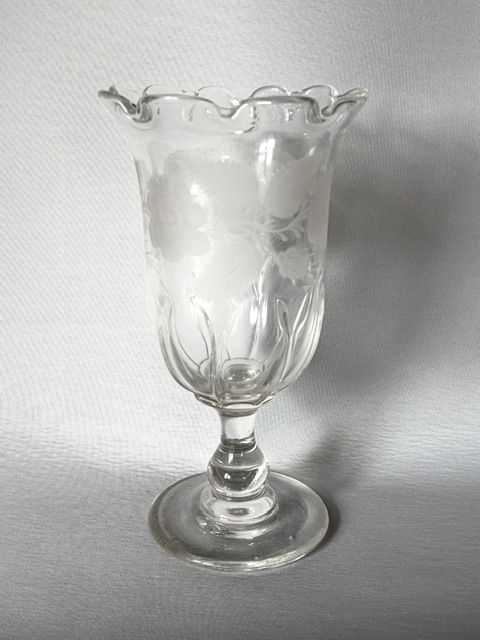
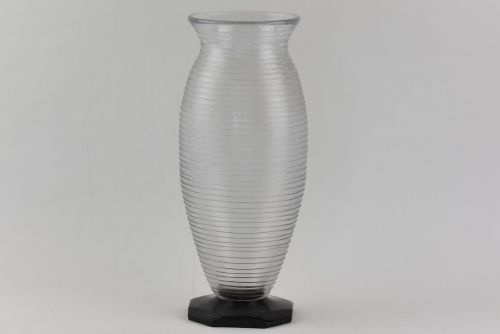
An etched clear glass vase combines transparency with opaque surface ornament, spanning Victorian, Art Deco, and Neoclassical periods. When you search for an etched clear glass vase, you find vessels ranging from nineteenth-century celery vases and epergnes to modernist Czech and French vessels.
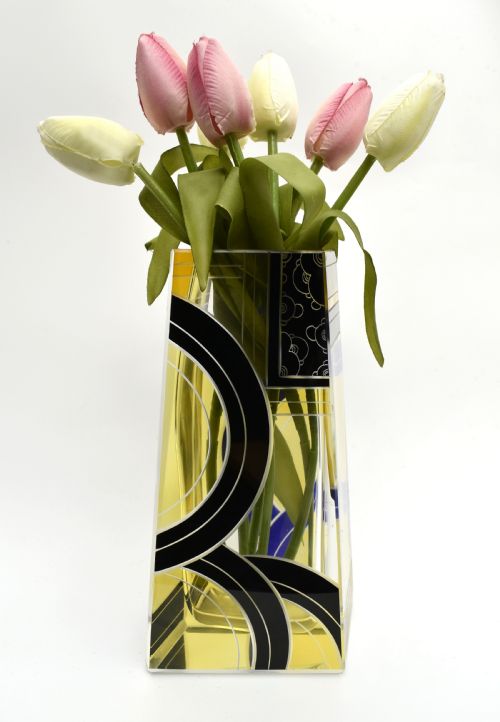
The nineteenth-century pieces lean towards Victorian florals and wheel engraving, whilst the 1930s examples showcase Art Deco geometric patterns often enhanced with black enamel. These objects serve both decorative display and practical floral arrangement within domestic interiors.
How they were made
Glass is blown or cast in lead crystal, frosted glass, or standard glass before receiving its surface decoration. Artisans then apply wheel engraving, acid-etching, or deep carving to cut designs into the clear ground.
Some twentieth-century examples integrate black enamel into the etched channels to create stark contrast against the clear or frosted body. Wood bases also appear in nineteenth-century Black Forest pieces, uniting carved timber with crystal.
Victorian diners once placed tall celery stalks proudly inside ornate crystal vessels before anyone thought to use them for flowers.
What varies in quality
The depth and precision of the engraving dictate the quality, separating surface-level scratching from deeply carved or wheel-engraved motifs that demand significant skill. Crisp lines in geometric Art Deco patterns and detailed figurative work indicate superior craftsmanship.
Material choice also influences the piece, with heavy lead crystal and fine hand-blown blanks offering greater resonance and clarity than standard moulded glass. The integration of enamel work and the sharpness of acid-etched borders further distinguish standard production from master workshops.
Jean Luce·Karl Palda·Daum·Baccarat
The Etched Clear Glass Vase Glossary
- Acid-etched glass
- A technique where hydrofluoric acid eats into unprotected areas of the glass surface to create frosted designs. This method allows for intricate repeatable patterns without mechanical wheel cutting.
- Wheel engraved glass
- A process involving small rotating copper or stone wheels fed with abrasive paste to grind detailed scenes or motifs into the vessel. This method produces deep, sharp cuts with distinct tonal gradations.
- Lead crystal
- Glass containing a high proportion of lead oxide, increasing weight, brilliance, and refractive index. This material enables deeper cutting and sharper facets than ordinary soda-lime glass.
- Celery vase
- A tall nineteenth-century vessel originally designed to hold stalks of celery upright on the dining table. These pieces later found secondary life as general flower vases.
- Epergne
- A large table centrepiece featuring a central basket or vase surrounded by smaller hanging or attached vessels. They frequently combine carved wood stands with crystal bowls.
Etched Clear Glass Vase: Frequently Asked Questions
How do I clean an etched clear glass vase?
Wash the vessel gently in lukewarm water using mild detergent and a soft cloth, avoiding abrasive pads that can scratch the clear surface. Allow it to air dry on a soft towel to prevent water spots on the unetched areas.
Keep harsh chemical cleaners away from pieces with black enamel infill, as solvents can dissolve the historic pigment. A soft brush helps clear dust from deep acid-etched grooves without risking the glass.
Are these vases suitable for holding water and fresh flowers?
Most glass vases handle water safely, provided the temperature remains moderate to prevent thermal shock in older lead crystal. Empty the water regularly and rinse the interior to prevent mineral deposits from clouding the clear glass.
Place protective felt pads underneath heavy crystal or carved wood bases if displaying them on polished wooden furniture. This prevents scratching from the underside of the vessel during placement.
How can I tell Victorian vases from Art Deco pieces?
Victorian examples tend to feature naturalistic floral motifs, wheel engraving, and elaborate shapes such as celery vases or lidded urns. They often reflect revival styles including Neoclassical or Bohemian aesthetics.
Art Deco pieces, commonly dated around nineteen thirty, favour strict geometry, stylized abstraction, and contrasting black enamel work. The silhouettes become taller and more architectural, reflecting modernist design shifts.
What is the difference between acid-etched and wheel-engraved glass?
Acid-etching uses chemical resist methods to frost the glass surface in flat, uniform patterns or soft gradients. It leaves the untouched clear glass smooth and distinct from the matte background.
Wheel engraving physically cuts depressions into the material using rotating wheels, resulting in tangible depth and sharp edges. You can often feel the physical ridges of the cuts with your fingertips on wheel-engraved pieces.