


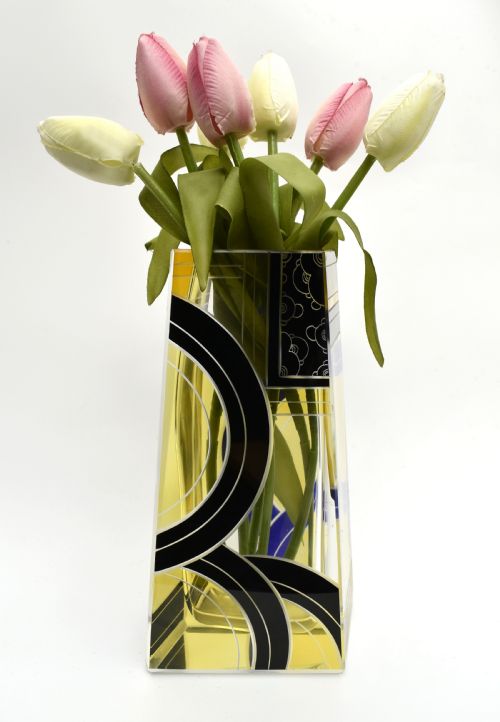


Czech Art Glass Vase
A czech art glass vase brings bold geometric lines and vibrant enamelling into a room, capturing the modernist spirit of the twentieth century.
Czech Art Glass Vase
When someone searches for a czech art glass vase, they encounter striking vessels originating primarily from the nineteen-thirties, alongside earlier examples from nineteen-hundred and the nineteen-twenties. The forms range from tall cylindrical shapes and square silhouettes to large centrepiece bowls.
Art Deco styling dominates these pieces, frequently combining coloured glass with etched motifs and painted enamel decoration. Buyers most commonly meet works utilising amber, uranium, black, and opaque glass.
Origins trace directly to Bohemian workshops and specific makers operating within the Czech region. Examples span from figural designs to heavy geometric vessels adorned with silver overlay or animal decoration.
How they were made
Maker utilise pressed glass and blown coloured glass as the primary foundations for these vessels. Molten material takes shape within moulds or through free manipulation before cooling into distinct geometric and figural forms.
Surface decoration relies on precise etching techniques combined with hand-applied enamel work. Artisans layer contrasting pigments onto uranium glass, black glass, or amber glass to create sharp linear patterns.
Metal components such as brass or sterling silver overlay appear mounted directly onto the glass bodies. This integration requires careful thermal bonding or mechanical fitting to secure the decorative metalwork.
Materials recorded across the archive include sterling silver, brass, enamel, and uranium glass.
What varies in quality
The precision of the enamel work and the sharpness of the etching determine the distinction between standard production and exceptional output. Master decorators execute crisp geometric lines that register evenly across the curved glass surfaces.
The complexity of the glass body itself creates a division in standard. Heavy opaque glass, multi-layered uranium glass, and integrated silver overlay demand greater technical mastery during production than simple pressed forms.
Karl Palda·Libochovice
The Czech Art Glass Vase Glossary
- Silver overlay
- A decorative technique where pure silver is bonded onto the exterior of a glass vessel in intricate patterns. It creates a striking metallic contrast against the coloured background.
- Enamel
- Opaque vitreous composition applied to the glass surface and fired to bond permanently. Artisans utilise this method to introduce bold colour blocks and linear details.
- Pressed glass
- Molten glass forced into a metal mould using a mechanical plunger to form specific shapes and patterns. This technique enabled the efficient production of heavy Art Deco vessels.
- Bohemian Biedermeier
- An earlier stylistic influence predating the dominant Art Deco period represented in these collections. It informs the decorative arts tradition of the region.
Czech Art Glass Vase: Frequently Asked Questions
How do I identify a czech art glass vase?
Look for characteristic nineteen-thirties Art Deco geometric forms combined with etched surfaces and coloured enamel decoration. Many examples utilise amber, uranium, or opaque black glass.
Specific makers such as Karl Palda or regional production marks often point directly to Bohemian workshops of the period.
Are these vases safe to display?
These glass vessels function primarily as decorative art objects rather than utility items for holding water. Standard handling precautions apply to protect the delicate enamel and silver overlay.
Uranium glass components emit low-level radiation that remains entirely safe for normal room display purposes.
What periods do these pieces date from?
The selection spans from nineteen-hundred through the nineteen-twenties and primarily concentrates in the nineteen-thirties. Art Deco aesthetics define the majority of the surviving output.
Earlier nineteenth-century influences from Bohemian Biedermeier traditions occasionally inform the decorative approach of centrepiece bowls.
How should I clean my glass vase?
Dust the exterior gently with a dry microfibre cloth to protect the hand-painted enamel and etched details. Avoid harsh chemical cleaners that might degrade the coloured glass surface.
Keep silver overlay and brass mounts dry to prevent tarnishing or chemical reactions with the underlying material.