



Bohemian Art Deco Glass
Bohemian art deco glass brings together sharp geometric cutting, vibrant enamelling, and striking forms from the interwar period.
Bohemian Art Deco Glass
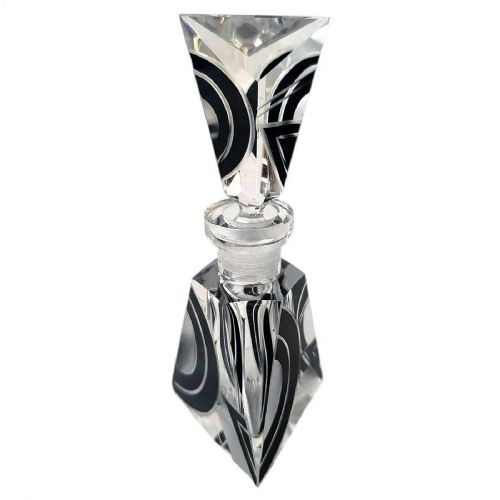
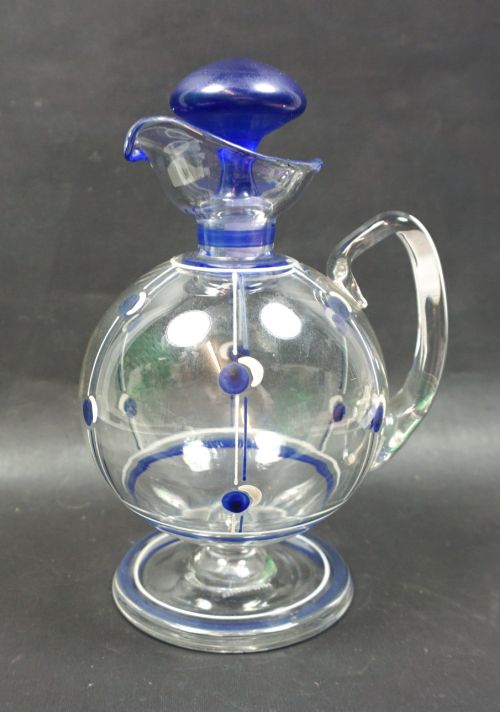
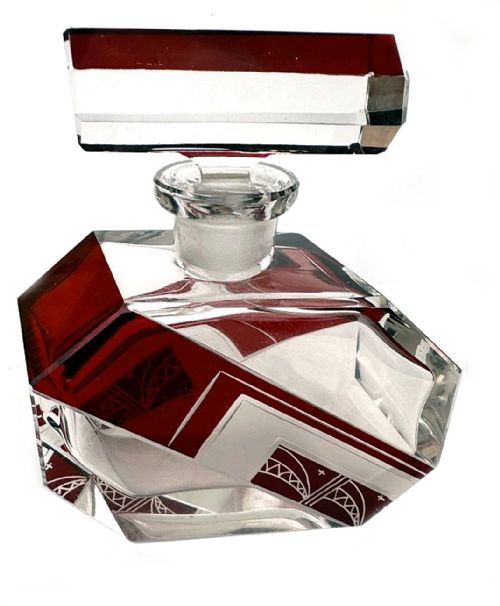
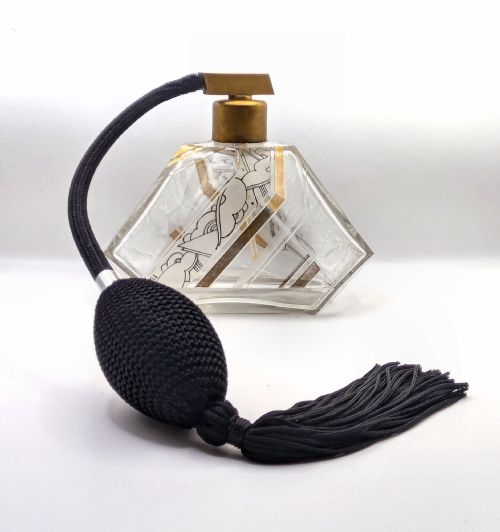
When searching for bohemian art deco glass, collectors encounter objects defined by the distinct aesthetic of Czechoslovakia during the 1920s and 1930s. The selection on this page centres heavily on dressing table accessories and dining wares, specifically perfume bottles, atomisers, and comprehensive decanter sets complete with matching glasses.
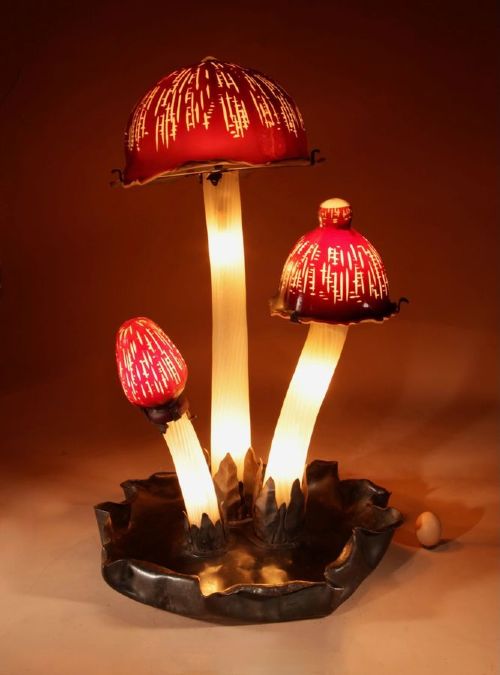
Vases and table lamps also appear frequently, often taking bold geometric or figural shapes. These items originate primarily from known Bohemian centres and workshops active during the interwar decades, reflecting the sharp angles and stylised motifs typical of the period.
Alongside the predominant 1930s output, occasional pieces draw on earlier Edwardian traditions or Victorian influences, yet the core focus remains firmly on the geometric dynamism of Czech design.
How they were made
Makers utilised heavy lead crystal and coloured glass bodies, often applying intricate geometric cutting to create contrasting textures and planes. Etched surfaces and geometric patterns catch the light, while opaque and hyalite glass provide solid, dramatic backdrops for surface decoration.
Colour and metallic lustre form a central part of the technique, seen through the application of blue, black, green, and uranium glass. Artisans integrated hand-applied enamel decoration, gold leaf, and silver overlay directly onto the glass, sometimes pairing the vessels with chrome, brass, or silver mounts.
Bohemian Art Deco Glass Retail Price Guide 2026
Typical asking prices for bohemian art deco glass among the pieces listed under this phrase on Sellingantiques today, from the lower quarter to the upper quarter. They describe what is for sale here now, not the wider market.
Jazz age drinkers enjoyed their spirits from matching sets proudly bearing the name 'Jazz Man'.
What varies in quality
Quality rests heavily on the crispness of the glass cutting and the precision of the hand-applied enamel work. Finer examples display deeply etched geometric motifs and securely fixed metallic or enamel details that show absolute control of the medium.
The sophistication of the form itself dictates distinction, as seen in complex decanter sets with all matching glasses intact or perfume bottles featuring elaborate multifaceted stoppers. Attribution to documented designers or major Bohemian firms elevates a piece above standard decorative production.
Karl Palda·Libochovice·Booms glass·Hermanova·Rudolf Hlousek
The Bohemian Art Deco Glass Glossary
- Uranium glass
- Glass containing uranium oxide, which glows green under ultraviolet light. This material was widely utilised during the interwar period for vibrant tableware and decorative objects.
- Atomiser
- A perfume bottle fitted with a spray mechanism and bulb. These dressing table pieces often incorporate elaborate glass bodies with metal hardware.
- Hyalite glass
- An opaque, dense glass developed in shades such as black or red. It provides a smooth, glossy surface ideal for contrasting enamel decoration.
- Decanter set
- A matched ensemble comprising a serving vessel and a set of drinking glasses. They frequently feature geometric cutting and hand-painted enamel designs.
- Enamel decoration
- Opaque glass paints fused to the surface through firing. This technique introduces rich colour blocks and linear patterns to clear or coloured glass.
Bohemian Art Deco Glass: Frequently Asked Questions
What defines bohemian art deco glass?
These pieces are characterised by sharp geometric forms, bold use of coloured crystal, and detailed enamel or etched surface patterns produced in Czechoslovakia during the interwar period.
They combine traditional glass-cutting techniques with modernist design principles, resulting in striking dressing table wares and drinks sets.
How do I identify a Karl Palda piece?
Works by this maker typically feature distinct geometric cutting, black or coloured enamel highlights, and structured architectural silhouettes. Many decanter sets and perfume bottles from this workshop bear characteristic crystal stoppers and matching glasses.
Studying the specific combination of etched lines and contrasting enamel colours helps distinguish these productions from generic interwar glassware.
How were decanter sets used?
These ensembles served as functional centrepieces for entertaining guests during the 1920s and 1930s, holding liqueurs or spirits in matching decanters accompanied by small glasses. They were displayed on sideboards or drinks trolleys when not in active use.
The complete sets reflect the social habits of the period, where coordinated tableware formed part of modern home presentation.
Can I use uranium glass safely?
Uranium glass contains low levels of radioactive material used as a colouring agent to produce a bright green hue. It remains safe for display and general handling under normal domestic conditions.
Collectors typically keep these objects as decorative art pieces rather than utilising them for daily food and drink service.