


Black Geometric Art Glass
Black geometric art glass brings sharp angles and striking dark tones into a room, defining the bold spirit of the nineteen-thirties.
Black Geometric Art Glass
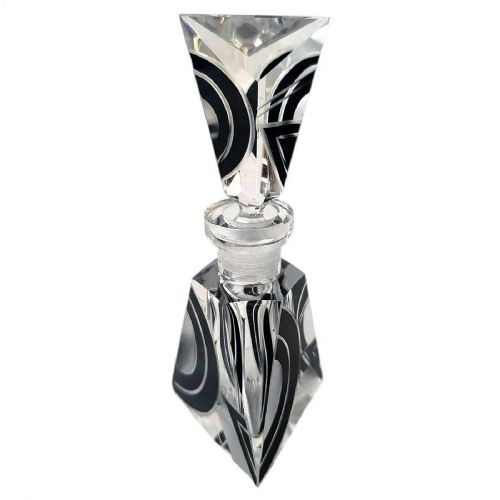
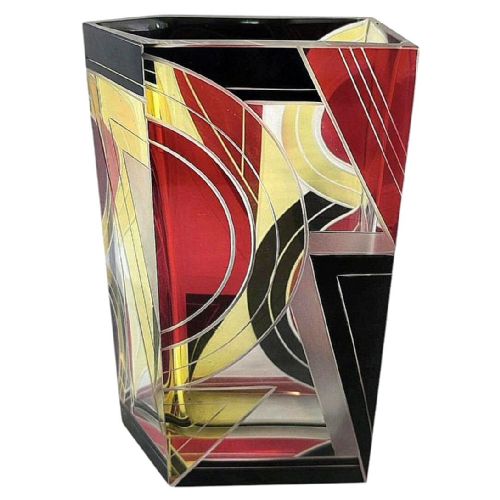
When searching for black geometric art glass, collectors encounter functional and decorative items from the Art Deco period, predominantly originating from the Czech Republic. The most common forms on this page include perfume bottles, tall vases, and complete decanter sets, often displaying rigid lines and contrasting surfaces.
These objects emerge from the nineteen-twenties and nineteen-thirties, capturing the modernist appetite for severe angles and industrial influence. Table lamps, clocks, and drinking sets also appear, representing the diverse application of dark glass and enamel within domestic spaces of the era.
The design vocabulary relies heavily on squares, sunray motifs, and stark colour contrasts between the dark glass body and surface decoration. Pieces range from simple utilitarian vessels to heavily etched display pieces designed to catch the light.
Materials and construction
Makers utilised heavy moulded or crystal glass as the foundation, frequently combining opaque black glass with cut crystal or coloured elements. Surface decoration often involved deep acid etching to bite linear patterns into the material, creating tactile depth against smooth planes.
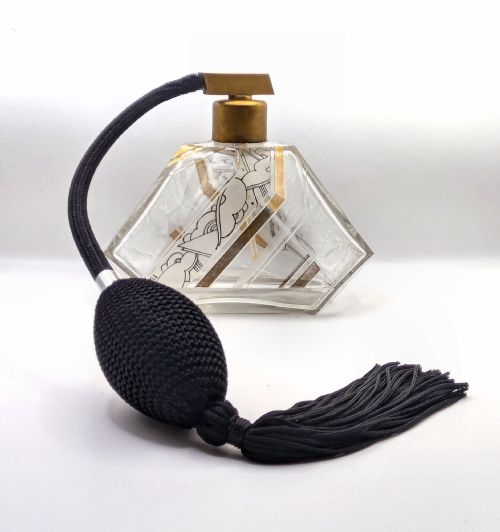
Enamel work provided sharp geometric colour blocks, applied by hand to the glass surface before firing. Metal components in chrome, brass, and silver plate were integrated into perfume atomisers, clocks, and decanter frames to complete the modernist aesthetic.
Even perfume bottles needed to look severe and architectural during the jazz age.
Evaluating quality and execution
The distinction between ordinary production and superior craftsmanship rests on the precision of the surface decoration and the weight of the glass body. Heavy, thick-walled glass forms with deeply incised etching demonstrate greater technical skill than lighter, pressed alternatives.
Hand-applied enamel work shows variation in neatness and durability, where crisp lines and intact pigment distinguish the better examples. The integration of metal mounts, such as functioning atomiser hardware or solid chrome clock housings, further separates standard wares from superior studio pieces.
Karl Palda·Jean Luce·P M Favre
The Black Geometric Art Glass Glossary
- Atomiser
- A spray bottle mechanism fitted to perfume containers, often utilising a rubber bulb and metal mesh to disperse scent.
- Etching
- A technique using acid to eat away the surface of the glass, producing recessed lines and frosted geometric patterns.
- Enamel
- A fused glassy substance applied to the exterior of the glass vessel to add opaque colour and graphic detail.
- Decanter set
- A matched ensemble comprising a serving vessel and a group of drinking glasses, designed for display and entertaining.
Black Geometric Art Glass: Frequently Asked Questions
What is black geometric art glass?
Black geometric art glass comprises decorative and functional objects from the Art Deco era featuring dark glass bodies and angular, linear designs. These items heavily reflect nineteen-thirties modernist aesthetics.
Most examples originate from workshops in the Czech Republic and include perfume bottles, vases, and glassware sets.
How do I date these glass pieces?
Dating relies on identifying stylistic markers associated with the Art Deco movement of the nineteen-twenties and nineteen-thirties. Specific manufacturing techniques like deep acid etching and enamel application point directly to this interwar period.
Signatures or attribution to known workshops help confirm the exact decade of production.
How were perfume atomisers used?
Perfume atomisers functioned as vanity accessories designed to spray liquid scent through a squeeze bulb mechanism connected to a metal collar. They sat upon dressing tables alongside matching trays and powder jars.
The glass bottles held volatile fragrances safely within heavy, decorative vessels.
How should I display them at home?
Display these items on flat surfaces where directional light can strike the etched patterns and contrasting enamel work. Placing vases or decanter sets near natural light highlights the depth of the dark glass.
Keeping them away from high-traffic edges protects the delicate metal atomiser hardware and glass rims.