
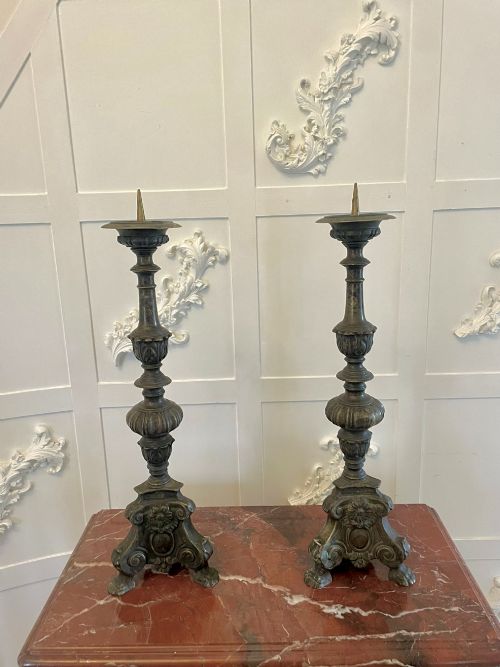
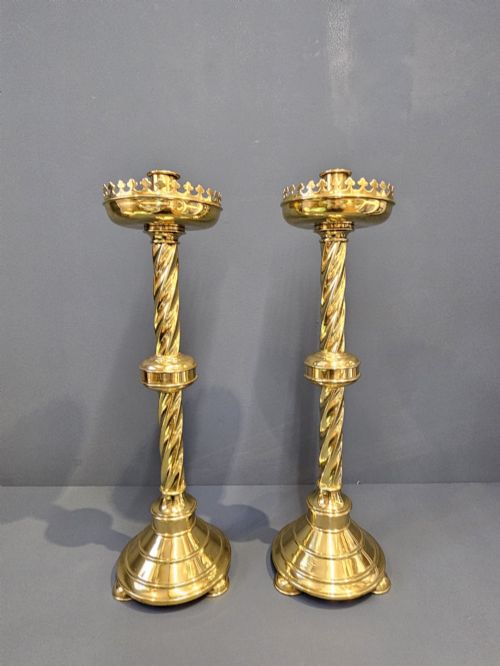
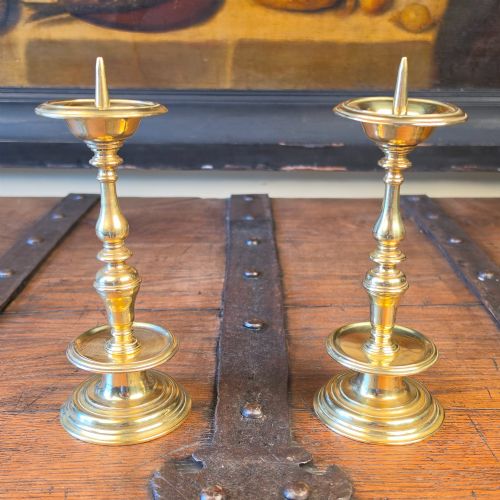
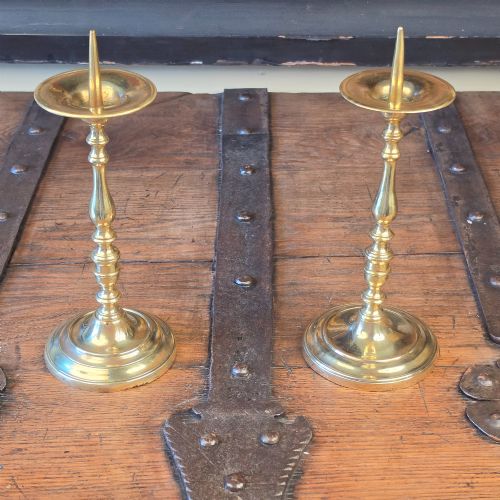




Church Pricket Candlestick
A church pricket candlestick holds a candle upon a sharp central spike rather than inside a socket, offering an ecclesiastical silhouette for the home.
Church Pricket Candlestick
A church pricket candlestick is a tall altar lighting fixture featuring an upright spike to secure a large wax candle. When searching this phrase, a buyer encounters altar pieces designed for ecclesiastical settings, including floor-standing torcheres and table-height altar sticks.
The selections span from the seventeenth century through the Victorian era and the early twentieth century. Brass and giltwood examples dominate the listings, alongside wrought iron, bronze, and carved wood versions reflecting Baroque, Gothic Revival, and Amsterdam School styles.
How church pricket candlesticks were made
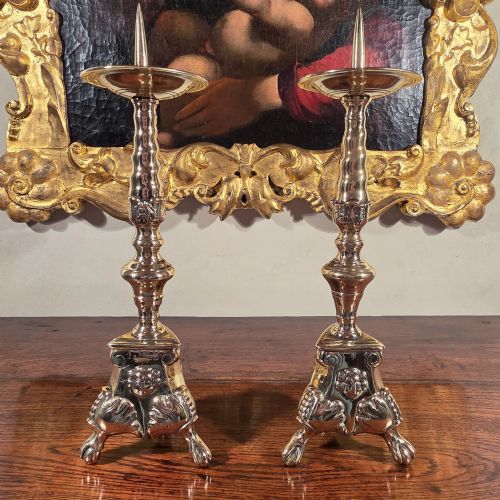
Metal versions rely on cast and turned brass, bronze, and iron, often finished with polish or nickel plating. Makers shaped heavy metal bases to support the weight of substantial church candles safely.
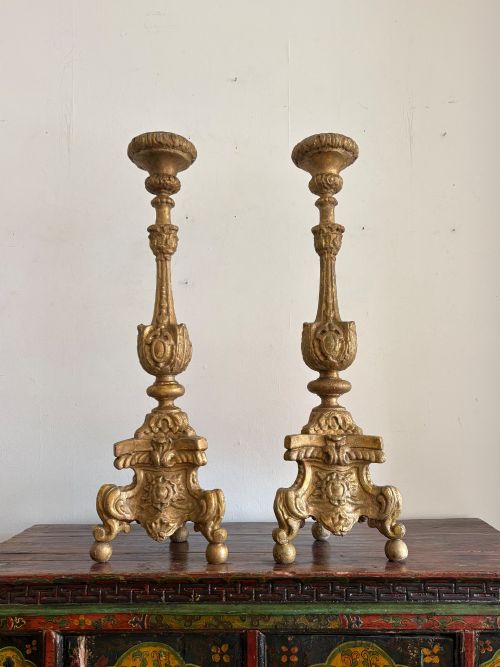
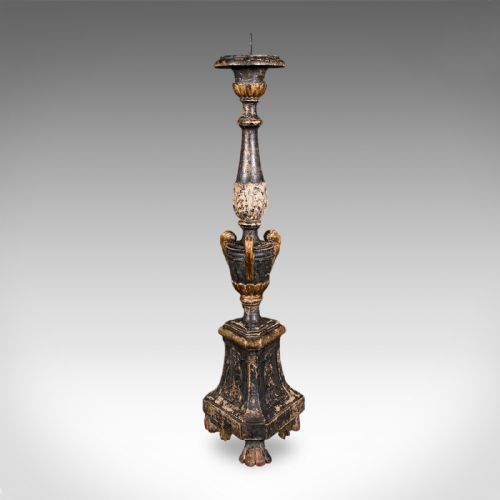
Wooden examples utilise carved pinewood, gesso, and wood covered in silver leaf, giltwood, or polychrome paint. Artisans shaped these organic materials into elaborate altar-style candle sticks, acolytes, and torcheres displaying continental baroque and gothic details.
Listings include church pricket candlesticks fashioned from brass, giltwood, bronze, and wrought iron across the Victorian, Baroque, and Amsterdam School traditions.
What varies in quality
Quality rests in the proportional balance of the turned stem and the solidity of the base, distinguishing heavy ceremonial pieces from lighter domestic adaptations. The depth of hand-carving on wooden altar sticks and the crispness of casting on brass or bronze examples mark the distinction between standard workshop output and superior ecclesiastical commissions.
The integrity of the original surface finish, whether aged giltwood, silver leaf, or polished brass, determines the visual weight of the object. Pieces retaining their original pricket spikes and matching pairs command greater presence than single items or heavily altered conversions.
The Church Pricket Candlestick Glossary
- Pricket
- A sharp metal spike projecting upwards from the drip pan to impale and hold a candle in place. This method predates the common socket candlestick.
- Torcher
- A tall ornamental stand or candlestick originally designed to carry a torch or large candle. These often stand on the floor rather than on an altar table.
- Giltwood
- Wood that has been coated with a thin layer of gold leaf or gesso and gold paint. This technique creates a rich decorative surface on altar pieces.
- Altar candlestick
- A ceremonial candle holder placed upon or near the altar in a church. They frequently appear in matching pairs and reach substantial heights.
- Amsterdam School
- An architectural and design movement from the early twentieth century characterised by expressive forms and rich texturing in metal and wood. Pieces from this tradition display bold, heavy lines.
Church Pricket Candlestick: Frequently Asked Questions
How do I use a church pricket candlestick safely?
A pricket holds a candle by pressing the wax base directly onto the upright metal spike. Ensure the candle has a wide enough base to sit steadily on the drip pan without leaning.
Place the candlestick on a secure, level surface away from drafts. Because these fixtures were built for large candles, select appropriate widths to fit the spike securely.
What is the difference between a pricket and a socket candlestick?
A socket candlestick encloses the base of the candle within a cup or tube. A church pricket candlestick uses a sharp metal spike that pierces the base of the candle directly.
Prickets represent an older ecclesiastical tradition designed for thick wax or tallow candles used in religious services. This design allows the entire candle to burn down toward the drip pan without obstruction from metal sides.
How do I date an antique church pricket candlestick?
Dating relies on examining the materials, construction marks, and stylistic influences such as Gothic Revival or Italian Baroque. Seventeenth and eighteenth-century examples often feature hand-turned timber or heavy cast bronze, while Victorian pieces show machine-assisted brass production.
Look at the wear around the base and the attachment method of the pricket spike. Archive listings show distinct shifts from seventeenth-century Flemish brass to nineteenth-century French polished brass and twentieth-century Amsterdam School designs.
Can I clean the brass on an old church candlestick?
Cleaning depends on whether you wish to preserve the aged patina or create a bright finish. Many collectors prefer leaving the natural darkening accumulated over centuries untouched.
If cleaning is necessary, use a gentle cloth and avoid harsh abrasive polishes that strip historical character. Light dusting keeps wooden and giltwood surfaces protected from moisture.