



Victorian Gothic Pricket Stands
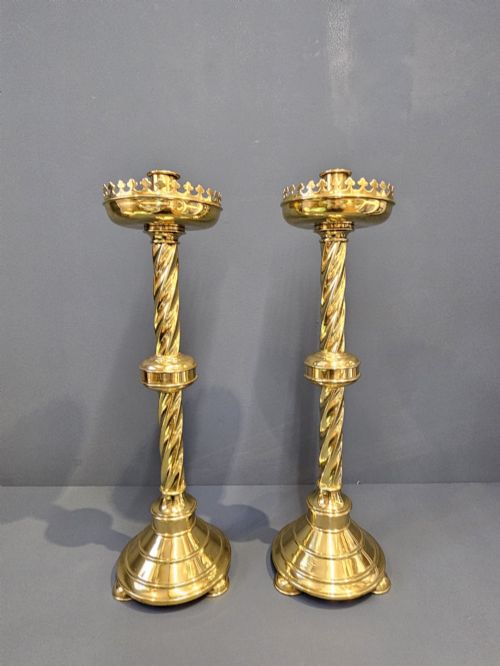
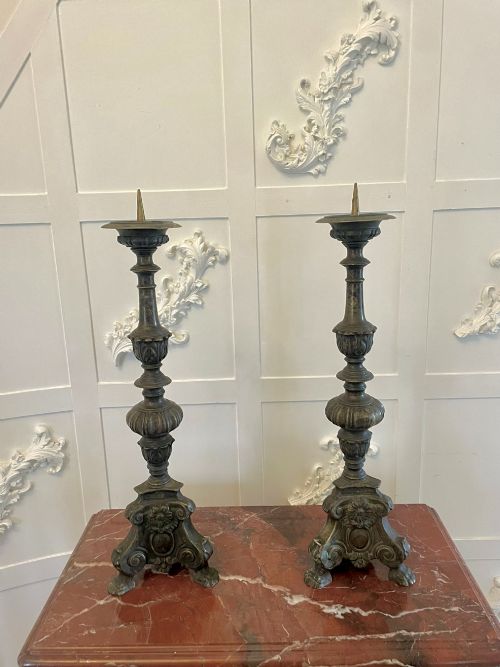
Victorian gothic pricket stands are heavy altar and church candle holders designed in the Gothic Revival style, bringing dramatic vertical presence and rich historic character to an interior.
Victorian Gothic Pricket Stands
Victorian gothic pricket stands comprise tall altar sticks and floor-standing candle holders produced during the nineteenth century. Most examples found here originate from the Victorian era and embody the architectural ornamentation of the Gothic Revival movement.
Buyers will most frequently encounter pairs of large brass candlesticks alongside single or paired bronze and wrought iron floor pieces. These objects served ecclesiastical functions on church altars before entering domestic decorative use.
How they were made
Foundries utilised heavy brass, cast bronze, and forged wrought iron to construct these durable ecclesiastical furnishings. Metal casting allowed makers to achieve intricate tracery and structural heft necessary for supporting tall church candles.
Gilt metal finishes occasionally appear alongside patinated bronze and polished brass surfaces. The combination of sturdy iron and decorative cast brass dictated both the weight and the silhouette of each stand.
Victorian Gothic Pricket Stands Retail Price Guide 2026
Typical asking prices for victorian gothic pricket stands among the pieces listed under this phrase on Sellingantiques today, from the lower quarter to the upper quarter. They describe what is for sale here now, not the wider market.
What varies in quality
The distinction between standard production and superior craftsmanship rests in the crispness of the cast ornamentation and the sheer mass of the metal. Heavier bronze and thick-gauge brass denote substantial ecclesiastical commissions rather than lighter domestic reproductions.
Proportion and architectural detailing also determine the caliber of a stand. Well-balanced shafts with complex noduses and secure pricket spikes demonstrate superior workshop design.
The Victorian Gothic Pricket Stands Glossary
- Pricket
- A sharp metal spike on top of a candlestick designed to impale and hold a candle securely in place. This form predates socket-style candle holders and remains standard in church altars.
- Gothic Revival
- An architectural and decorative style popular during the nineteenth century that revived medieval forms. It draws inspiration from medieval cathedrals through pointed arches and ornate tracery.
- Altar Candlestick
- A heavy candle holder placed upon or near a church altar for liturgical services. These pieces are typically larger and more ornate than domestic equivalents.
- Nodus
- The ornamental knob or swelling situated on the shaft of a candlestick. It provides a secure grip when lifting heavy metal stands.
Victorian Gothic Pricket Stands: Frequently Asked Questions
What is a pricket stand?
A pricket stand is a heavy candle holder featuring a vertical spike instead of a socket. The base of the candle is pushed directly onto this spike to hold it upright.
These stands were primarily used in churches and altars during the nineteenth century to support large wax candles. Their sturdy construction ensured stability during long services.
How do I date these stands?
Dating relies upon examining the metal composition, casting quality, and the specific characteristics of the Gothic Revival ornamentation. Nineteenth-century pieces often display heavy brass or bronze casting with hand-finished details.
Comparing the proportions and architectural motifs to documented ecclesiastical metalwork helps narrow down the production period. Maker marks, where present, provide further chronological context.
Where should I place a floor candlestick?
Floor-standing candle holders suit high-ceilinged rooms, entrance hallways, or corners where their vertical height creates a strong focal point. They provide dramatic architectural presence without requiring furniture surface space.
Keep them away from heavy foot traffic to protect the heavy metal base and prevent accidental tipping. Pairing them with thick pillar candles completes the traditional aesthetic.
Are these pieces from churches?
Many large brass and bronze examples originated in ecclesiastical settings such as chapels and parish churches. Their robust construction and pricket design reflect traditional church altar furnishings.
Over time, collectors repurposed these ecclesiastical items for domestic interiors to introduce historical weight and ecclesiastical charm. Their durable materials ensure they transition smoothly into modern homes.