




Pair Tall Pricket Sticks
Pair tall pricket sticks bring vertical drama to a room, offering commanding height and distinctive spiked drip pans rooted in centuries of ecclesiastical and domestic ritual.
Pair Tall Pricket Sticks
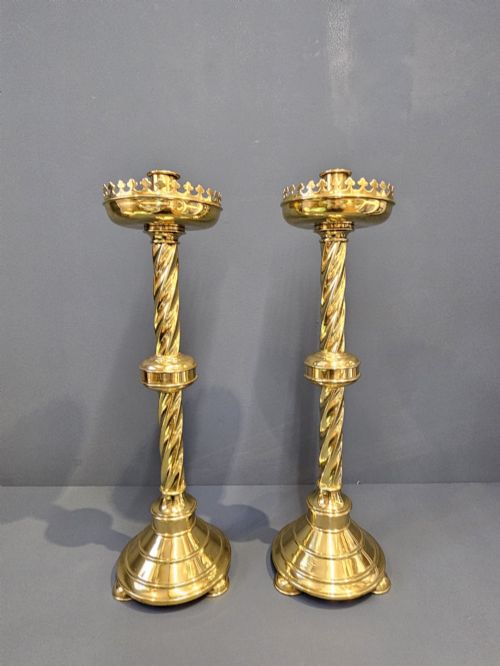
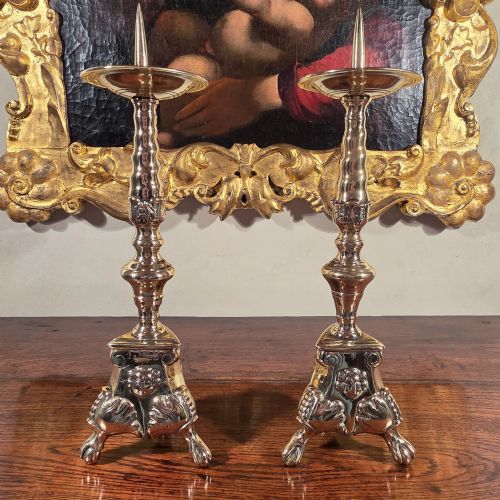
When you search for pair tall pricket sticks, you encounter substantial church and altar lighting designed to hold large candles upon an upward-pointing metal spike rather than inside a socket. The selection spans the eighteenth, nineteenth, and early twentieth centuries, drawing on Victorian and Gothic Revival, Italian Neoclassical, Baroque, and French Chateau aesthetics.
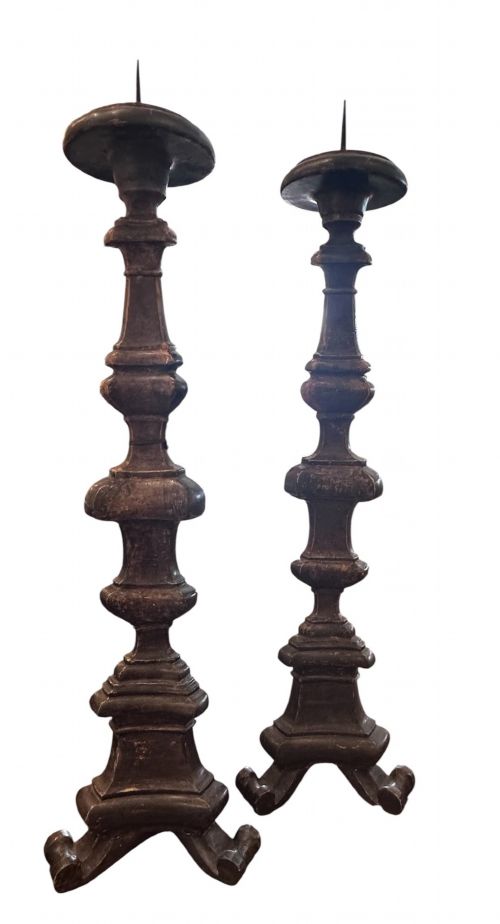
You meet a variety of sturdy forms on this page, dominated by tall candlesticks alongside table lamps and floor candlesticks. Materials range from traditional brass and bronze to carved wood enhanced with gesso, paint, and silver leaf or gilt metal prickets.
How they were made
Metal examples utilise durable casting techniques in brass and bronze to achieve the robust shafts and wide bases necessary to support heavy ecclesiastical candles safely. Carved wooden versions employ traditional joinery and turning, shaping timber foundations before applying decorative finishes.
Surface decoration relies on applied gesso layered beneath silver leaf, gold leaf, or paint to mimic opulent metalwork or create rich patinated finishes. Craftsmen fitted sharp metal prickets directly into the top drip pans to secure large wax candles firmly in place.
Pair Tall Pricket Sticks Retail Price Guide 2026
Typical asking prices for pair tall pricket sticks among the pieces listed under this phrase on Sellingantiques today, from the lower quarter to the upper quarter. They describe what is for sale here now, not the wider market.
Listings span four distinct centuries, ranging from eighteenth-century origins through the nineteenth-century Victorian era up to nineteen-twenty creations.
What varies in quality
The sophistication of the carving and the crispness of the casting separate simpler vernacular objects from more ambitious workshop pieces. Proportions dictate visual balance, where slender turned shafts meet appropriately weighted bases to ensure stability at height.
The integrity of the original surface finish, whether patinated brass, aged paint, or intact silver leaf, heavily influences the character and authenticity of each pair. Wear patterns tell a story of long use in churches and private chapels, distinguishing honest age from later intervention.
The Pair Tall Pricket Sticks Glossary
- Pricket
- A sharp metal spike set into the top of a candlestick to impound and hold a candle. This form predates standard socket holders common in domestic lighting.
- Gesso
- A plaster-based mixture applied to wood surfaces to prepare them for gilding or painting. It provides a smooth ground that accepts metallic leaf or pigment.
- Silver Leaf
- Extremely thin sheets of beaten silver applied to wood or metal surfaces for decorative effect. It develops a dark oxidation over time.
- Gothic Revival
- An architectural and decorative style drawing inspiration from medieval forms. It frequently employs pointed arches and ecclesiastical motifs.
- Baroque
- A flamboyant artistic style characterised by ornate detail and dramatic movement. It manifests in heavy scrolls and sculptural flourishes.
Pair Tall Pricket Sticks: Frequently Asked Questions
What is a pricket stick?
A pricket stick is a candle holder featuring an upright metal spike that pierces the base of a candle to keep it steady. This design was standard for large altar candles in churches.
Over time, these tall sticks transitioned into domestic settings for decorative illumination and architectural presence.
How were pricket sticks used?
They were originally placed on church altars or in cathedrals to provide elevated light during religious ceremonies. The tall shafts ensured light reached above crowds and large liturgical furnishings.
In later centuries, grand houses adopted them for formal rooms to create dramatic focal points on tables or floors.
Are these made of wood or metal?
The listings include both metal and wooden constructions, often combining materials for structural integrity and decorative impact. Brass and bronze provide heavy metallic weight.
Carved wooden versions frequently feature gesso, paint, or silver leaf applied over timber to simulate precious metal.