





Ecclesiastical Candle Stand
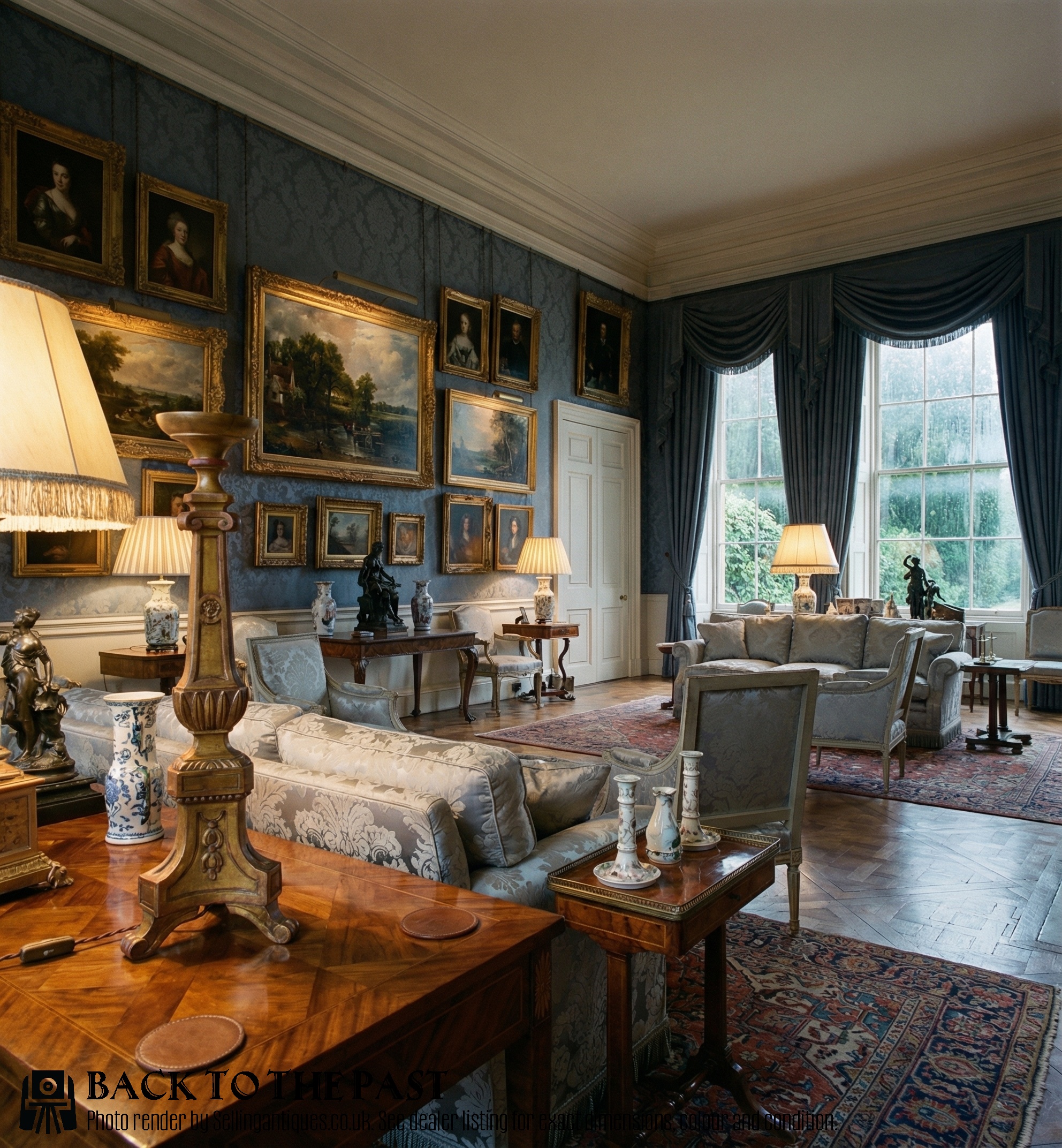
An ecclesiastical candle stand brings weight and solemnity to a room, offering the solid presence of altar metalwork and carved devotional timber.
Ecclesiastical Candle Stand
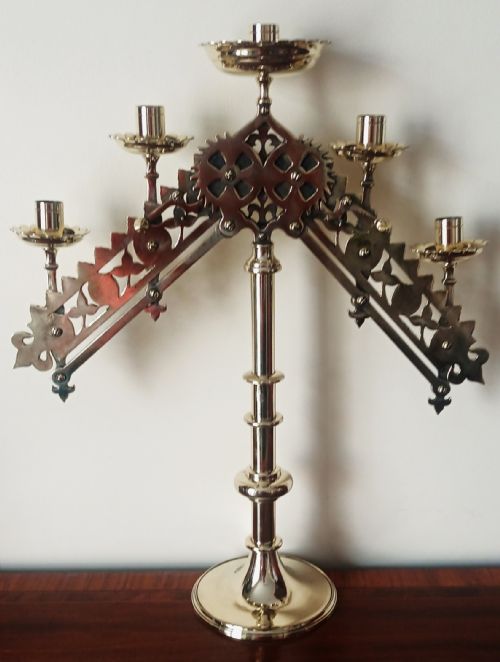
An ecclesiastical candle stand is a devotional lighting fixture designed for altars, chancels, or processional use within churches, spanning the Georgian, Victorian, and early twentieth-century periods. These objects range from heavy brass table candlesticks to grand floor-standing candelabras and altar stands.
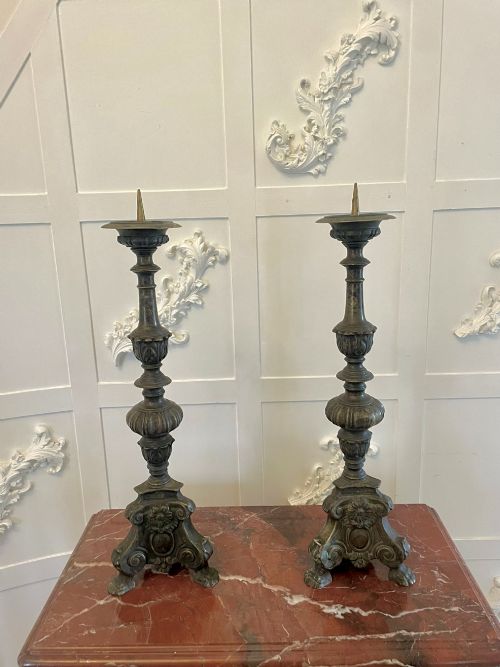
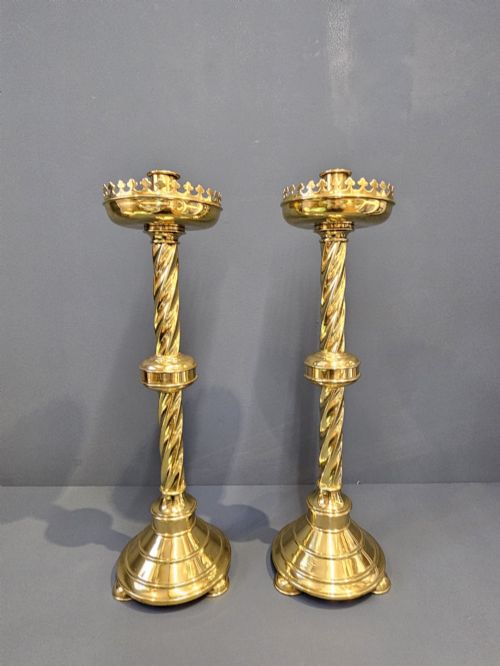
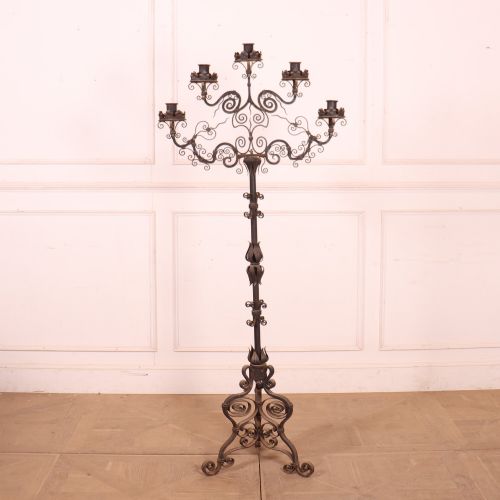
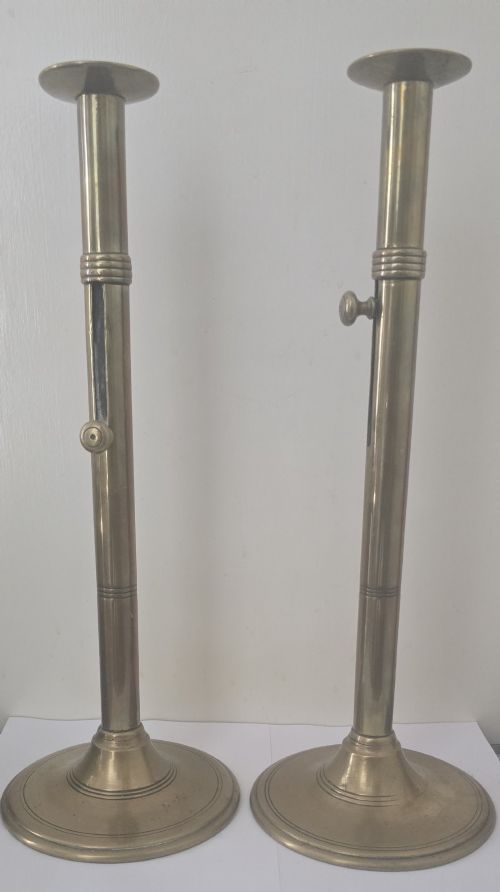
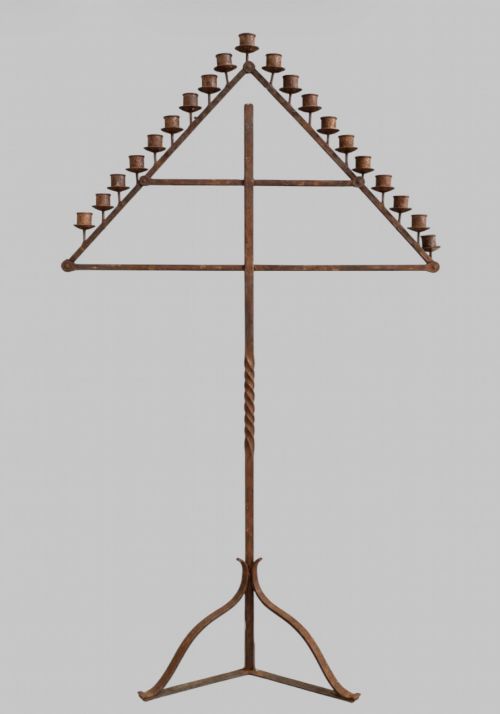
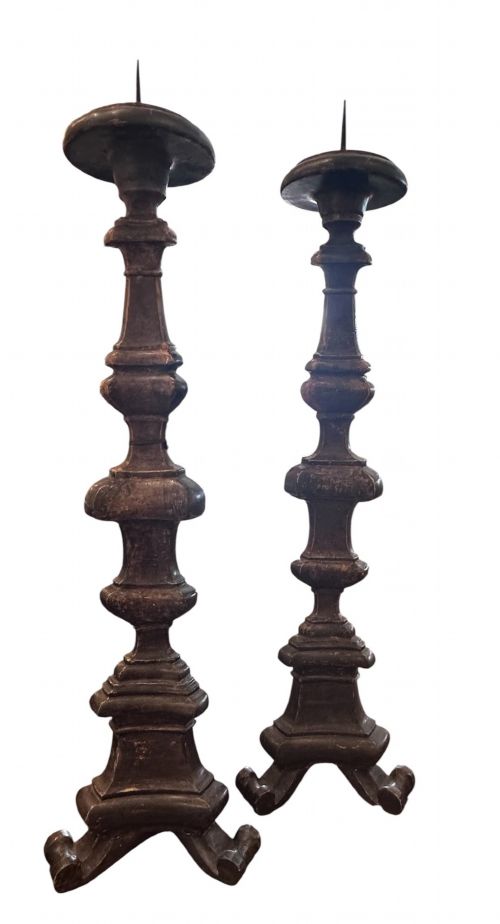
The pieces most frequently met on this page are nineteenth-century brass church candlesticks and pricket sticks, often found in pairs. Alongside these, buyers encounter architectural wrought iron floor candelabras and carved wooden altar pieces hailing from continental and British workshops.
Forms include tall floor-standing holders, articulated brass candelabras, and multi-candle stands designed to hold large wax tapers. Their origins stretch from English workshops to Italian and French ecclesiastical centres.
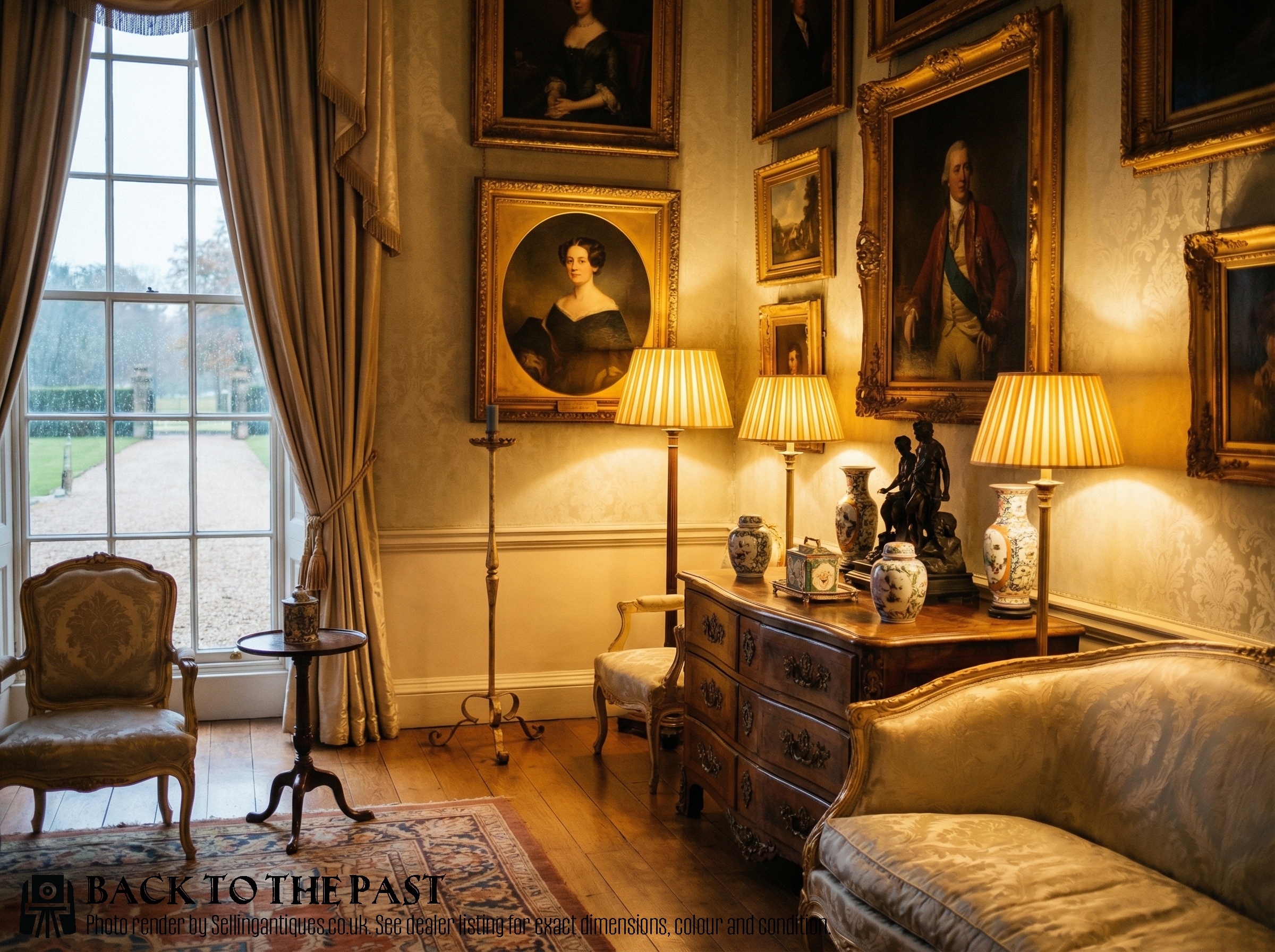
How they were made
Makers utilised cast and turned brass, heavy bronze, and forged wrought iron to build durable structures capable of supporting thick liturgical candles. Brass components were frequently cast in sections and joined, while iron work relied on traditional blacksmithing techniques for architectural stability.
Wooden examples were hand-carved from solid timber, then treated with gesso and finished with silver leaf or gilding to emulate precious liturgical metalwork. Surface decoration on metal often involved Gothic Revival ornamentation, chased details, and neo-Gothic motifs.
Listings feature items from the eighteenth, nineteenth, and twentieth centuries, incorporating materials such as brass, bronze, wrought iron, and silver leaf.
What varies in quality
Quality rests in the substance of the casting and the crispness of the hand-chased or carved detail. Heavy, thick-walled brass and deeply carved timber retain their structural integrity and decorative sharpness over centuries of use.
Proportion and scale dictate the visual impact of a stand, separating standard church metalwork from exceptional architectural statements. The integrity of original surface finishes, such as untouched patination on bronze and aged silver leaf on wood, defines the piece's historical authority.
T Thomason & Co
The Ecclesiastical Candle Stand Glossary
- Pricket
- A sharp metal spike on a candlestick designed to impale the base of a large candle. This traditional altar form secures heavy wax tapers without a socket.
- Candelabra
- A branched lighting fixture holding multiple candles on separate arms. These offer greater illumination than a single candlestick and often feature articulated joints.
- Gesso
- A plaster-like mixture applied to wood as a smooth base for gilding or silver leaf. It allows carvers to achieve fine decorative details before applying metallic finishes.
- Treen
- Small domestic and decorative wooden objects made by turning on a lathe. In ecclesiastical contexts, these items display traditional woodworking skills.
- Gothic Revival
- An architectural and decorative style popular during the Victorian era. It draws inspiration from medieval church design, featuring pointed arches and ornate tracery.
Ecclesiastical Candle Stand: Frequently Asked Questions
What is a pricket stick?
A pricket stick is a candle holder that uses an upright spike to secure the candle rather than a traditional socket. This design was standard for large altar candles in churches.
Such sticks often held thick wax tapers used during long liturgical services, requiring a sharp point to keep the heavy candle stable.
How were these stands used?
These stands were placed on altars, chancels, and sanctuary floors to provide ceremonial lighting during religious services. Floor-standing versions illuminated large liturgical spaces.
Smaller pairs rested on altars for daily prayer, while grander floor pieces served architectural and processional roles in larger churches.
Can I use modern candles on them?
Pricket sticks require candles with a drilled base to fit securely onto the metal spike. Standard socket candlesticks accommodate modern pillar candles if the diameter matches.
Buyers should measure the spike or socket before purchasing candles to ensure a safe and stable fit for home display.
How do I date a brass church candlestick?
Dating relies on stylistic clues such as Victorian Gothic Revival motifs, casting methods, and assembly marks. Heavy brass components and Georgian ejector mechanisms provide specific chronological markers.
19th-century examples often display deep chasing and distinctive patination that separates them from later twentieth-century reproductions.
Are wooden altar stands fragile?
Wooden stands finished with gesso and silver leaf require stable humidity and gentle handling to protect the delicate surface layers. Solid timber structures remain robust.
Keeping them away from direct heat sources prevents the carved wood from drying out and preserves the historic finish.