
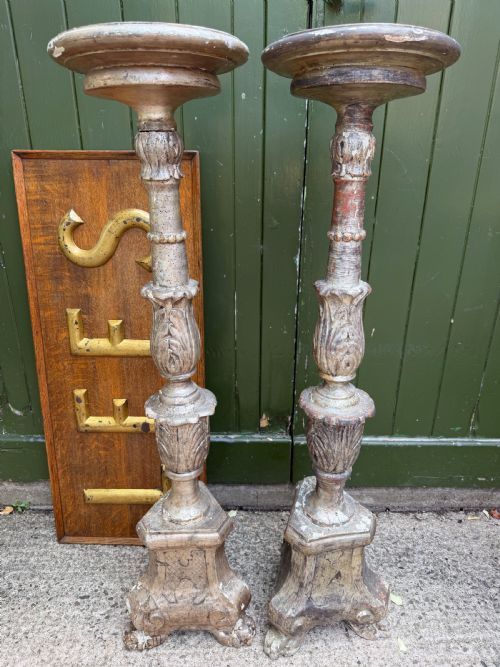
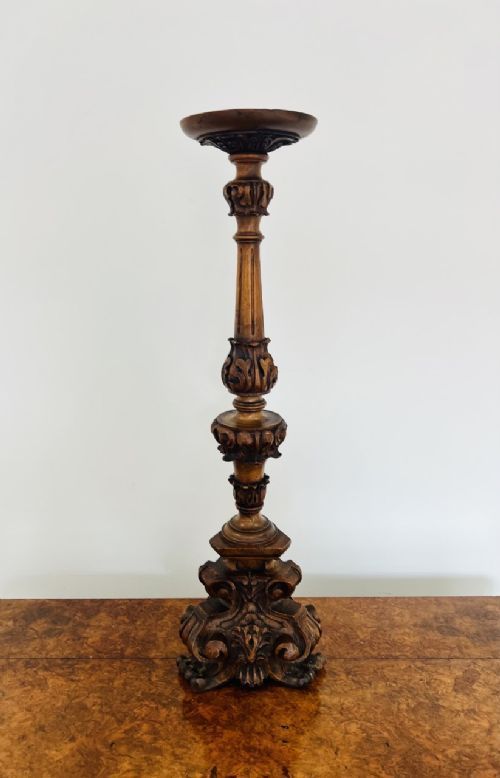


Carved Wood Pricket Stand
A carved wood pricket stand brings sculptural ecclesiastical presence to a room, holding candles upon a sharp central spike rather than inside a socket.
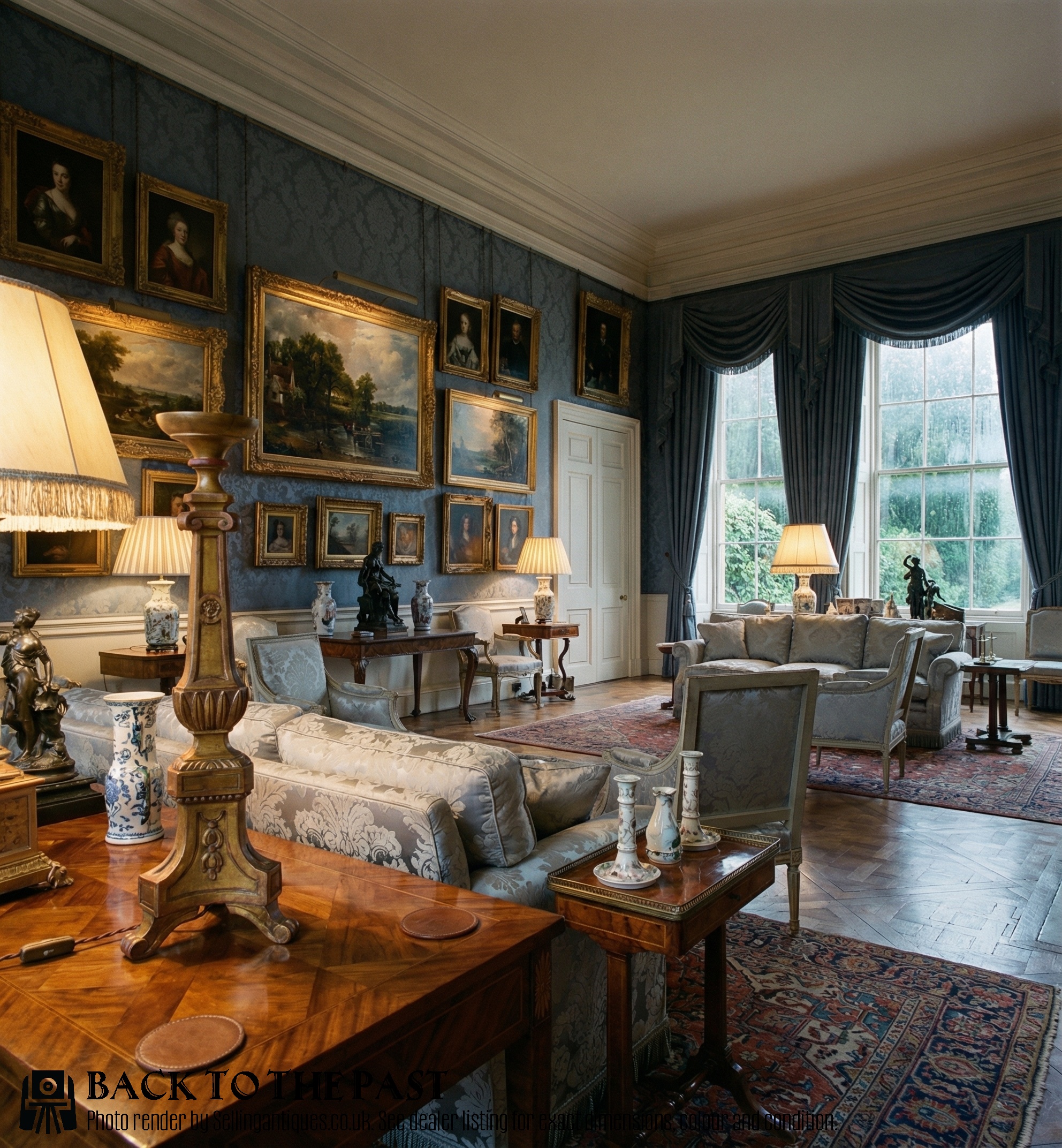
Carved Wood Pricket Stand
A carved wood pricket stand is fundamentally an altar-style candle holder or torchere designed to support large wax tapers on an upward-pointing metal spike. The examples seen on this page span several centuries, with a strong representation of eighteenth-century and nineteenth-century Italian workmanship alongside later revival interpretations.
Buyers will encounter various forms ranging from tall floor-standing torcheres to shorter table candlesticks and converted lamp bases. The decorative vocabulary draws heavily from Baroque and Neoclassical traditions, often taking the form of altar sticks, angel figures, or column-like standards.
Originating largely from continental religious and domestic settings, these objects serve as both functional illumination and decorative sculpture. The listings here demonstrate that walnut, pinewood, and giltwood represent the primary structural foundations for these items.
How they were made
Makers shaped these stands from solid timbers such as pine, walnut, and various foundational woods before applying decorative surface treatments. Carvers worked by hand to create elaborate acanthus leaves, fluted columns, and figurative elements like angels or scrolls.
Surfaces frequently received layers of gesso to smooth the wood grain prior to gilding or silvering. Craftsmen applied thin sheets of gold leaf or silver leaf over the gesso, often burnishing parts to create a lustrous finish that caught the dim light of churches and chateaux.
Several stands double as watchful guardians, carved with the wings of wooden angels ready to hold your evening flame.
What varies in quality
Quality rests primarily in the crispness and depth of the hand carving, where deeper undercut foliage and anatomically convincing figures distinguish superior workshops from mechanical production. The handling of the gesso and metal leaf foundation dictates how well the surface ages, as thin or hastily applied layers wear differently than thicker, burnished applications.
Proportion and scale also separate the ordinary from the exceptional, particularly in taller torcheres where balance and structural integrity matter. Pieces that retain their original pricket spikes and uncompromised wooden cores command greater interest than those subjected to heavy structural rebuilding.
The Carved Wood Pricket Stand Glossary
- Pricket stand
- A candle holder featuring an upright metal spike upon which a thick candle is impaled. This traditional method preceded socket-style holders.
- Torchere
- A tall ornamental stand or candlestick designed to elevate a light source high above the floor. They frequently appear in pairs flanking furniture or architectural doorways.
- Giltwood
- Wood that has been coated with thin sheets of gold leaf over a prepared gesso ground. This technique creates a rich metallic sheen that resists tarnishing.
- Gesso
- A plaster-like mixture applied to wood surfaces to create a smooth base for gilding or painting. It allows carvers to achieve sharp details beneath metal leaf.
- Treen
- Small handmade wooden household objects and utilitarian items. In the context of candle holders, it denotes turned or carved wooden construction without metal or gilt embellishments.
Carved Wood Pricket Stand: Frequently Asked Questions
What is a pricket candle stick?
A pricket candlestick uses a sharp metal spike instead of a cup to secure the candle. The base of the wax taper is pressed down onto this point to hold it upright.
This format is common in ecclesiastical settings and older domestic lighting. It requires candles with a small pre-pierced base or a soft underside to mount properly.
How do I date a carved wooden stand?
Dating relies on examining the tool marks left behind by the woodcarver, the composition of the underlying gesso, and the wear patterns on the gilt or silver leaf. Stylistic cues such as Baroque scrolls or Neoclassical urns also point toward specific eras.
Secondary woods and fixings help confirm the age of the piece. Earlier examples often show hand-sawn timber marks and older peg construction.
Were these originally used in churches?
Many large torcheres and altar-style candle holders originated in European churches, chapels, and private oratories. Their impressive proportions and religious iconography reflect this ecclesiastical function.
Others were made for grand domestic interiors and chateaux to light large rooms. Over time, many transitioned from church altars into secular drawing rooms.
Can I still use these for lighting?
Many of these stands function effectively with traditional candles placed upon the pricket. Some examples have been adapted over the years to house electrical lamp fittings for modern convenience.
When using real candles, one must ensure the drip pan or plate catches falling wax. Placing them away from drafts protects both the antique wood surface and surrounding furnishings.
What is Italian Baroque Revival style?
Italian Baroque Revival refers to nineteenth-century and early twentieth-century works that consciously emulate the theatrical, ornate designs of the seventeenth-century Baroque period. These pieces feature exaggerated curves, rich gilding, and bold sculptural motifs.
Craftsmen during this revival used older construction techniques alongside contemporary tools to recreate antique opulence. This style is particularly prevalent among nineteenth-century Italian torchere stands.