




Gold Pricket Candlestick
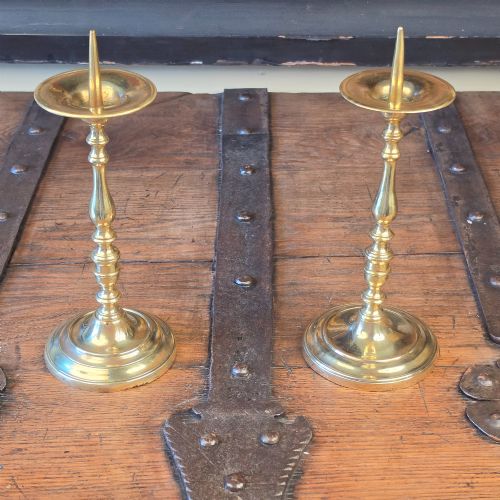
A gold pricket candlestick brings devotional height and burnished warmth to a room, driven by the upward thrust of its central spike.
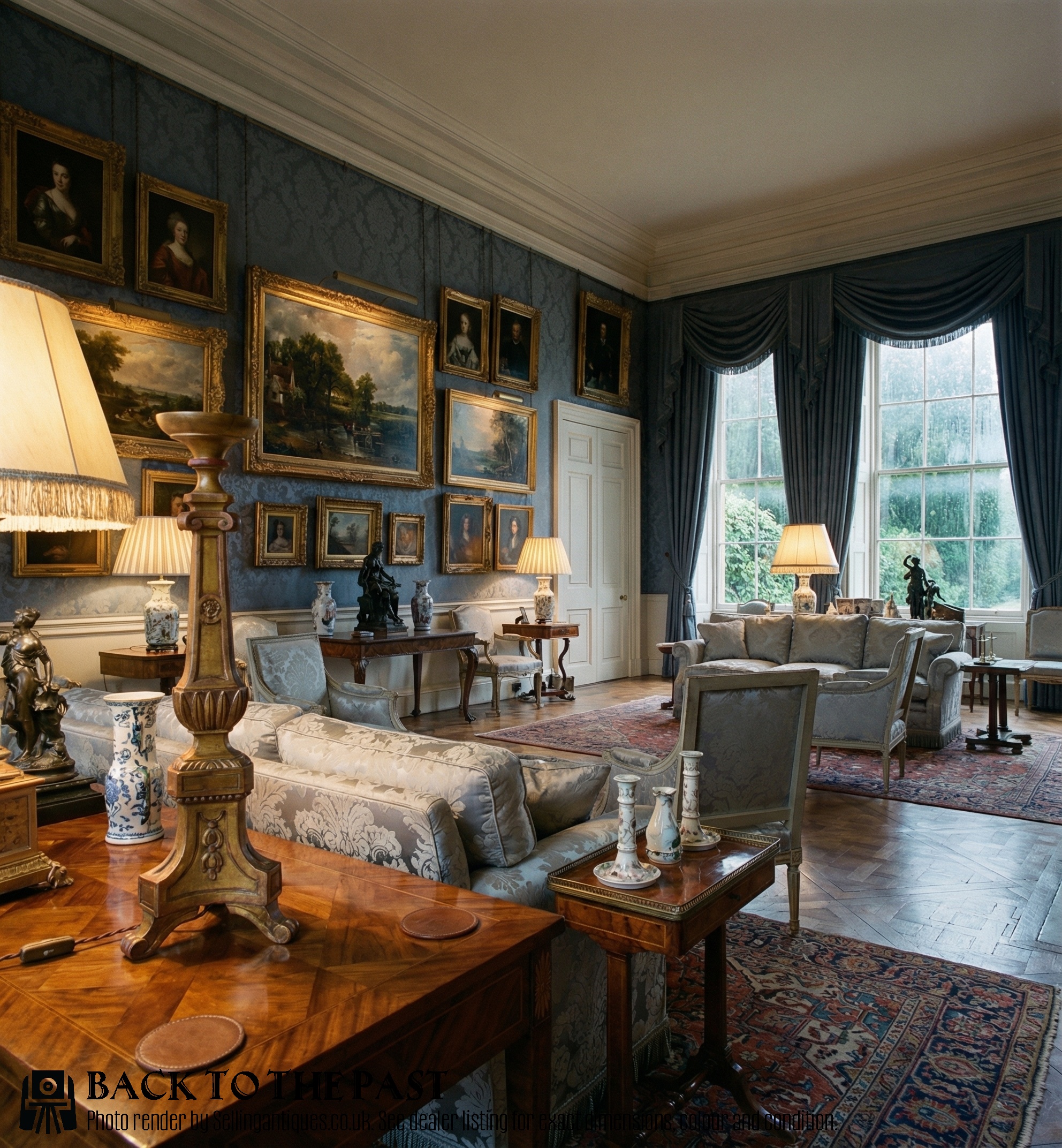
Gold Pricket Candlestick
When you search for a gold pricket candlestick, you encounter altar furniture and church accessories adapted through various centuries for domestic illumination.
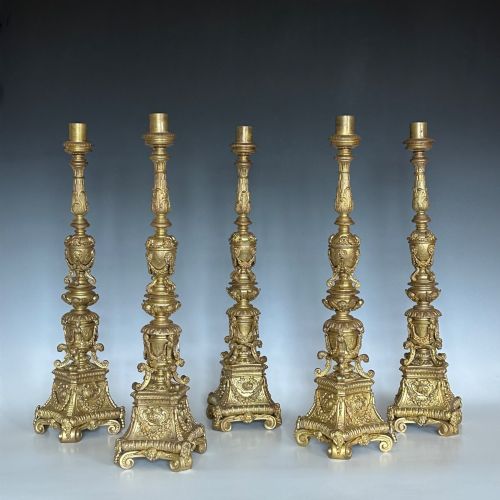
The selections here span from eighteenth-century Italian Venetian pieces to nineteenth-century Gothic Revival adaptations and later standard lamps.
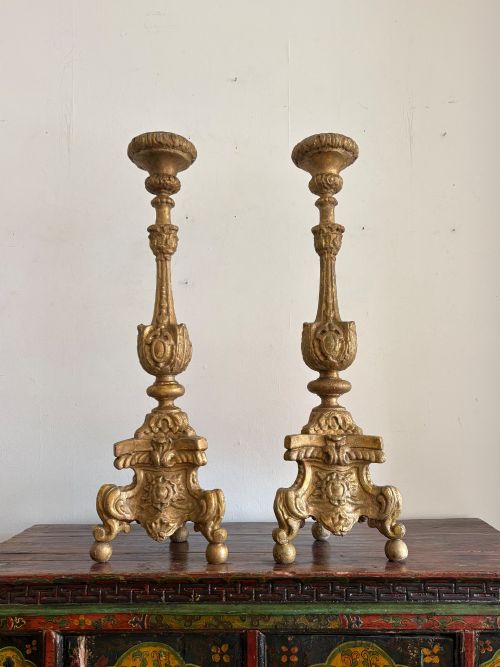
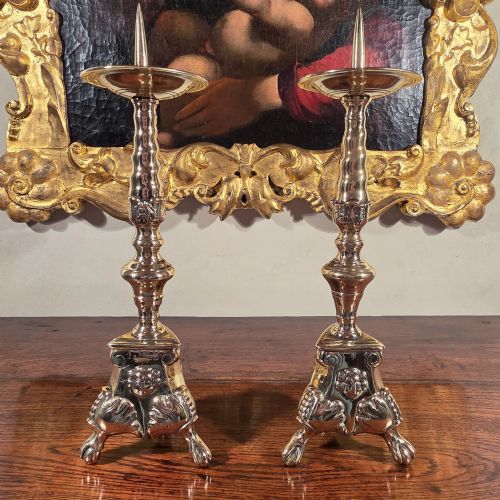
You meet pairs of tall carved giltwood altarpiece standards alongside smaller brass or bronze table lighting conversions.
Materials and construction methods
Carved wood provides the structural core for many Continental examples, subsequently coated in gesso and finished with applied gold leaf or silvered mecca.
Cast metals such as brass, gilt-brass, ormolu, and bronze form the heavy bases and spikes of ecclesiastical pieces.
Many historical church sticks undergo later adaptation into table lamps, integrating electrical fittings while retaining their original spikes and drip pans.
Some tall altar pieces spent decades illuminating dim chapels before finding a second life as sitting room table lamps.
Distinctions in craftsmanship and form
The depth and clarity of the wood carving distinguish exceptional Italian Baroque and Florentine pieces from simpler turned wooden shafts.
Proportion dictates the architectural presence of an altar stick, where heavy gauge metalwork or substantial timber diameters support significant height without instability.
The integrity of the original gilt surface determines historical value, separating untouched gold leaf and mecca finishes from later repainting.
The Gold Pricket Candlestick Glossary
- Pricket
- A sharp metal spike atop a candlestick designed to impale the base of a candle, rather than a socket that holds the candle.
- Giltwood
- Timber that has been coated in gesso and covered with a thin layer of gold leaf, frequently seen on Italian altar pieces.
- Mecca
- A transparent golden varnish applied over silver leaf to simulate the richer appearance of gold leaf at a lower production cost.
- Gothic Revival
- An architectural and decorative style drawing on medieval forms, prominent in nineteenth-century ecclesiastical metalwork.
Gold Pricket Candlestick: Frequently Asked Questions
How do I use a pricket candlestick safely?
The central spike secures the base of a pillar candle, preventing it from slipping off the top platform during burning.
Ensure the candle is pressed firmly onto the metal point and keep the piece away from draughts to catch falling wax.
Are these candlesticks converted to lamps?
Several pieces in this selection feature electrical wiring added for domestic illumination while preserving the original candle spike.
This conversion allows you to place tall altar pieces on tables or floors as functional reading lamps.
How do I date an antique candlestick?
Examine the materials and joinery beneath the base, noting whether the timber shows hand-carving or the metal is cast in heavy sections.
Stylistic cues such as Baroque scrollwork or Gothic Revival tracery point directly to eighteenth and nineteenth-century production periods.
Where should I place a large floor candlestick?
Tall standard lamps and heavy altar sticks suit corners of reception rooms or flanking architectural doorways where height adds vertical balance.
Their substantial proportions require stable placement on flat flooring away from heavy household traffic.