


Dark Iron Candle Holder
These dark iron candle holder pieces bring heavy, utilitarian form and dark metallic texture into a room.
Dark Iron Candle Holder
A dark iron candle holder encompasses practical lighting implements, tall floor candelabras, wall lanterns, and tabletop candlesticks spanning from the eighteenth century into the twentieth century. When searching for a dark iron candle holder, collectors encounter diverse regional forms including Welsh vernacular rushlight holders and Italian altar pieces.
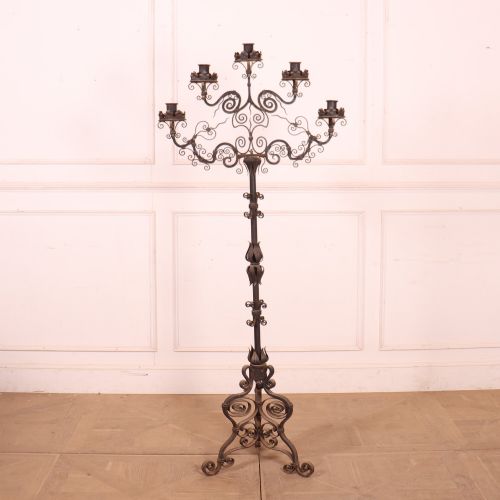
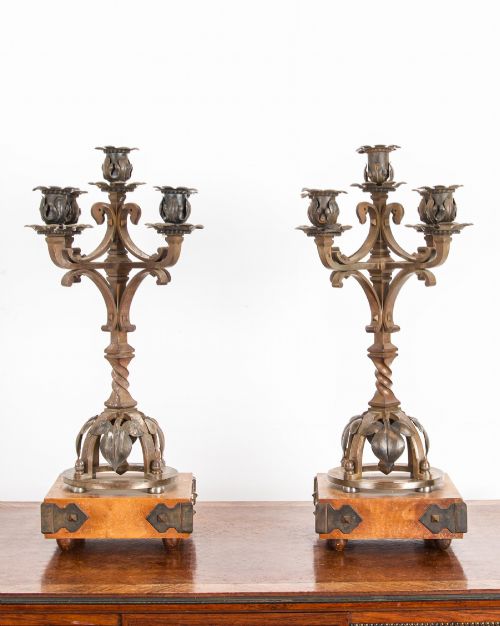
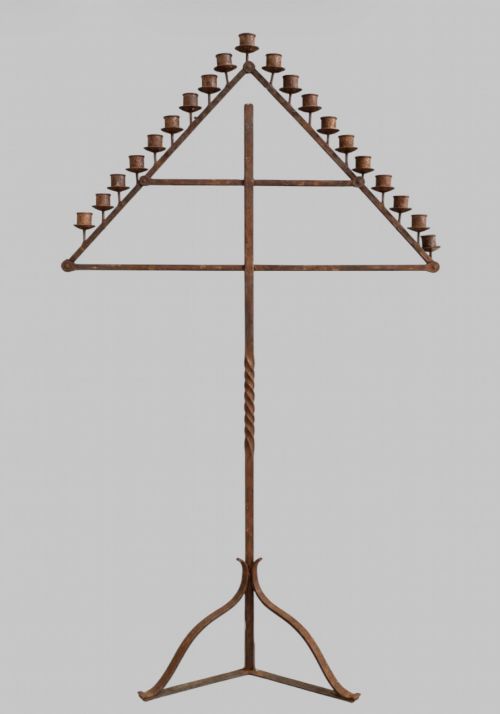
The selection ranges from early spring action tripod rushlight mechanisms and spiral candlesticks to Gothic Revival five-branch candelabra and Arts and Crafts hall lanterns. Pieces survive in various configurations, from small chambersticks to architectural floor-standing torchères designed for heavy wax illumination.
How they were made
Blacksmiths forged these items primarily from wrought iron and steel, hammering heated metal into functional curves, tripod bases, and spiral stems. Many examples combine the dark iron structure with brass components, wooden elements, or glass panels to create contrast and utility.
Makers utilised casting techniques for heavier figures and architectural floor candelabras, applying patination to achieve deep surface colours. Utility items like rushlights incorporate sprung iron mechanisms designed to grip natural rushes securely for domestic illumination.
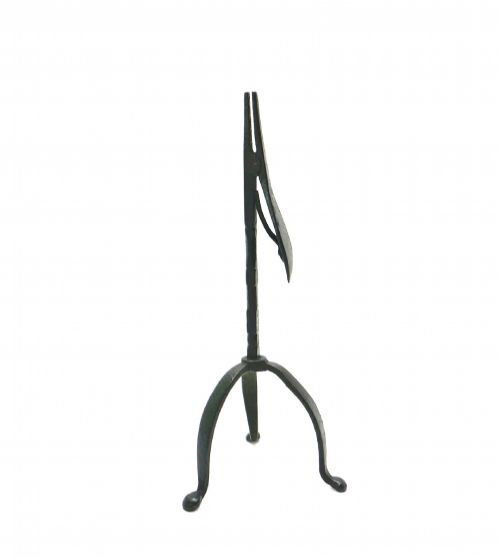
Some eighteenth-century Welsh examples were built with clever spring actions so a farmer could clamp a burning weed and read by its sputtering glow.
What varies in quality
Quality rests in the honesty of the blacksmithing, the purity of the material, and the integrity of the period surface rather than decorative excess. Finer examples display purposeful hand-hammered proportions, clean mechanical action in sprung components, and substantial structural weight.
Vernacular pieces show the direct hand of regional makers, where simple construction achieves sculptural presence through balanced form. Later Secessionist and Arts and Crafts pieces depend on precise styling and harmonious integration of mixed metals like brass and iron.
Hugo Berger Goberg
The Dark Iron Candle Holder Glossary
- Rushlight holder
- A domestic lighting device featuring a sprung iron jaw that grips a dried rush dipped in animal fat. These vernacular objects date largely to the eighteenth century.
- Pricket candlestick
- A candlestick featuring a sharp central spike rather than a socket to secure the base of a candle. They appear frequently on Italian altar pieces and Gothic Revival designs.
- Torchère
- A tall ornamental stand or candlestick designed to carry a light source at an elevated level. These floor-standing pieces often serve as architectural statements in a room.
- Spiral candlestick
- A lighting form featuring a stem twisted into a helical screw pattern, sometimes incorporating a sliding clip to adjust the candle height as it burns down.
- Trench art
- Objects fashioned by soldiers or civilians from war debris and metal scrap, including candlesticks produced during the early twentieth century.
Dark Iron Candle Holder: Frequently Asked Questions
What is a rushlight holder?
A rushlight holder is a domestic lighting device that uses a weighted spring arm to clamp a dried rush soaked in fat. This provided cheap illumination in cottages and farmhouses before candles became affordable.
These pieces rely on simple blacksmithing, often featuring tripod bases for stability on uneven floors and stone flags.
How do I date an iron candlestick?
Dating relies on construction marks, tool traces, and the evolution of styles from vernacular Georgian forms to later Gothic Revival and Art Deco movements. Eighteenth-century examples often show hand-forged irregularities and simple functional joinery.
Nineteenth- and twentieth-century pieces incorporate more refined cast elements, machine-rolled iron, or distinct Secessionist design characteristics associated with makers like Hugo Berger.
Where were floor candelabras used?
Floor candelabras and architectural torchères stood in large halls, churches, and grand domestic interiors to provide significant ambient light. Italian altar pieces served liturgical functions in ecclesiastical settings.
In modern rooms, these tall pieces suit corners or flanking hearths where their height and dark metallic silhouette create a strong visual anchor.
What is a pricket candlestick?
A pricket candlestick uses a sharp metal spike at the top to impale the base of a candle, rather than sliding the candle down into a tubular socket. This style is common on older altar pieces and Gothic Revival designs.
They require candles with a flat base wide enough to balance securely on the spike and the drip pan below.