


Standing Floor Candelabrum
A standing floor candelabrum brings commanding height and atmospheric candlelight to a room, offering both sculptural presence and practical illumination.
Standing Floor Candelabrum
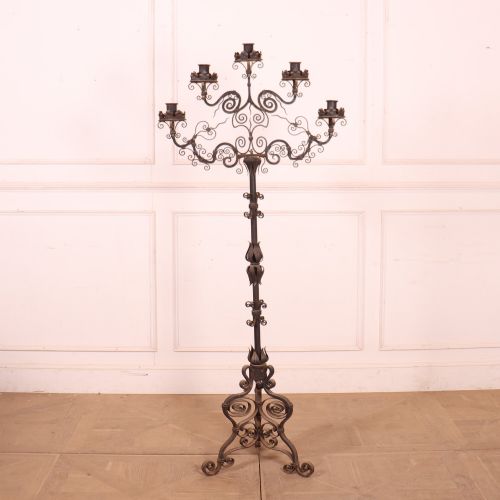
A standing floor candelabrum is a substantial lighting fixture designed to rest directly upon the floor rather than on a table or wall bracket. These pieces function as architectural statements, drawing the eye upward with their height and presence.
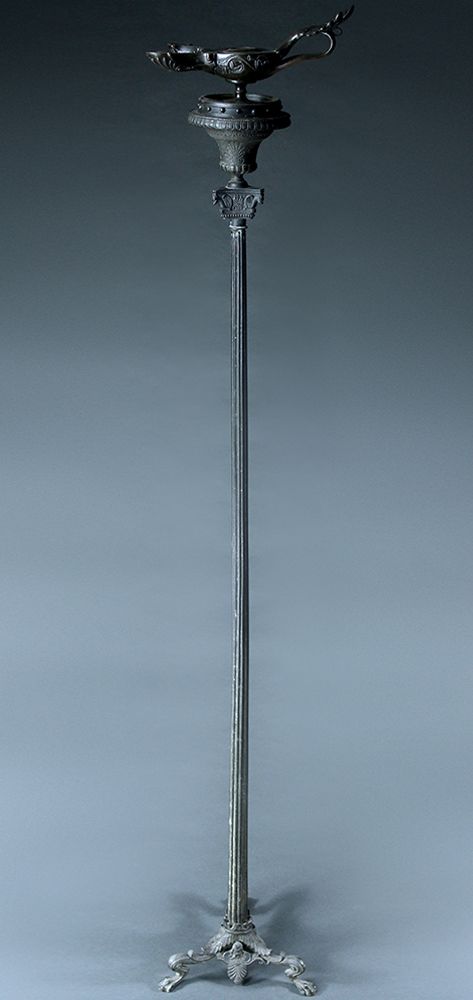
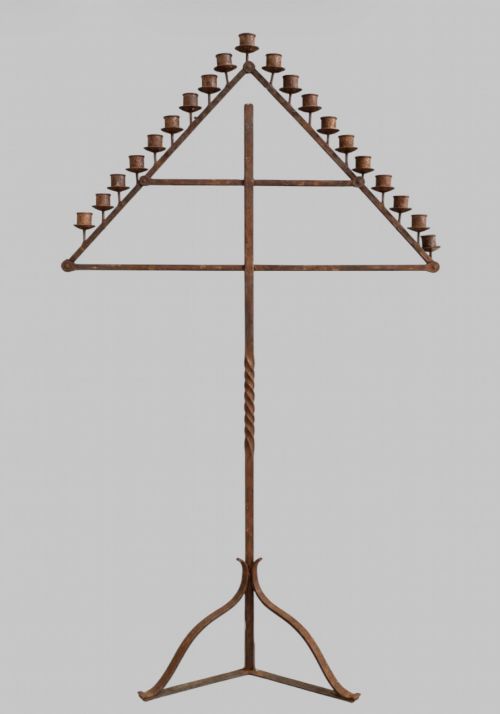
The selection on this page encompasses diverse historical periods, ranging from eighteenth-century Italian altar pieces to nineteenth-century Gothic Revival and Victorian interpretations. Forms vary from simple wrought iron torchères to elaborate figural stands and neoclassical bronze designs.
Buyers frequently encounter variations that bridge the gap between traditional candle lighting and early electrified standards, including converted gas light candelabras and standard lamps. Their origins span Italian craftsmanship, Regency works by makers such as Humphrey Hopper, and Venetian Baroque pieces.
How They Were Made
Construction relies heavily on metals and timber, with wrought iron, cast iron, and bronze providing the sturdy structural foundation necessary for tall floor-standing pieces. Artisans shaped iron through blacksmithing techniques, while bronze and brass elements were cast and finished with patination or silvering.
Carved wood examples demonstrate traditional carpentry and sculptural skills, often finished with original gilt polychrome or left as hand-carved natural timber. Plaster and glass details occasionally supplement the primary structure, particularly in pieces adapted during later periods for standard lamps.
The listings span from the eighteenth century through the 1930s, featuring wrought iron, bronze, giltwood, and carved timber.
What Varies in Quality
Quality reveals itself in the integrity of the materials and the precision of the craftsmanship, from the weight of the cast bronze to the depth of hand-carving in wood. Pieces that retain their original surface finishes, such as early patination or gilt polychrome, command greater appreciation than those with compromised or heavily restored surfaces.
The artistic ambition of the design dictates the standing of the piece, distinguishing standard utilitarian iron torchères from sculptural works associated with known makers or specific classical revivals. Proportional balance and structural stability at height remain essential characteristics of superior execution.
Humphrey Hopper
The Standing Floor Candelabrum Glossary
- Torchère
- A tall ornamental stand designed to hold a light source or candle. This form originates from seventeenth-century lighting stands and evolved into prominent floor-standing furniture.
- Gilt Polychrome
- Wood decoration combining gold leaf with multiple colours of paint. This technique creates a rich, layered decorative surface often found on Venetian figures and stands.
- Patinated Bronze
- Bronze treated to produce a desirable surface coloration through chemical or natural means. It protects the metal while enhancing the sculptural detail of nineteenth-century pieces.
- Neo-Classical
- A style reviving classical Roman and Greek motifs, prevalent during the Regency period. It emphasises symmetry, clean lines, and architectural details such as fluting and urns.
Standing Floor Candelabrum: Frequently Asked Questions
Can these be used with real candles?
Many historical examples were built specifically for candles and retain their original prickets or drip pans for wax collection.
Care should be taken with older materials, and modern users often employ high-quality drip candles or LED alternatives for safety.
How do I distinguish Regency from Victorian pieces?
Regency items generally favour strict neoclassical restraint, drawing directly from ancient Greek and Roman archetypes with precise symmetry.
Victorian pieces often embrace heavier ornamentation, revivalist styles like Gothic, or more eclectic material combinations.
Are standard lamps different from candelabras?
While candelabras are designed to hold multiple candles, standard lamps were built or later adapted to house electrical or gas lighting.
Both share the tall floor-standing format, though standard lamps frequently include wiring channels or shade fittings.