



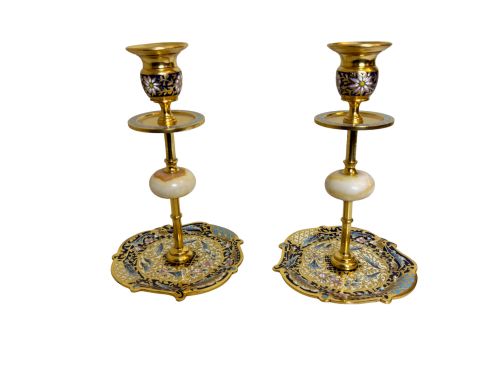
French Gilt Candle Holder
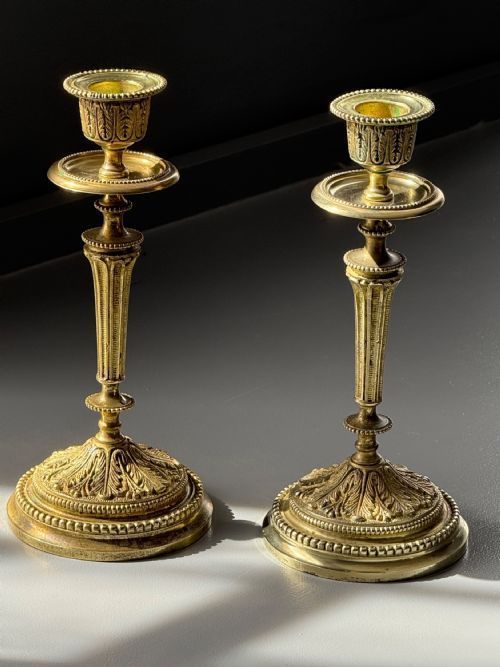
A french gilt candle holder brings interior warmth through polished metal and classical form.
French Gilt Candle Holder
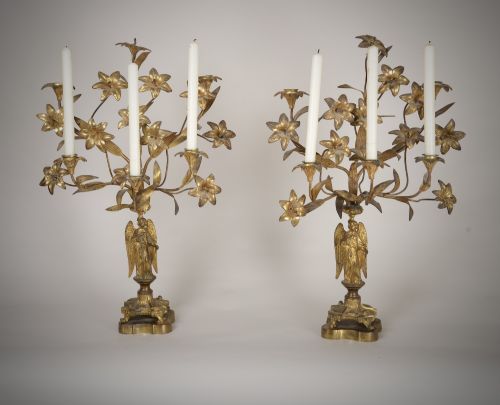
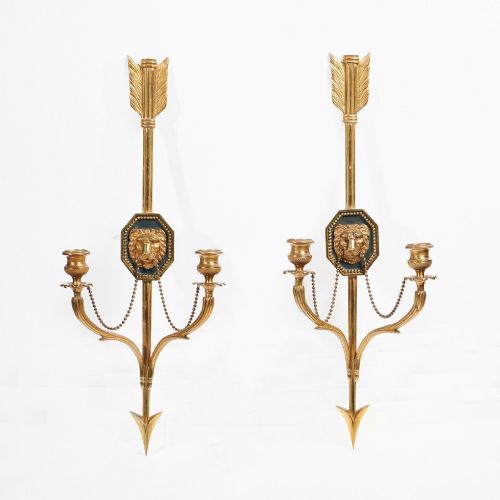
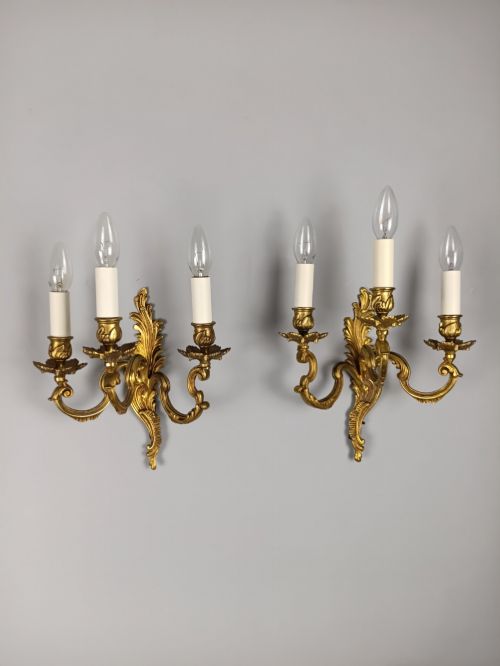
A french gilt candle holder encompasses single candlesticks, multi-arm candelabra, and wall sconces designed to illuminate and ornament domestic interiors. These objects originate predominantly from the nineteenth century, reflecting periods from the Empire and Louis XVI revivals to Rococo and Gothic tastes.
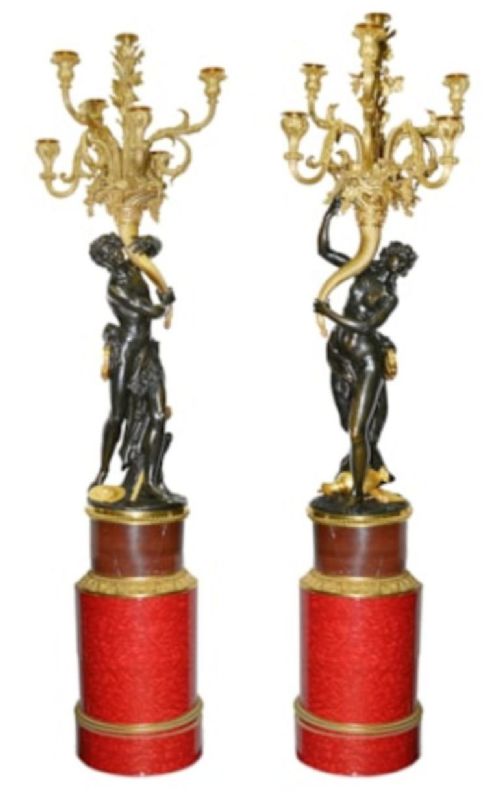
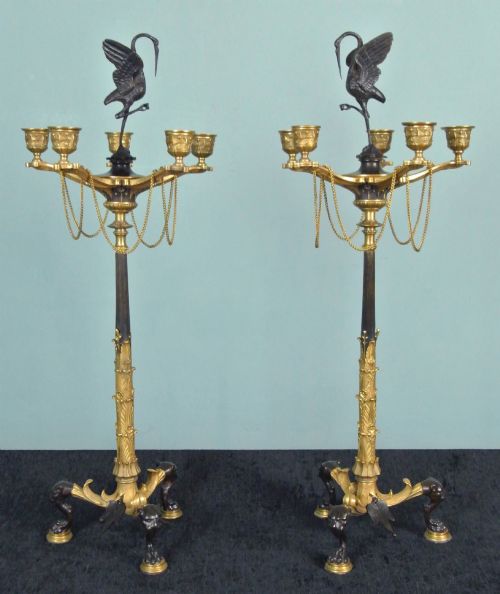
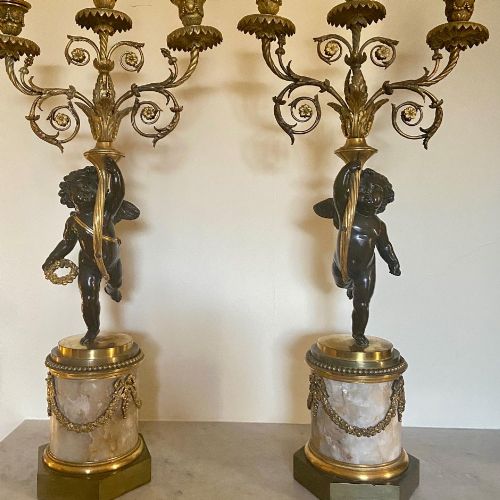
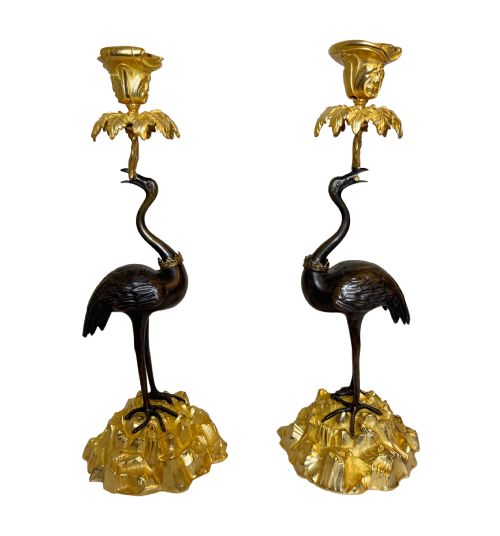
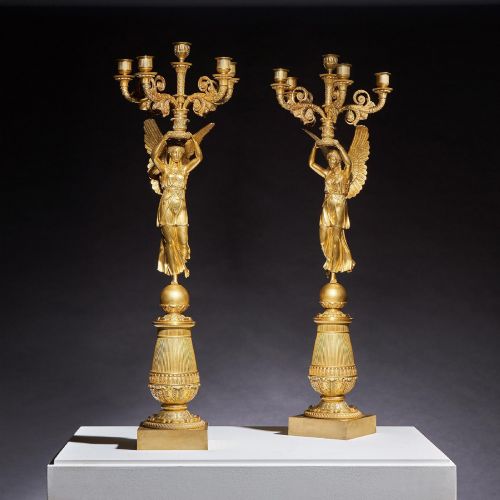
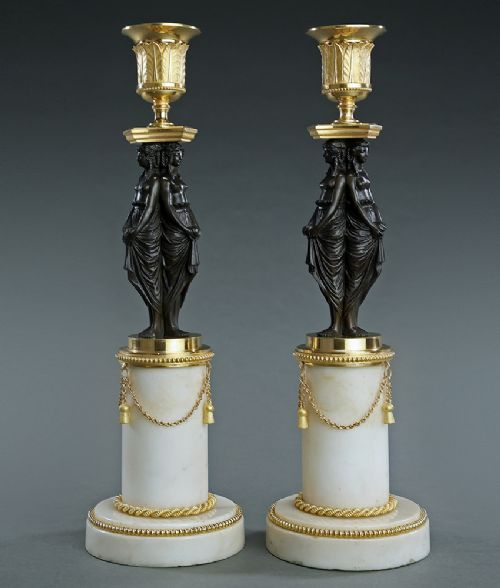
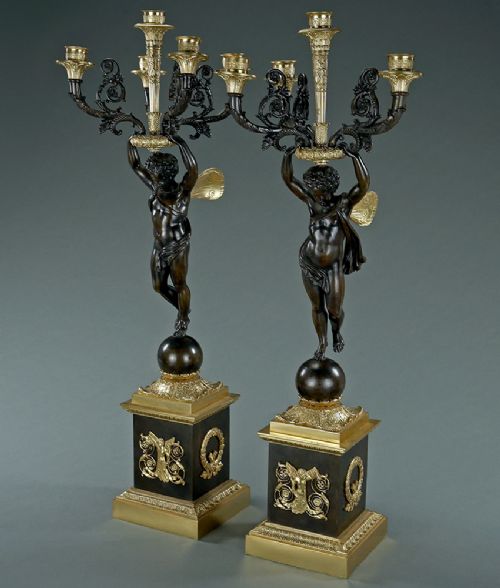
Buyers encounter pairs most frequently, often cast in bronze or brass with mercury gilding, ormolu, and patinated surfaces. Forms range from simple classical columns to elaborate figural compositions featuring cherubs, caryatids, and mythic motifs.
How they were made
Foundries utilised lost-wax and sand-casting techniques to shape bronze and brass into intricate components before assembly and finishing. Artisans applied mercury gilding or ormolu to highlight decorative details, contrasting the bright gold finish with dark patinated bronze or natural stone bases.
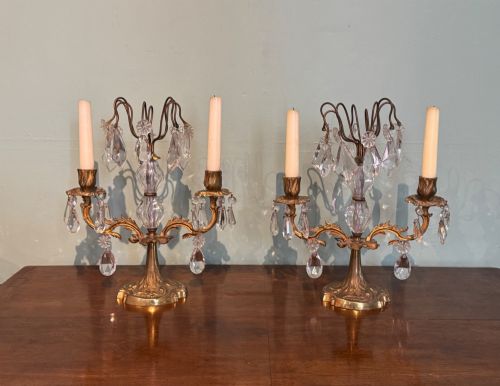
Many examples incorporate mixed media, combining cast metal with white marble, onyx, fluorspar, or cut glass elements. Skilled chiselling and chasing followed the initial casting to sharpen acanthus leaves, figures, and architectural mouldings by hand.
Listings feature eighteenth and nineteenth-century periods, showcasing materials like ormolu, marble, onyx, and bronze across diverse styles.
What varies in quality
Superior examples distinguish themselves through the crispness of the chased detail and the depth of the mercury gilding. Master bronze-workers achieved subtlety in facial expressions and botanical motifs that mass-produced foundry work lacks.
The integration of secondary materials also signals grade, where solid marble or onyx plinths and heavy cast-bronze armatures outclass lighter brass and hollow construction. Signature marks from notable founders or designers elevate the standing of a piece within historical production.
Barbedienne·Pierre Philippe Thomire·Thiebaut Freres·Abel Landry·Rabiat
The French Gilt Candle Holder Glossary
- Ormolu
- Gilded bronze produced by applying a mixture of gold and mercury to a bronze base and firing it to drive off the mercury. This technique creates a durable, rich golden surface typical of nineteenth-century decorative objects.
- Candelabra
- A branched candlestick holding multiple candles on separate arms. These fixtures often feature removable top sections or central finials.
- Patinated bronze
- Bronze treated with chemicals or heat to darken the surface colour, creating contrast against gilt highlights. This finish emphasises the sculptural quality of figures and foliage.
- Champleve
- An enamelling technique where troughs are dug into a metal surface and filled with vitreous enamel before firing. It appears frequently on nineteenth-century decorative accessories.
- Caryatid
- A sculpted female figure serving as an architectural support or pillar. These figures appear frequently on neoclassical and Empire revival stems.
French Gilt Candle Holder: Frequently Asked Questions
How do I clean gilt bronze safely?
Dust gently with a soft, dry microfibre cloth to remove surface particles without abrasive friction. Avoid water, commercial polishes, and chemical cleaners that strip the delicate gold surface.
For stubborn grime, consult a professional conservator rather than attempting aggressive home remedies. Preserving the original mercury gilding or ormolu finish remains the primary conservation priority.
Are these candle holders wired for electricity?
Most antique pieces retain their original configuration designed exclusively for wax candles. Converting them to electricity often requires drilling through structural bronze components, which alters historical integrity.
Collectors generally prefer unadapted examples that preserve the maker's original casting and assembly methods. Use taper candles sized appropriately to secure snug placement within the drip pans.
How do I distinguish Empire style from Rococo?
Empire pieces feature rigid symmetry, military motifs, classical figures, and restrained architectural lines inspired by ancient Rome. Rococo designs embrace asymmetrical scrollwork, flowing organic curves, naturalistic foliage, and playful putti.
Examining the underlying casting style and decorative vocabulary immediately clarifies which nineteenth-century revival movement influenced the maker.
Why do some candlesticks include marble bases?
Foundries added marble or onyx plinths to provide structural weight and a stable centre of gravity for tall or branched designs. The stone also offered a pleasing tonal contrast against the bright gilt bronze and dark patinated metal.
Different geological stones signal specific production periods and regional workshops across France during the nineteenth century.