



Gilt Metal Candle Stands
These gilt metal candle stands catch the light and anchor a room with classical weight, bringing centuries of skilled metalwork straight to a mantelpiece or table.
Gilt Metal Candle Stands
When buyers search for gilt metal candle stands, they are looking at heavy cast illumination pieces designed to hold taper candles or multi-armed lights securely. The selection relies heavily on nineteenth-century examples, spanning robust Victorian pieces and refined Regency designs.
Most items you encounter here take the form of paired candlesticks or substantial candelabras featuring multiple branches. Alongside standard tabletop versions, the evidence includes larger floor candlesticks and standard lamps that share the same metallic finish.
Origins stretch across French, Italian and English workshops, encompassing styles from French Empire and Rococo Revival to Continental Baroque and Italianate. These pieces served both practical lighting needs and decorative display roles in period interiors.
Materials and construction
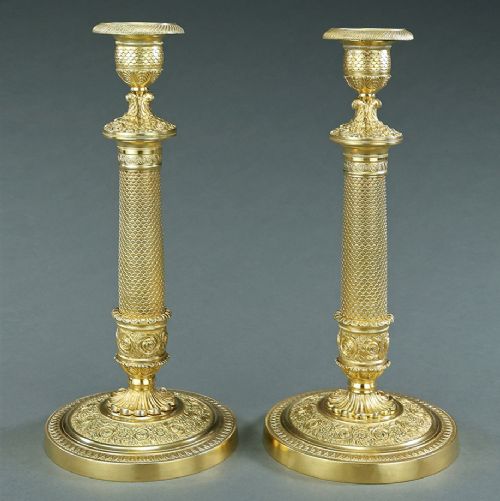
The foundation of these stands rests upon cast metals, specifically brass, bronze and patinated metal, which provide structural rigidity and substantial weight. Artisans applied fire gilding or ormolu techniques to impart a rich golden surface across the bronze structures.
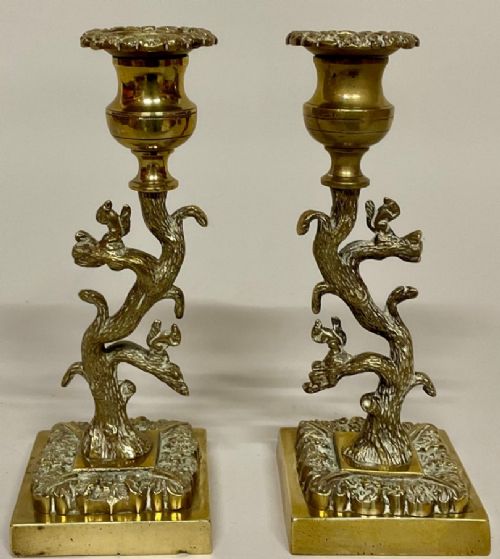
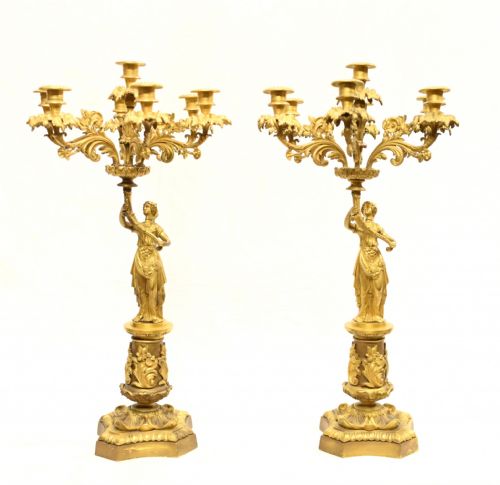
Many examples incorporate contrasting base materials, pairing ormolu and bronze elements with white marble or alabaster plinths. Sculptural details, such as tree branches, squirrels or figural maidens, were cast separately before being assembled and chased by hand.
Squirrels occasionally peek out from cast bronze tree branches on Regency stands.
The spectrum of quality
The choice of materials also dictates the standing of a piece, with heavy fire-gilded ormolu and genuine marble bases sitting above simple brass or cast metal alternatives. Integrity of construction, from straight sconces to secure joins between the base and shaft, marks the better grade of work.
The Gilt Metal Candle Stands Glossary
- Ormolu
- A gilded bronze technique utilising mercury amalgamation to bond gold to a bronze base. This process creates a distinct, durable golden lustre seen on finer antique pieces.
- Campana
- A vase-shaped candle socket resembling an inverted bell. This classical form appears frequently on nineteenth-century shafts.
- Candelabra
- A decorative branched candlestick designed to hold multiple tapers simultaneously. They often feature removable arms to allow single-candle use.
- Patinated metal
- Metal surfaces treated to produce a dark or aged coloration. This finish often contrasts sharply against bright ormolu highlights.
Gilt Metal Candle Stands: Frequently Asked Questions
How do I clean gilt metal?
Dust gently with a soft, dry cloth to prevent accumulation in recessed chased details. Avoid harsh commercial polishes that strip away the original gilding.
Moisture can harm aged bronze and marble bases, so keep these pieces away from damp environments and use no liquids during routine maintenance.
Are these stands wired for electricity?
Most items listed remain in their original candle-holding format designed for wax tapers. Standard lamps and certain floor variants incorporate electrical adaptations.
Converting a candlestick requires caution to avoid damaging historic metal structures, though many owners prefer using them with traditional candles.
How do I date an antique stand?
Dating relies upon stylistic markers such as the restrained geometry of Regency design or the exuberant curves of French Rococo Revival. Construction marks, the weight of the cast bronze, and the composition of accompanying marble bases offer further clues.
Comparing the casting sharpness against known period examples helps narrow down the decade of manufacture.