


Gilded Brass Candle Holders
These gilded brass candle holders span Georgian restraint and Victorian exuberance, offering brass, ormolu, and bronze forms to light a room.
Gilded Brass Candle Holders
Gilded brass candle holders encompass a range of lighting forms, from single candlesticks to multi-branch candelabra and wall-mounted sconces.
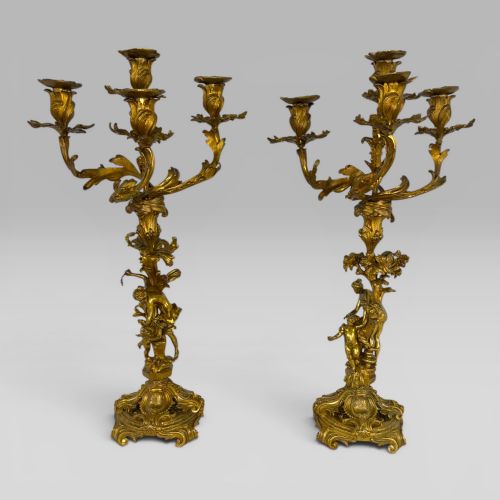
The pieces appearing here lean heavily into French Rococo Revival, Louis XVI, and Victorian aesthetics, dating predominantly from the eighteenth and nineteenth centuries.
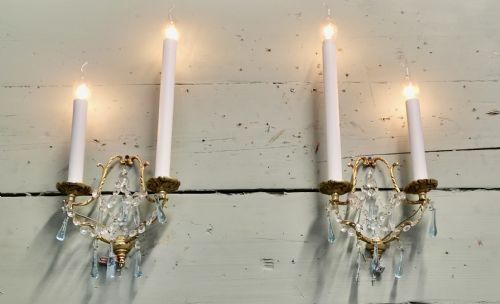
Buyers encounter pairs designed for mantelpieces and side tables, alongside specialised forms such as chamber sticks and wall lights.
Materials and Construction
Maker workshops utilised brass, bronze, and ormolu, applying a layer of gold to base metals through mercury gilding or electroplating.
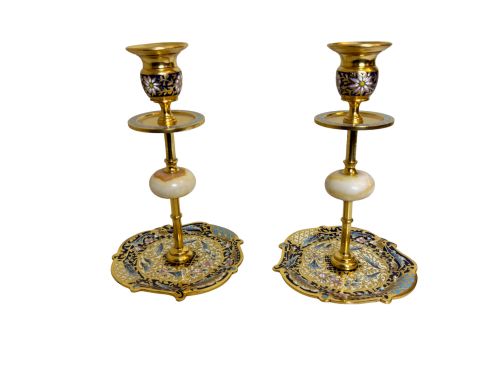
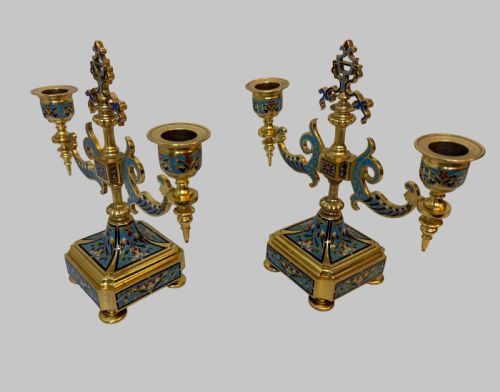
Many items combine cast metal with contrasting materials such as marble, onyx, and glass, whilst others incorporate champleve enamel details.
Individual components were cast in sections and secured together, allowing for intricate figural work and multi-branch structures.
Dolphin motifs swim across nineteenth-century bronze bases, supporting candles above the waves.
Assessing Quality
Quality rests upon the crispness of the chasing and the depth of the metalwork, where sharper surface details indicate superior hand-tooling after casting.
Weight and balance distinguish robust foundry output from lighter commercial pieces, with heavier bases ensuring stability for multi-light branches.
The integrity of the surface finish and the harmonious integration of secondary materials like marble or champleve define the better examples.
Galle
The Gilded Brass Candle Holders Glossary
- Ormolu
- Gilt bronze produced by applying a finely ground gold-mercury amalgam to a bronze object before heating. This technique created a durable, rich golden surface on nineteenth-century French pieces.
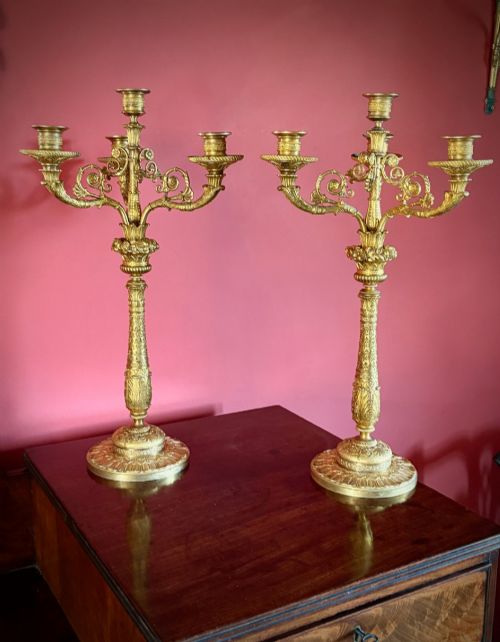
- Candelabra
- A multi-branched candle holder designed to support several candles simultaneously. These pieces often feature removable top sections for easier cleaning.
- Champleve
- An enamelling technique where troughs are dug into the metal surface and filled with vitreous enamel powder before firing. It frequently appears on nineteenth-century decorative pieces.
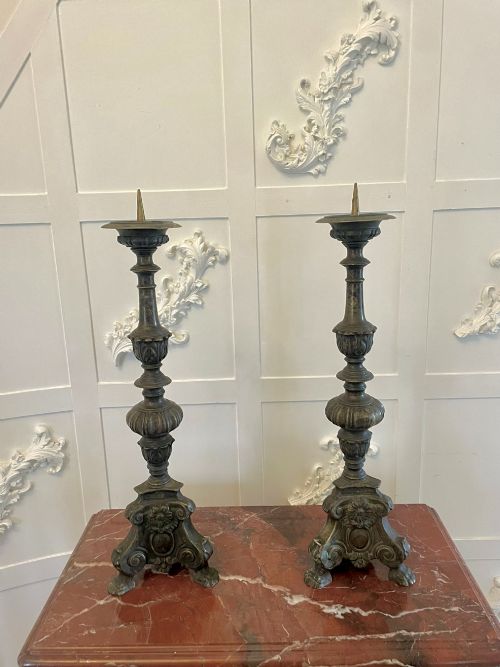
- Pricket candlestick
- A candle holder that uses a central metal spike to secure the base of the candle rather than a socket. They appear on older ecclesiastical and revival pieces.
- Girandole
- A branched candle holder with a mirrored backplate designed to reflect and multiply the candlelight. They hang upon walls to illuminate dark corners.
Gilded Brass Candle Holders: Frequently Asked Questions
Are these candle holders safe to use?
Most antique holders accommodate standard taper candles, but checking the diameter and stability before lighting is wise. Drip trays or protective mats underneath prevent wax from reaching antique furniture surfaces.
Extinguish candles before they burn down to the metal socket to protect the original gilding from heat damage.
How do I distinguish Louis XVI style from Rococo?
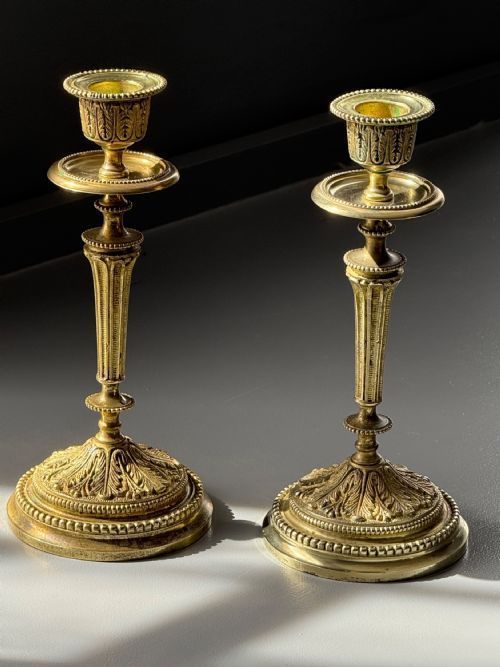
Louis XVI pieces display symmetry, straight lines, and classical motifs such as urns and fluting. They reflect an architectural order inspired by archaeological discoveries.
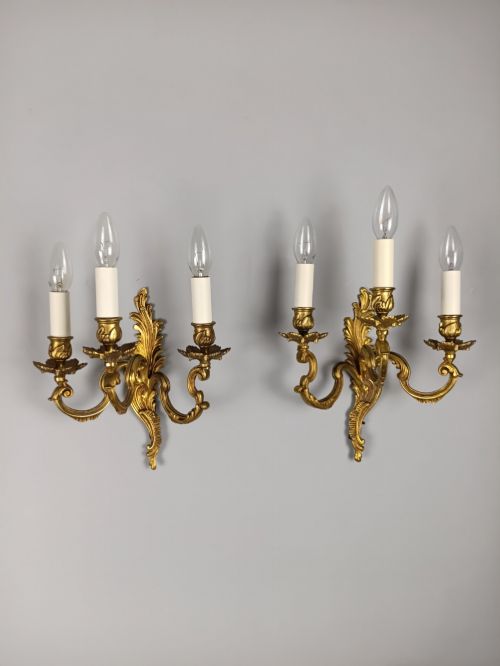
By contrast, Rococo designs embrace asymmetry, C-scrolls, and naturalistic shell or leaf forms. The silhouette feels fluid and organic rather than rigid.
What is the difference between ormolu and gilt brass?
Ormolu specifically denotes gilded bronze, a material favoured by high-end French foundries for its ability to hold sharp, crisp chased details. The bronze underneath is heavy and dense.
Gilt brass is a lighter alloy treated with a golden coating, often found on mass-produced Victorian domestic items. It tends to be brighter in tone.