



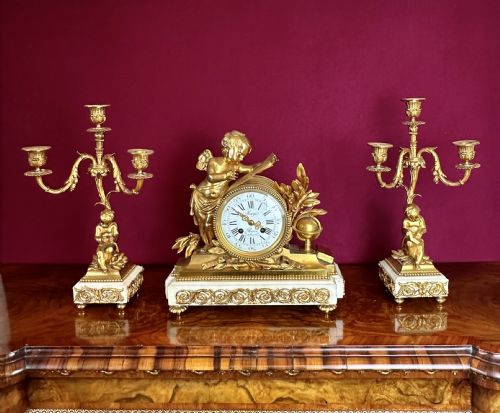


Gold Marble Candelabra
Gold marble candelabra bring together warm gilt metal and cool stone, lighting a room with the structured elegance of nineteenth-century French design.
Gold Marble Candelabra
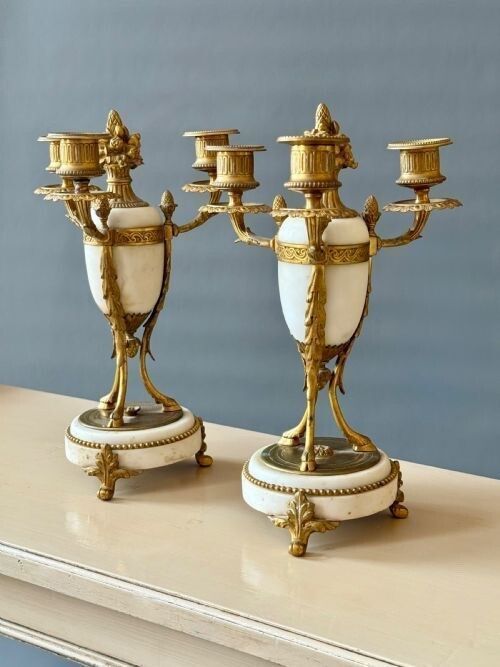
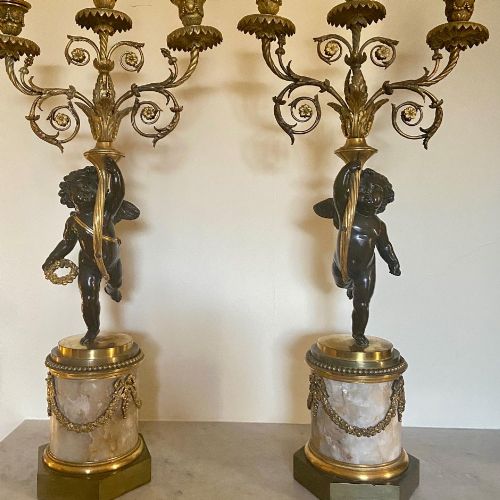
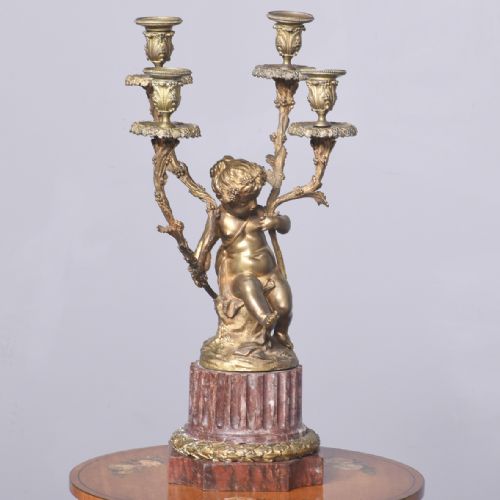
Gold marble candelabra combine cast bronze elements finished in gilt or ormolu with natural marble bases, frequently appearing as matched pairs or as part of larger clock garniture sets. These decorative lights emerge across the eighteenth, nineteenth, and twentieth centuries, with French Victorian and Louis XVI revival pieces dominating the selection. Buyers most often encounter pairs featuring sculpted figures such as cherub putti supporting multiple candle arms above polished stone plinths.
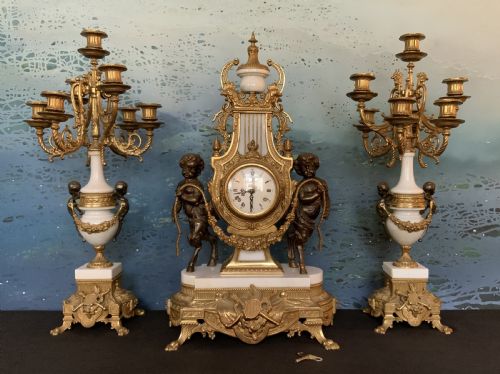
The forms range from compact boudoir pairs to large multi-light mantel pieces and three-piece garniture sets complete with matching clocks. Neoclassical motifs and French styles govern the aesthetic, showing distinct influences from earlier monarchical periods adapted by later makers. Each surviving example demonstrates how nineteenth-century workshops blended classical sculpture with functional household illumination.
Materials and construction methods
The primary metals used are bronze and brass, transformed through mercury gilding or fire-gilding to create ormolu, alongside patinated bronze details that provide visual contrast. Artisans carved white marble and porphyry to form solid pedestals and bases, occasionally incorporating fluorspar or enamel accents into the design. These heavy stone bases anchor the cast metal figures, ensuring stability for multi-armed branch structures.
Foundries cast the bronze figures and arms in separate sections before chasing the surfaces by hand to sharpen the details of hair, drapery, and foliage. The gilt components and marble segments are then assembled using threaded pins and screws, allowing the contrasting textures of polished stone and bright metal to sit flush against one another.
Bronze cherubs perpetually struggle to hold up heavy candle branches without dropping their fruit.
Assessing quality and craftsmanship
Proportion and structural integrity separate standard production items from finer studio work, particularly in how the candle branches align with the central figurative stem. Pieces bearing signature plaques or maker marks from established foundries demonstrate higher standards of nineteenth-century assembly and material selection.
Francois Redmond·Claude Clodion·Vincenti
The Gold Marble Candelabra Glossary
- Ormolu
- Gilt bronze produced by applying a mixture of gold and mercury to a bronze base and firing it to drive off the mercury. This technique creates a durable, golden surface finish characteristic of fine French decorative objects.
- Garniture
- A set of matching ornamental objects designed to be displayed together on a mantelpiece, typically consisting of a central clock flanked by two matching candelabra or vases.
- Putti
- Depictions of plump, winged infant figures, often appearing as cherubs holding the candle branches or climbing the marble stems of nineteenth-century lighting pieces.
- Louis XVI Style
- A neoclassical design revival popular during the nineteenth century characterised by symmetry, straight lines, classical urns, and restrained floral ornamentation.
- Porphyry
- A hard igneous rock containing large crystals, prized by stonemasons for its deep reddish-purple colour and used for the bases of high-status candelabra.
Gold Marble Candelabra: Frequently Asked Questions
What is a clock garniture set?
A clock garniture set comprises a mantel clock accompanied by two matching side pieces, usually candelabra or urns, designed to create a balanced display.
These three-piece ensembles were placed centrally on fireplace mantels in nineteenth-century salons to provide both timekeeping and illumination.
How do I clean gilt bronze and marble?
Gilt bronze requires only gentle dusting with a soft brush, as harsh metal cleaners will strip away the historic ormolu surface.
Marble bases can be wiped carefully with a damp cloth, avoiding excess moisture near the metal joints to prevent corrosion.
Were these candelabra originally wired for electricity?
These pieces were created exclusively for wax candles before the widespread adoption of domestic electric lighting.
Many surviving examples have since been adapted to function as table lamps while retaining their original bronze and marble structures.
How can I tell a nineteenth-century piece from a later copy?
Nineteenth-century originals show hand-chased surface details on the cast bronze and use period assembly methods like threaded peg construction.
Examining the weight, the natural ageing of the gilt surface, and the type of marble helps confirm the production era.