
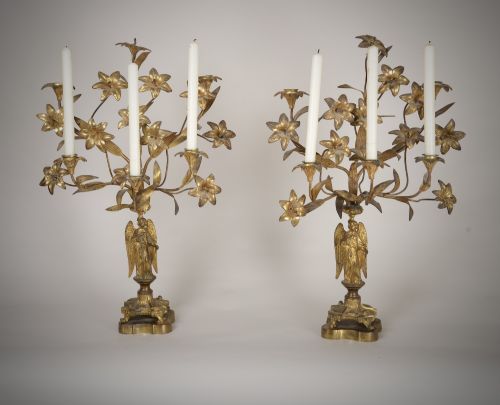
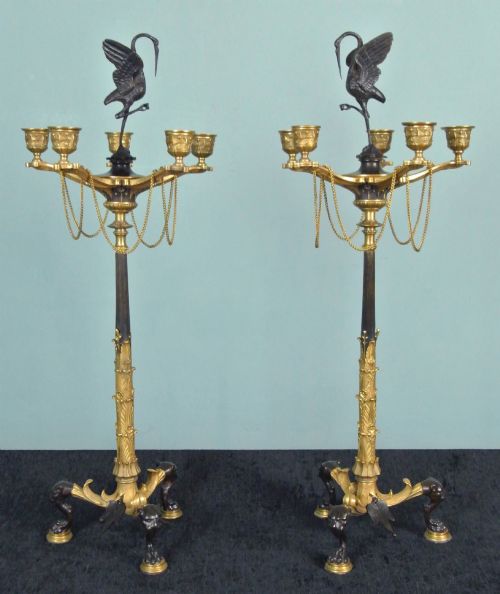
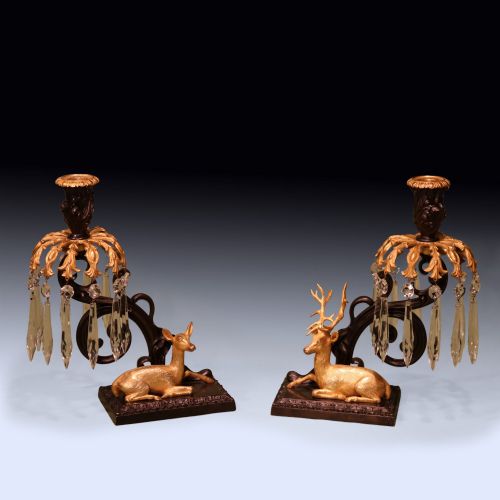
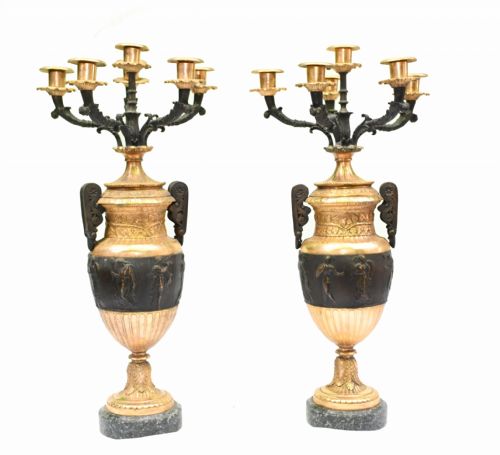
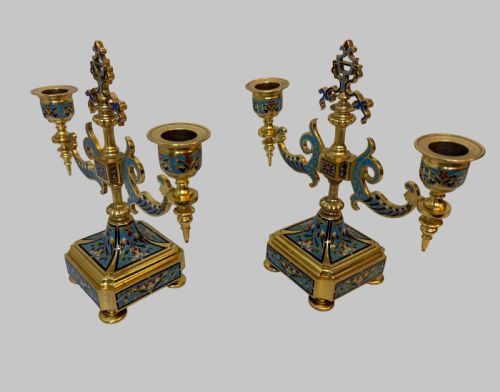

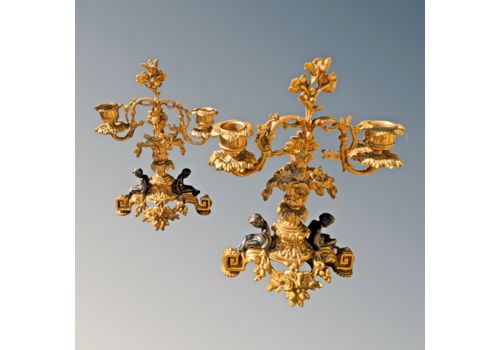


Victorian Ormolu Candelabra Pair
These Victorian ormolu candelabra pair items bring striking nineteenth-century metalwork and balanced illumination to a mantelpiece.
Victorian Ormolu Candelabra Pair
A victorian ormolu candelabra pair presents dual metal branch arrangements designed to hold multiple candles upon a table or sideboard. These decorative lighting fixtures emerge primarily from the nineteenth century, spanning decades from eighteen sixty to nineteen hundred.
The objects take several distinct shapes within the listings, appearing as standalone multi-arm candelabras, matched candlesticks, or components of larger clock garnitures. Many examples pair gilt metals with contrasting materials like marble or porcelain.
French revival designs dominate the aesthetic, drawing heavily on Rococo, Empire, and Second Empire influences alongside Gothic revival and Regency interpretations. English workshops also contribute substantial gilt and bronze models to the selections.
Materials and construction
Makers utilised ormolu and gilt bronze as primary metallic surfaces, applying gold leaf or mercury gilding over base metals to achieve a brilliant lustre. Patinated bronze and brass frequently provide structural contrast within the same piece.
Stonework and ceramics appear extensively in the bases and columns, incorporating white or coloured marble and Sevres style porcelain alongside champleve enamel details. Certain variations integrate decorative glass or ceramic elements such as Chinese sang de boeuf vases.
Foundries cast these components in sections before assembling them with threaded rods or pins, allowing for intricate figural work including cherubs, stags, and classical motifs.
Current selections span nineteenth-century production dates from eighteen sixty to nineteen hundred, featuring ormolu, gilt bronze, marble, and porcelain.
Factors of quality
The definition and depth of the metal chasing separate standard production items from superior workshop output. Crisp detail in foliage, figures, and scrollwork indicates skilled hand finishing after the casting process.
The choice and integration of secondary materials dictate overall visual balance and cost. Solid marble bases and heavy fire-gilt bronze demonstrate greater material investment than lighter brass alloys or composite substitutes.
Completeness and originality of the components matter significantly, particularly where arms, drip pans, and crystal drops remain uniform and undisturbed across the pair.
Barbedienne·Thomas Hope
The Victorian Ormolu Candelabra Pair Glossary
- Ormolu
- A metallic technique involving the application of finely ground high-carat gold to a bronze object. This process creates a rich, durable golden finish characteristic of luxury furnishings.
- Garniture
- A set of three or more decorative objects designed to be displayed together on a mantelpiece. Typically, this comprises a central clock flanked by a matching pair of candelabras or vases.
- Patination
- The surface alteration or coloration that develops on bronze over time through age and handling. Controlled chemical treatments also produce deliberate dark patinas to contrast with bright ormolu.
- Champleve
- An enamelling technique where troughs or cells are sunk into the surface of a metal object and filled with vitreous paste. Firing hardens this material into vibrant coloured patterns.
- Sèvres
- A style inspired by the famous French porcelain factory known for soft-paste ceramic bodies and rich glaze colours. These panels are frequently mounted onto metal candelabra bases.
Victorian Ormolu Candelabra Pair: Frequently Asked Questions
How do I clean ormolu candelabras?
Dust these metal pieces gently with a soft, dry brush to prevent accumulation in recessed crevices. Avoid harsh chemical cleaners or abrasive polishes that can strip away the delicate gilt surface.
Water and soap should be kept away from mixed-media pieces, particularly where marble or porcelain joins the metal. Professional conservation is recommended for tarnished or fragile antique surfaces.
Where should I place a candelabra pair?
These matched lighting pieces work well centered on a mantelpiece, sideboard, or large console table. Their height and reflective gilt surfaces draw the eye and anchor symmetrical interior arrangements.
Ensure they sit on a stable, level surface away from heavy foot traffic or drafts that could cause candles to flicker dangerously. Many owners prefer them purely as decorative objects rather than active light sources.
Are these candelabras French or English?
Nineteenth-century metalwork includes distinct styles from both regions, with French designs strongly represented by Rococo, Empire, and Second Empire aesthetics. Makers across the channel often adopted these continental fashions.
English workshops also produced notable gilt bronze and brass pieces, sometimes incorporating domestic stylistic touches like Gothic revival elements. Examining the casting style and associated maker signatures helps clarify the origin.
What is a clock garniture set?
A clock garniture is a matched decorative ensemble consisting of a central mantel clock accompanied by two flanking candelabras or urns. These sets were designed to create a unified focal point on a fireplace mantel.
The pieces share identical materials, patination, and stylistic motifs, such as marble bases and ormolu mounts. Finding a complete surviving set adds considerable cohesion to a room display.