
Gilt Brass Candlesticks
These gilt brass candlesticks bring warmth and refined metalwork to any room.
What these pieces are
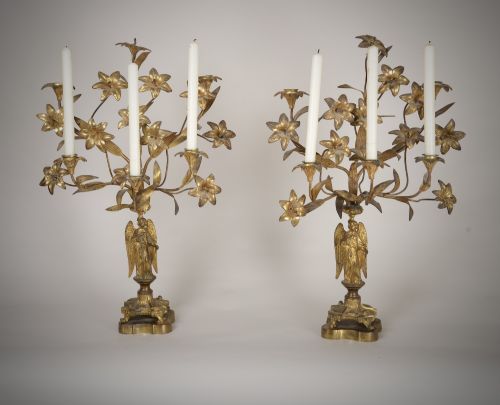
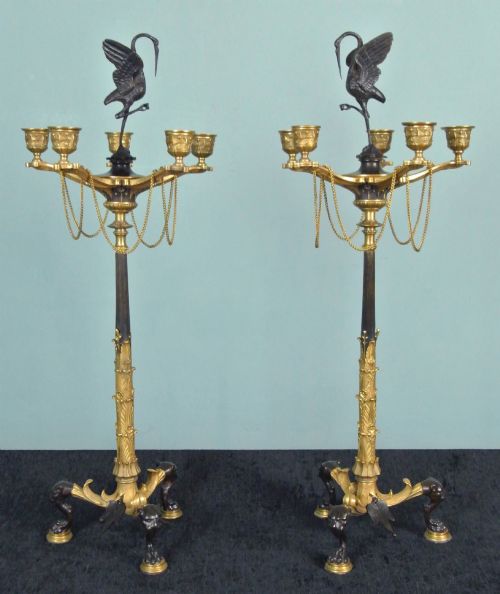
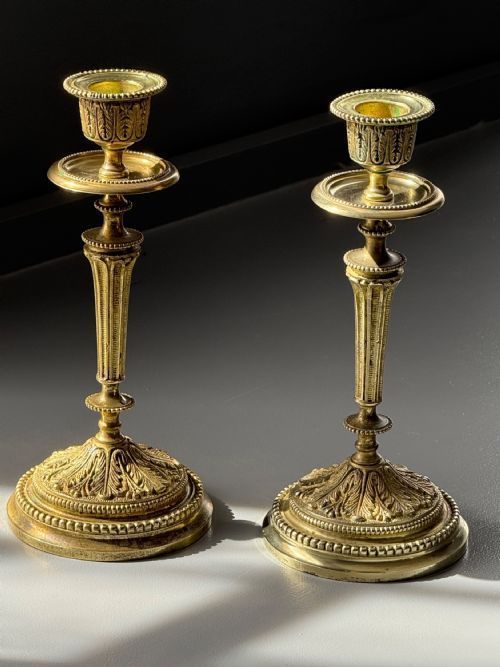
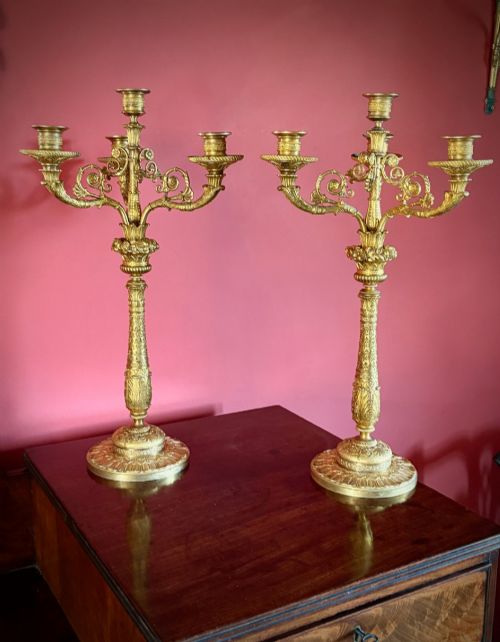
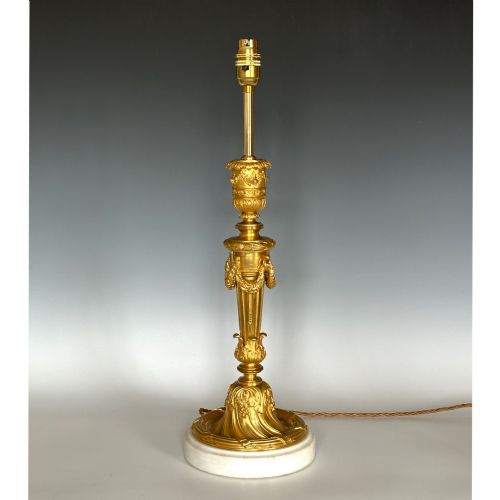
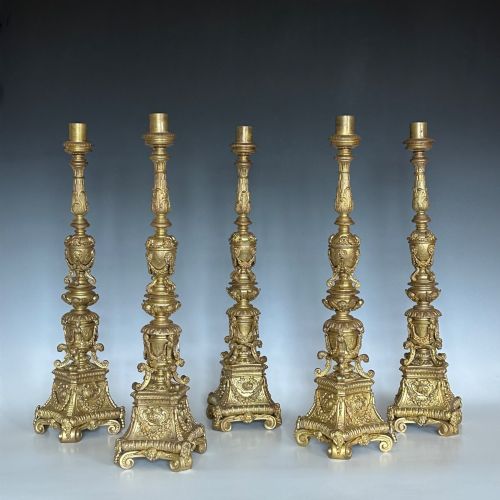
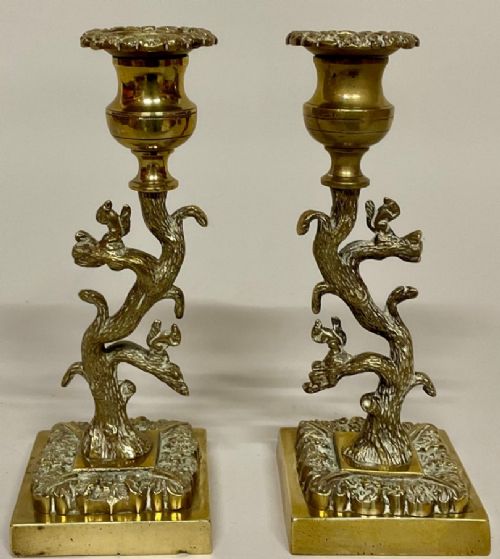
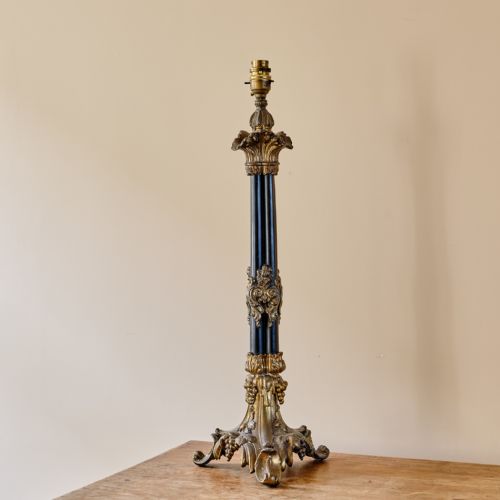
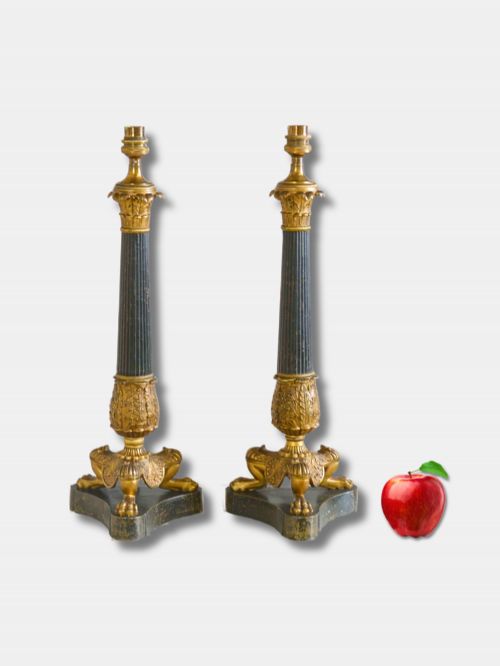
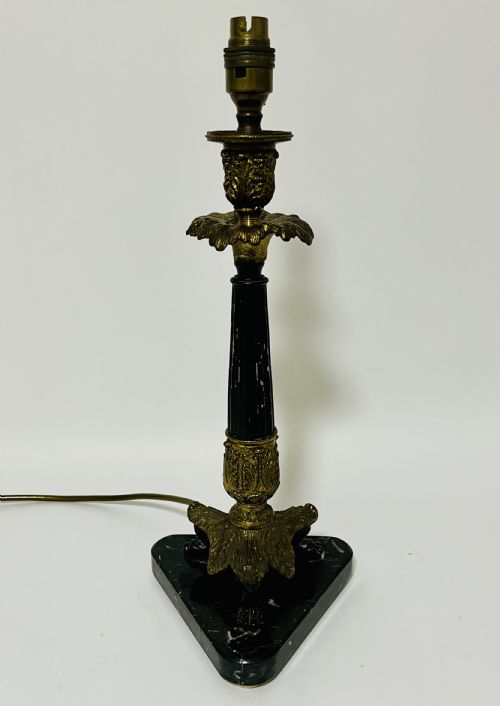
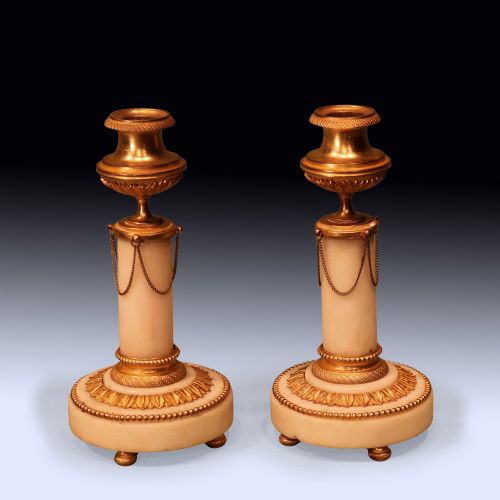
When you search for gilt brass candlesticks, you encounter table lights shaped by nineteenth-century tastes, spanning Regency elegance, Victorian revival styles, and Edwardian design. Most examples appear as matched pairs, though sets of graduated heights and occasional single pieces also emerge.
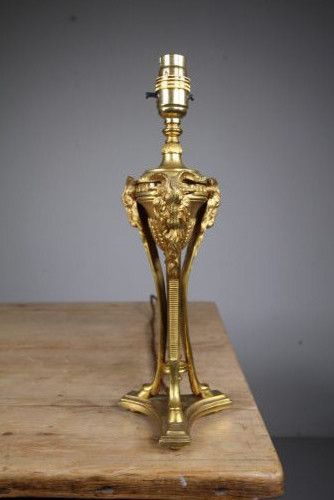
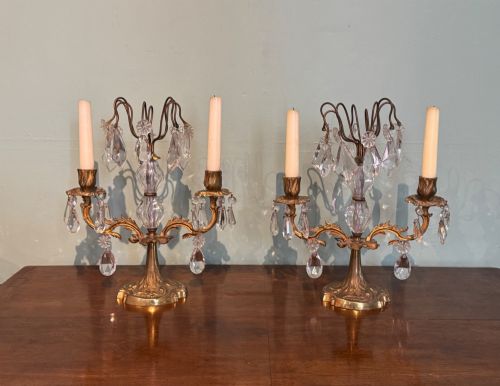
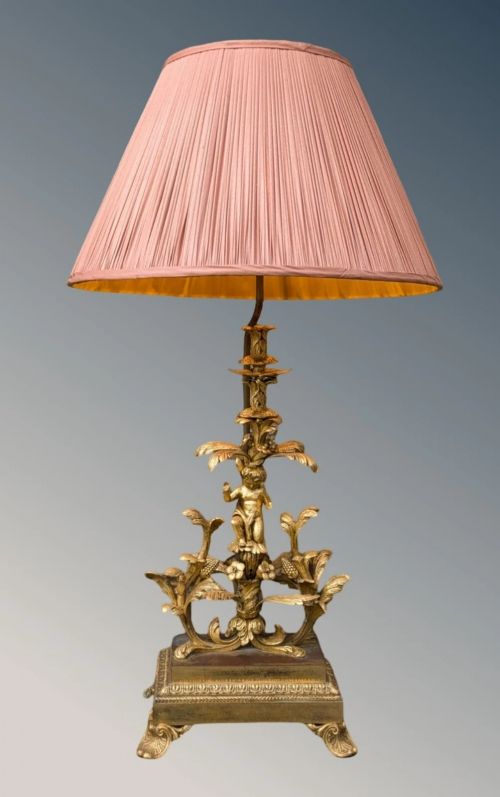
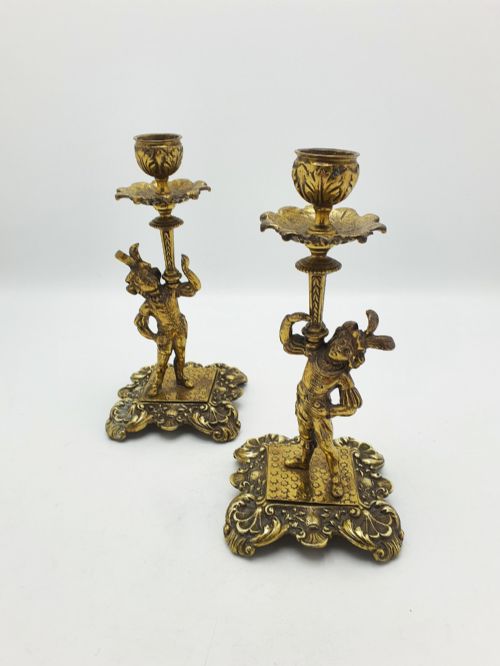
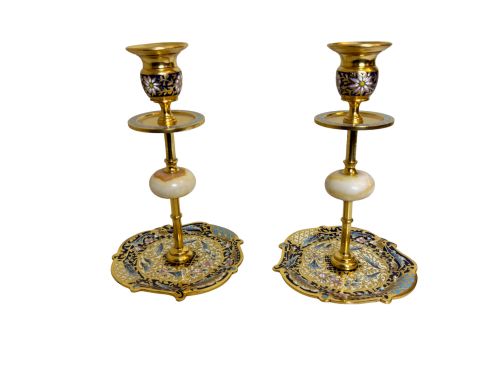
The forms range from classical Corinthian columns and ecclesiastical designs to ornate Rococo Revival pieces, French Empire models, and figural candlesticks decorated with dancing cherubs. Materials often combine the core metal with glass lustre drops, alabaster, agate, marble, or painted metal elements.
How they were made
Maker workshops built these candlesticks using cast brass, applying a gilt surface treatment to achieve a bright metallic finish. Many pieces integrate secondary materials such as carved stone bases, inset agate panels, or suspended glass lustre drops.
Decoration relied on applied surface ornamentation, including classical architectural detailing on columns, relief figures, and hand-painted accents on metal bodies.
Retail Price Guide 2026
Typical UK retail prices for gilt brass candlesticks, calculated from the Sellingantiques database of over a million retail prices indexed since 2003. This retail price guide relies exclusively on Sellingantiques data; no external sources or auction records are used, so the figures do not describe the wider market.
Listings demonstrate materials including brass, gilt brass, painted metal, glass, alabaster, marble, and agate.
What varies in quality
Quality separates ordinary cast objects from finer works through the crispness of the chasing, the weight of the metal, and the harmony of combined materials like marble or agate. Finer pairs retain their original gilding without excessive rubbing and integrate delicate components such as glass lustres securely.
The design ambition also dictates the tier, moving from simple domestic turned forms to elaborate architectural columns and sculptural bases featuring cherubs or specific stylistic motifs.
The Gilt Brass Candlesticks Glossary
- Gilt brass
- Metal treated with a gold-coloured surface layer to simulate solid gold and protect against dulling. This finish defines the reflective appearance of the pieces.
- Corinthian column
- An architectural column form featuring ornate acanthus leaves on the capital. Makers frequently adopted this classical order for tall candlesticks.
- Lustre drop
- A hanging glass pendant suspended from a collar around the candle nozzle. These droplets catch and refract candle flame light.
- Ecclesiastical
- Design style derived from furnishings made for churches. Such candlesticks often display heavier religious motifs and formal proportions.
Frequently Asked Questions
How do I clean gilt brass candlesticks?
Wipe surfaces gently with a soft, dry cloth to remove dust without disturbing the gilt layer.
Avoid abrasive metal polishes that can strip away the historical gilding entirely.
Are these candlesticks always sold in pairs?
Many survive as matched pairs, which remains the traditional format for mantelpiece or tabletop placement.
Occasionally, listings include single items, sets of three graduated heights, or matched groups from church and lodge settings.
What periods do these candlesticks cover?
The selection spans the eighteenth century through the nineteenth century, including Regency, Victorian, and Edwardian eras.
Distinct stylistic revivals such as Gothic, Rococo, and Empire characterise the manufacturing periods.
Did these pieces hold standard candles?
Candle sockets accommodated the standard taper dimensions of their respective periods of manufacture.
Modern users may need to check nozzle diameters if planning to burn standard household candles today.