




Blue Ceramic Candle Holders
Blue ceramic candle holders bring together durable earthenware and porcelain bodies with striking cobalt and polychrome washes, offering a practical way to anchor a mantel or table.
Blue Ceramic Candle Holders
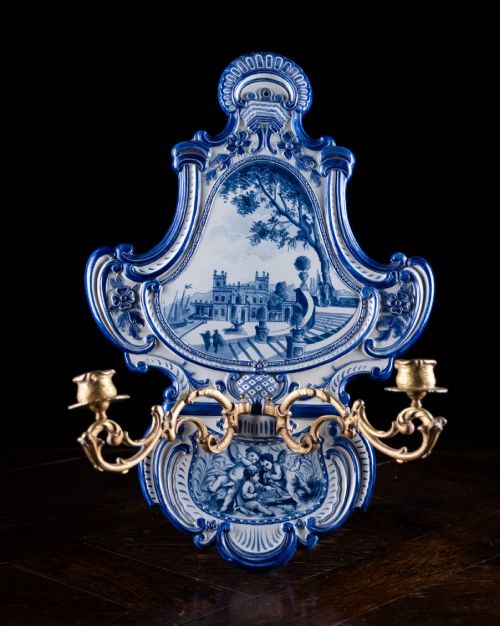
Blue ceramic candle holders encompass chambersticks and candlesticks shaped in earthenware, porcelain, and ironstone across periods from the eighteenth century to the early twentieth century. These pieces emerge in styles ranging from English Regency and Victorian to Arts and Crafts and Dutch Delft, often paired with brass or gilt mounts.
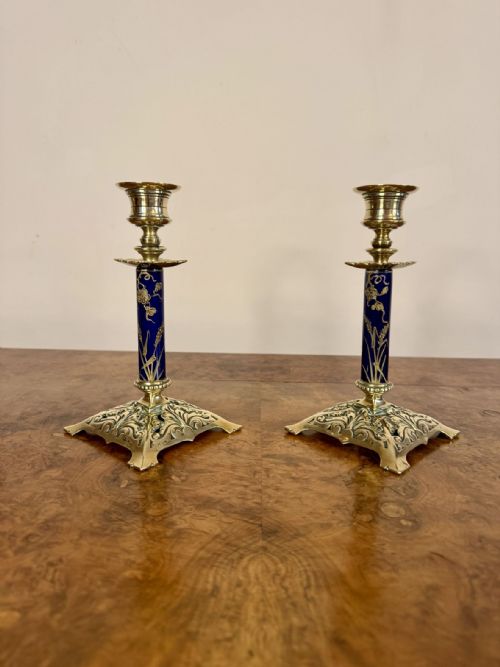
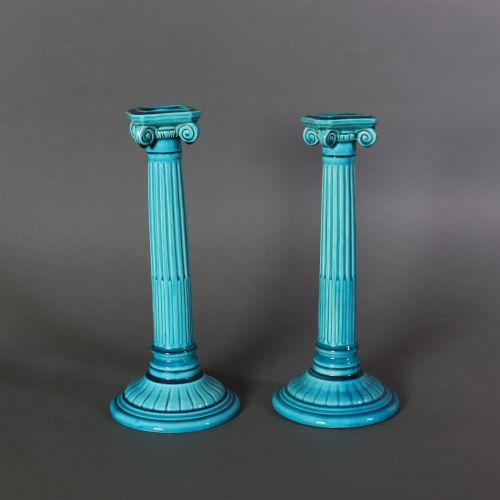
The version most commonly met on this page is the Victorian or nineteenth-century pair, alongside early ceramic forms such as Masons ironstone or Spode porcelain. Buyers encounter utilitarian chambersticks fitted with handle rings as well as decorative figural candlesticks and neoclassical pairs.
How they were made
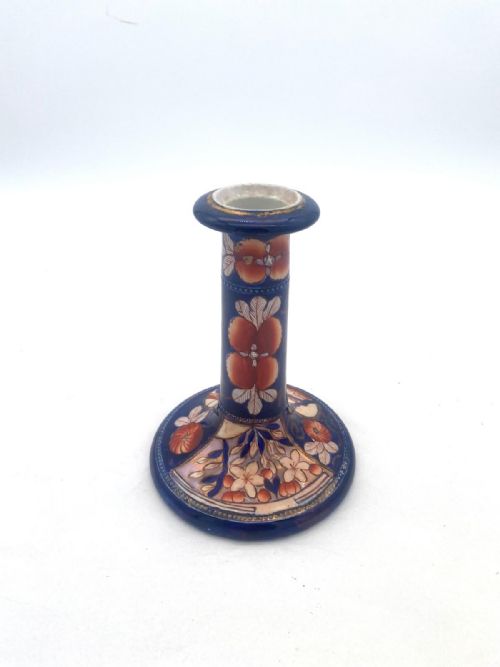
Makers shaped these holders using ceramic, porcelain, earthenware, and ironstone, frequently combining them with brass components, enamel, and gold leaf highlights. Potters applied rich blue glazes and polychrome decoration directly to the clay body before firing.
Techniques varied from hand-painted Delft figures and transfer-printed patterns to moulded faience and jasperware reliefs. Workshops often mounted ceramic stems onto heavy brass bases or incorporated gilt metal sconces to secure the candles.
Blue Ceramic Candle Holders Retail Price Guide 2026
Typical asking prices for blue ceramic candle holders among the pieces listed under this phrase on Sellingantiques today, from the lower quarter to the upper quarter. They describe what is for sale here now, not the wider market.
Listings feature periods spanning from the eighteenth century through the Regency era, Victorian aesthetic movement, and early twentieth century.
What varies in quality
The distinction between ordinary and superior pieces rests on the crispness of the moulding and the depth of the ceramic glaze. Stronger examples display evenly saturated blue pigments, precise hand-painting, and securely fitted metal mounts without awkward gaps.
Makers such as Spode, Burmantofts, and Masons achieve distinct standards through refined paste bodies and controlled kiln firings. Inferior production shows pooling glaze, blurred transfer prints, or mismatched pairs cobbled together from disparate elements.
Burmantofts Faience·Masons·Spode·Royal Doulton·Wedgwood·Minton
The Blue Ceramic Candle Holders Glossary
- Chamberstick
- A low candle holder featuring a flat pan to catch dripping wax and a loop handle for carrying from room to room. These portable pieces were essential for lighting bedchambers before household gas and electricity.
- Ironstone
- A heavy, durable type of earthenware patented in the nineteenth century to imitate Chinese porcelain. It resists chipping and provides a stable surface for blue transfer-printed patterns.
- Faience
- A term for tin-glazed earthenware decorated with opaque coloured glazes. Burmantofts and similar potteries utilised this technique to achieve rich surface textures and deep blue hues.
- Polychrome
- The application of multiple distinct colours in the decoration of pottery and porcelain. Dutch Delft pieces often employ this method alongside blue and white pigments to render figurative scenes.
Blue Ceramic Candle Holders: Frequently Asked Questions
What is a chamber stick?
A chamber stick is a low candlestick equipped with a saucer base and a small side handle. This design allowed individuals to carry a lit candle safely down dark corridors.
Unlike tall table candlesticks meant to stay in one room, chamber sticks often included a small cone-shaped snuffer resting in the tray.
How do I date ceramic candle holders?
Dating relies on examining the ceramic body type, glaze characteristics, and any impressed factory marks on the underside. Nineteenth-century pieces often use ironstone or dense earthenware alongside transfer-printed patterns.
Earlier eighteenth-century examples display tin glazes and hand-painted polychrome details, while twentieth-century items show cleaner moulded lines and modern earthenware bodies.
Are brass and ceramic holders original?
Many nineteenth-century candlesticks combine ceramic stems with brass sockets, bases, or decorative mounts. Makers frequently joined these materials to add structural weight and stability to fragile porcelain.
Buyers should examine how the components join together to ensure the brass fittings match the age and wear of the ceramic body.
How do I clean antique ceramic holders?
Cleaning requires warm water and mild soap applied gently with a soft cloth to protect the glaze and enamel details. Harsh abrasives or soaking can damage old transfer printing and gold leaf.
Wax residue should be softened with warm water rather than scraped with metal tools to preserve the underlying ceramic surface.