


Wrought Iron Floor Light
A wrought iron floor light brings height and architectural character to a room, ranging from simple adjustable standards to grand multi-candle stands.

Wrought Iron Floor Light
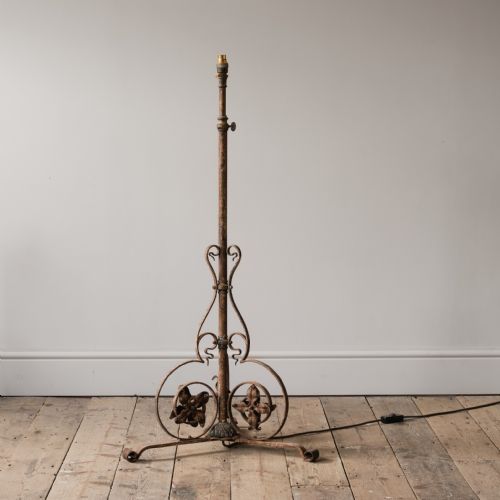
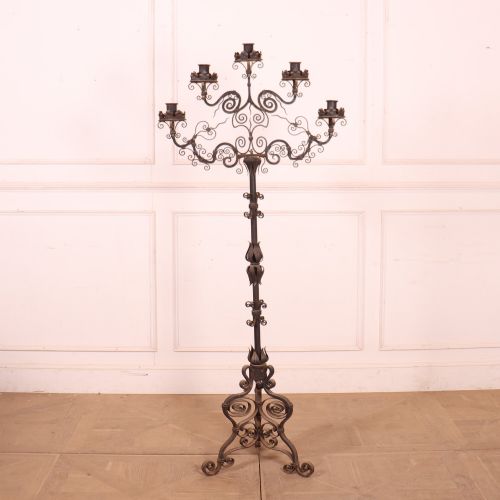
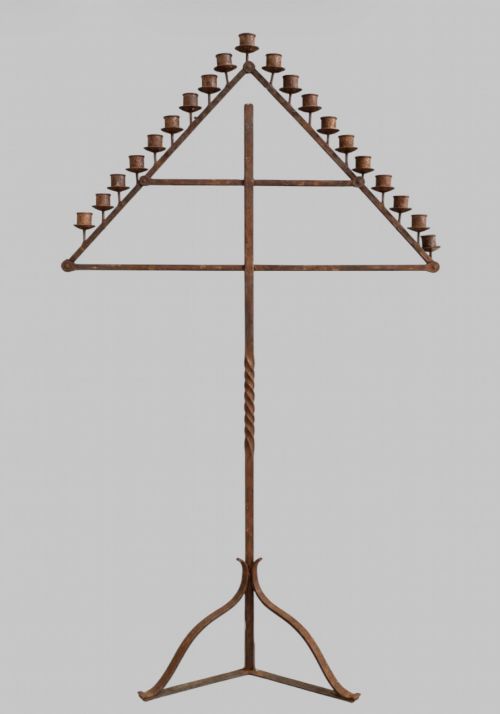
When you search for a wrought iron floor light, you encounter tall stands designed to hold candles, oil lamps, or electric bulbs, spanning periods from the eighteenth century through the Victorian era and into the Art Deco twentieth century.
The pieces listed on this page take various forms, including floor lamps, standard lamps, floor candelabras, lantern stands, and torchères, often reflecting styles such as Gothic Revival, Arts and Crafts, and Continental Baroque.
Victorian and nineteenth-century examples dominate the selection, frequently featuring adjustable arms or telescopic mechanisms alongside earlier eighteenth-century altar pieces and later twentieth-century designs.
How they were made
Makers shaped these stands using wrought iron and cast iron, sometimes combining them with brass, gilt metal, paint, and turned wood to achieve structural stability and varied surface finishes.
Lighting adaptation is evident in pieces originally configured for candles, oil, or gas, which were subsequently electrified or modified with fabric shades and glass components over their working lives.
Some floor stands began life holding rushes or grease-dipped reeds before evolving through oil and gas to electricity.
What varies in quality
Quality in these standards rests on the proportion of the forging and the cleverness of any mechanical adjustment, such as a smoothly operating telescopic stem or an adjustable arm.
The integrity of the ironwork itself, whether hand-forged by a blacksmith or cast in a foundry, dictates the visual weight and presence of the piece in an interior.
The Wrought Iron Floor Light Glossary
- Torchère
- A tall ornamental stand for a candle or light. These pieces provide vertical illumination and decorative height.
- Pricket stick
- A candlestick featuring a central spike upon which a candle is stuck. They appear frequently in ecclesiastical or architectural lighting.
- Telescopic
- A shaft designed with sliding sections to adjust height. This mechanism allows the overall height of the standard lamp to change.
- Rushlight candlestick
- An early lighting device holding a rush soaked in fat. These represent the utilitarian origins of domestic floor lighting.
Wrought Iron Floor Light: Frequently Asked Questions
How do I place a floor light in a room?
These tall stands suit corners or beside seating where their height introduces vertical contrast.
Their substantial presence anchors a room without occupying excessive floor space.
Are these lamps electrified?
The selection includes pieces adapted for electricity alongside items configured for candles or oil.
Conversion methods vary depending on whether the stand originally held a candle, gas fitting, or oil font.
What styles are common?
Victorian, Gothic Revival, and Arts and Crafts designs appear frequently among the ironwork.
Continental and earlier eighteenth-century examples lean towards architectural or altar-style candle stands.
How do I adjust a telescopic lamp?
Telescopic standards utilise a sliding stem held in place by a key or screw mechanism.
This allows the height of the light source to be altered according to requirement.