

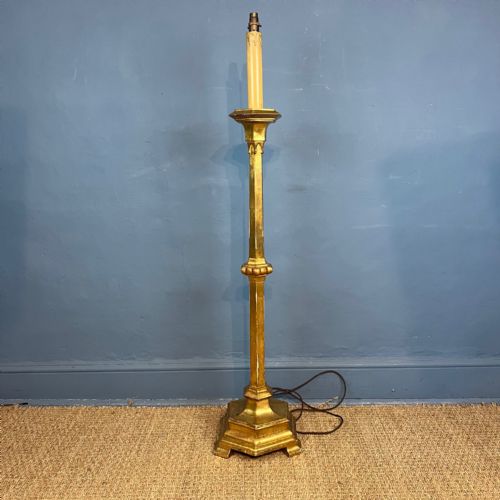
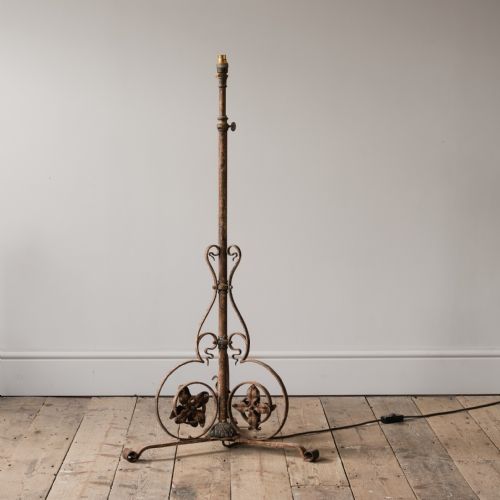
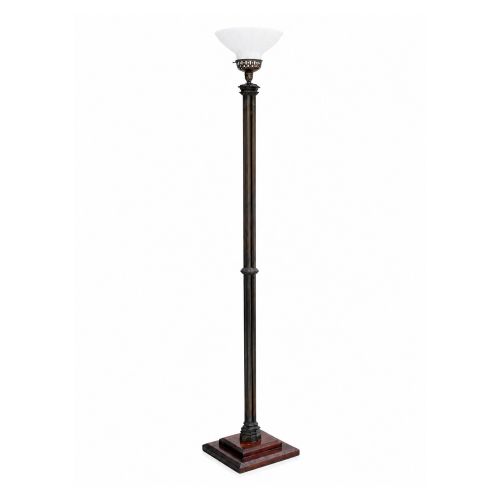


Gothic Floor Lamp
A gothic floor lamp brings heavy ironwork, carved oak and ecclesiastical height into a room.

Gothic Floor Lamp
A gothic floor lamp brings structural weight and medieval character to domestic lighting, taking the form of standard lamps, lantern stands, and floor candelabras. When searching for a gothic floor lamp, you encounter pieces spanning the eighteenth, nineteenth, and early twentieth centuries, reflecting Victorian, Arts and Crafts, and Art Nouveau interpretations.
The most common versions on this page are wrought iron standards and telescopic floor lamps, alongside carved oak torchere pieces. These objects originate from British and broader historical workshops, merging functional illumination with architectural motifs such as barley twists and pointed arches.
How they were made
Makers shaped these pieces primarily from wrought iron, cast iron, and oak, utilising blacksmith techniques for adjustable arms and telescopic stems. Metal components were hammered, forged, and joined to support heavy oil lamps, gas burners, or early electrical fittings.
Timber examples display traditional woodworking skills, featuring carved details and barley twist turning on floor standing standard lamps. Fabric and glass elements were frequently integrated as shades and chimneys, completing the conversion from utilitarian candle or oil stands to domestic lighting.
Gothic Floor Lamp Retail Price Guide 2026
Typical asking prices for gothic floor lamp among the pieces listed under this phrase on Sellingantiques today, from the lower quarter to the upper quarter. They describe what is for sale here now, not the wider market.
Listings feature periods spanning from the eighteenth century through Victorian craftsmanship to nineteen-ten, using wrought iron, brass, oak, and glass.
What varies in quality
Quality rests upon the integrity of the blacksmith work or the crispness of the oak carving, distinguishing robust architectural smithing from simpler commercial production. The articulation of mechanical parts, such as adjustable arms and telescopic mechanisms, reveals the care taken in construction.
Materials also dictate the tier of a piece, where substantial hand-forged wrought iron or richly grained carved oak commands greater presence than standard cast alternatives. Surface finishes that retain authentic texture rather than flat modern paint preserve the historical character of the metal and wood.
The Gothic Floor Lamp Glossary
- Standard lamp
- A tall floor-standing lamp designed to illuminate a room from a raised height. These pieces often feature heavy bases to support extended stems.
- Torchere
- A tall ornamental stand originally designed to carry a torch or candle, later adapted for electricity. In this context, they are typically carved from oak.
- Telescopic
- Describing a stem mechanism that adjusts in height through sliding sections secured with a key or screw. This feature allowed users to alter the spread of light.
- Barley twist
- A spiral turning technique used on wooden shafts to create diagonal movement and depth. It remains a hallmark of seventeenth-century style revived in later furniture.
- Lantern stand
- A specialised floor standard engineered to hold a glazed housing for a flame. They emphasise structural ironwork over slender wooden turnings.
Gothic Floor Lamp: Frequently Asked Questions
What is a gothic floor lamp?
A gothic floor lamp is a tall lighting fixture influenced by medieval architecture, featuring materials like wrought iron and carved oak.
They appear as standard lamps, lantern stands, and floor candelabras developed during the nineteenth and early twentieth centuries.
How were they originally lit?
Many early examples functioned with candles, oil lamps, or gas light fixtures before later conversion to electricity.
Adjustable arms and telescopic stems allowed users to position the flame or light source precisely where needed for reading or task work.
How do I date a piece?
Dating relies on combining material evidence with stylistic markers from periods like the Victorian era or the Arts and Crafts movement.
Hand-forged wrought iron and traditional joinery point to nineteenth-century production, while cleaner lines often suggest early twentieth-century manufacture.
Where should I place one?
These lamps suit rooms with traditional proportions, high ceilings, or architectural details that complement heavy metalwork and dark oak.
Their substantial height and presence make them effective anchor points in darker corners or beside large armchairs.