
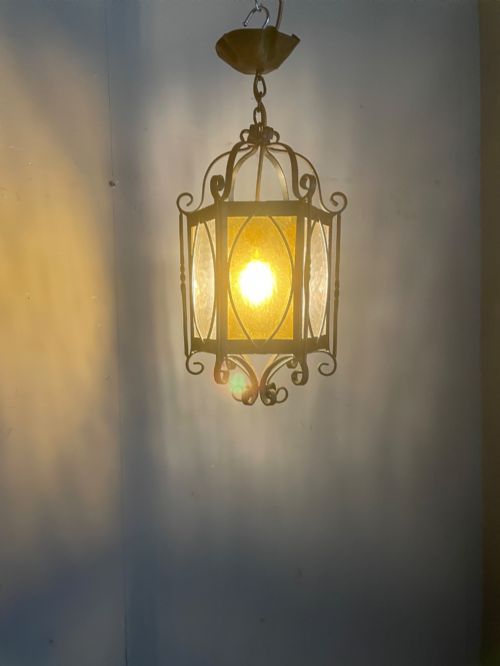


Black Wrought Iron Lamp
These black wrought iron lamp examples bring robust hand-forged character and structural utility to interior spaces through centuries of lighting tradition.

Black Wrought Iron Lamp
A black wrought iron lamp brings heavy forged metalwork into domestic spaces, appearing in forms from standard lamps and floor lights to wall lanterns and chandeliers. Buyers seeking a black wrought iron lamp encounter diverse expressions spanning the eighteenth century through the Art Deco era, with Victorian and early twentieth-century examples dominating the selection.
Floor lamps and standard lamps frequently incorporate adjustable arms or telescopic columns for practical task lighting. Hanging hall lanterns, ceiling lights, and wall lanterns utilise glazed panels, frosted glass, or stained glass to diffuse illumination within corridors and exterior entrances.
Origins stretch from British country workshops to French studios, incorporating styles such as Gothic Revival, Arts and Crafts, and Art Deco. Buyers find both monumental castle wall lights and delicate table lamps, each demonstrating the utilitarian strength of forged iron.
Materials and construction
Blacksmiths shaped heated metal over anvils using traditional hammers and tongs to create the structural frames of each black wrought iron lamp. This hot-working technique produces the characteristic surface texture, visible hammer marks, and sturdy joints that define genuine forged ironwork.
Glass elements including frosted, stained, or clear panes are integrated into lanterns and shades, often held by metal cames or riveted collars. Secondary materials such as brass fittings, dark wood bases, and fabric components occasionally accent the primary iron structure.
Materials across these listings combine wrought iron with glass, fabric, brass, cast iron, stained glass, frosted glass, and dark wood.
Judging quality in forged lighting
Quality separates pieces by the crispness of the blacksmith's handiwork and the fluidity of decorative scrolls. Superior examples display purposeful forging where proportions remain balanced and structural elements integrate seamlessly with decorative flourishes.
The choice of secondary materials and glass execution heavily influence distinction. Hand-formed stained glass panels and finely cast brass components elevate the overall execution far above standard utilitarian production.
Degue
The Black Wrought Iron Lamp Glossary
- Wrought iron
- A tough, malleable form of iron containing embedded slag fibres, traditionally worked by hand at a forge. It resists snapping under stress and accepts complex shaping.
- Telescopic floor lamp
- A standard lamp featuring a sliding shaft mechanism that allows the overall height to be adjusted. These pieces provide adaptable illumination for varying ceiling heights.
- Hall lantern
- An enclosed hanging light fixture designed for entranceways and corridors. They frequently use glazed panels to protect open flames or early electric bulbs from draughts.
- Gothic Revival
- An architectural and decorative style drawing on medieval ecclesiastical motifs. Pieces often incorporate pointed arches, quatrefoils, and heavy iron tracery.
- Arts and Crafts
- A design movement valuing honest construction and visible artisan handwork over mass production. Objects from this tradition celebrate the intrinsic texture of their materials.
Black Wrought Iron Lamp: Frequently Asked Questions
How do I date an iron floor lamp?
Dating relies on examining construction marks, wiring methods, and stylistic cues such as Art Deco geometric lines or Victorian Gothic motifs. Hand-forged elements often carry subtle tool signatures unique to specific manufacturing eras.
Changes in base weights and switch types also help narrow down the period of production, distinguishing nineteenth-century pieces from later twentieth-century interpretations.
Can these antique lamps be rewired safely?
Most older lamps require modern electrical rewiring to meet current safety standards and ensure reliable daily operation in a modern home. Professional electricians can thread modern flex through existing internal channels without altering the historic metalwork.
Preserving original lampholders where possible maintains historical integrity while updating the internal wiring for peace of mind.
Where should I place a heavy wall lantern?
Substantial iron wall lights and lanterns require secure fixing into solid masonry or reinforced wall studs to support their considerable weight safely. Hallways, entrance porches, and large reception rooms provide appropriate architectural scale for these robust pieces.
Consider the projection from the wall so that adjustable arms or wide lanterns clear surrounding furniture and door swings.
How do I clean black wrought iron?
Routine maintenance involves gentle dusting with a dry microfibre cloth to prevent the accumulation of debris within forged crevices. Avoid harsh chemical cleaners that can strip protective historic finishes from the metal surface.
Applying a light coat of microcrystalline wax can help protect the iron from atmospheric moisture while preserving its deep dark tone.